
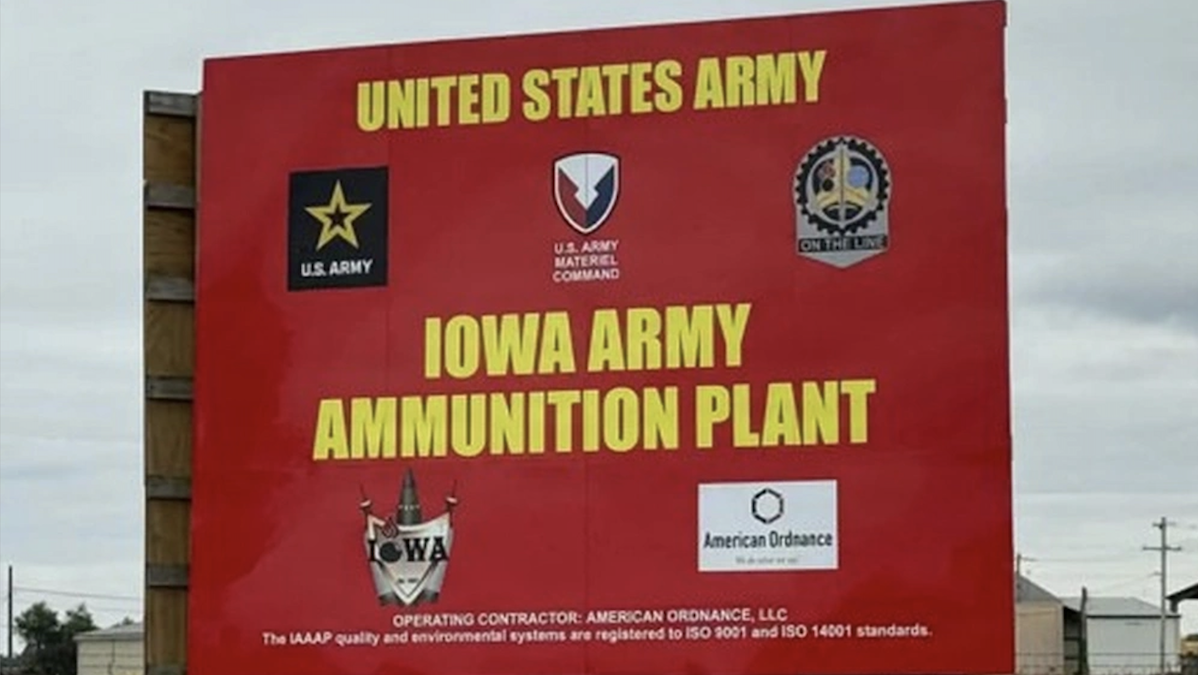
The stockpile, stored in 68 barrels inside underground concrete tanks, has been recrystallizing into a form too unstable to move or chemically neutralize without a high risk of accidental explosion, the Army said in an environmental assessment.
The Environmental Protection Agency granted an emergency permit to the U.S. Army based on the explosion risk, saying that the condition of the lead azide “presented an imminent and substantial threat to human health and the environment.”
“The chemical neutralization process requires significantly more ‘hands-on’ time and physical manipulation of the drums by personnel over a prolonged 7-to 22-day period, drastically increasing the probability of accidental, fatal detonation during handling,” the assessment says.
University of Iowa environmental scientist David Cwiertny is leading an independent effort to sample air, topsoil, and dust wipes before and after the blast. “These are tough circumstances to plan sampling campaigns under,” Cwiertny said. “But we’ll do what we can.”
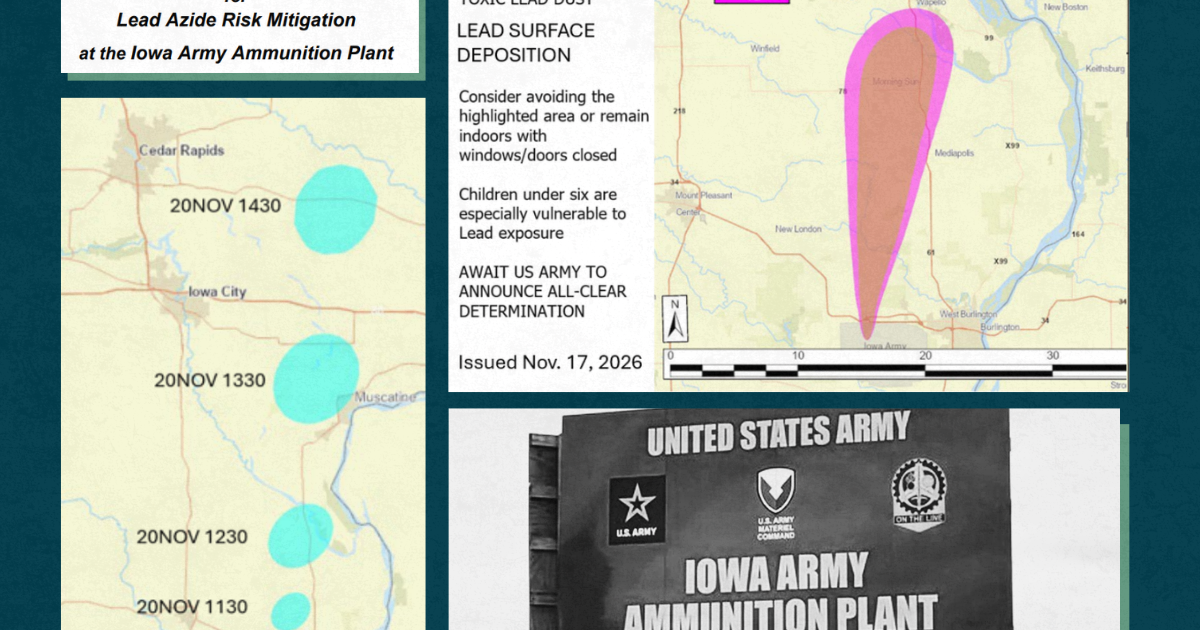
Army maps released this week initially showed a worst-case dust plume reaching roughly 100 miles north to Maquoketa. An updated map issued Wednesday shrank the hazardous zone significantly, ending southeast of Cedar Rapids. The EPA’s permit requires winds below 15 miles per hour during the detonation.
“The less wind that we have, the more likely all of the particulates would stay on the installation,” Army spokesperson Justine Barati said. Winter temperatures also pressed the schedule: lead azide becomes more volatile in cold weather, raising the chance of an uncontrolled detonation if the Army waited.
Middletown residents have been asked to vacate from 8 a.m. to 2 p.m. Monday. The Army advises anyone in the potential deposition zone — especially children, pregnant individuals, older adults, and sensitive populations — to avoid outdoor activity, keep windows and doors closed, and set HVAC systems to recirculate. Dust is expected to linger for no more than an hour, depending on wind speed.
The Iowa Integrated Network for Science, Information, and Geospatial Health Tracking (INSIGHT) is recruiting property owners in potentially affected areas to host monitoring equipment. Volunteers can sign up through the IIHR — Hydroscience and Engineering Facebook post.
Shannon Bartelt-Hunt and Kaycie Lane, environmental engineers at the University of Nebraska–Lincoln, are coordinating a crowdsourced soil-sampling campaign. They are asking residents within the blast radius to collect one cup of topsoil before and after the event and mail it with location data for analysis.
“People are very, very concerned about not having information about what’s happening in their community,” Bartelt-Hunt said.
The Army Corps of Engineers is also collecting pre- and post-blast soil samples for about 150 residents who requested them, The New York Times reported. “In an unprecedented event with so many unpredictable factors, we believe that having more independent data is always better for public transparency and for public health,” Cwiertny said.
On the Reddit community r/Iowa, some residents discussed taking their own samples in preparation for potential lawsuits over lead exposure.
The Army’s public advisory and the rescheduled date notice are posted on army.mil. The EPA’s emergency permit details are available at response.epa.gov.
Worth a look

New Mexico Wins 24-17 at Wyoming, Moves Atop Mountain West Division
New Mexico moved back atop the Mountain West mountain division Friday night, grinding out a 24-17 win at...

North Bay Rapid Response Network Reports at Least 12 Detained in Sonoma County Sweeps
Federal immigration agents swept through Sonoma County before dawn Friday, detaining at least 12 people in what a...

Houston West Loop Is Texas’ Worst Bottleneck, TTI Study Finds
Houston’s West Loop Freeway swallows 2.1 million hours of driver time every year per mile, the highest toll...
I-40 Near Morgan Road Closed Due to Injury Wreck Involving Milk Tanker
Interstate 40 near Morgan Road closed Friday night after a milk tanker wreck. This injury collision, involving a...