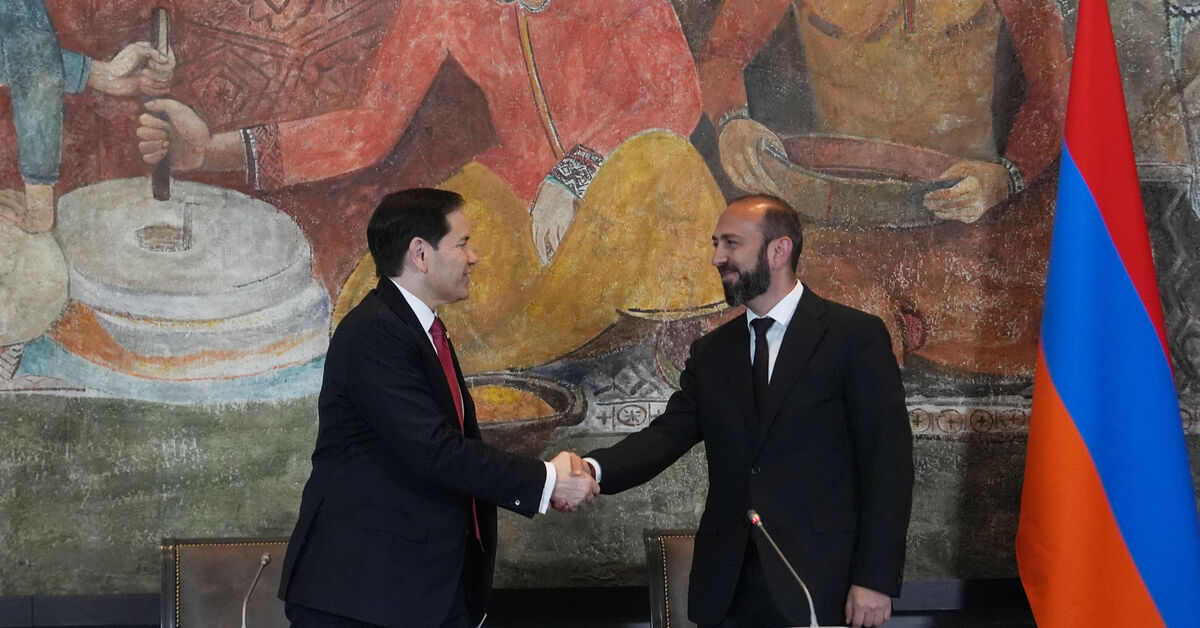
Armenian Prime Minister Nikol Pashinyan announced the initial implementation phase of the “Trump Route for International Peace and Prosperity” on Monday, drawing swift security pushback from Iranian officials who refuse to rely solely on Yerevan’s diplomatic assurances.
The planned transit corridor, known as TRIPP, connects Azerbaijan directly to its Nakhchivan exclave through southern Armenia’s Syunik province. Al-Monitor reported that Iranian Foreign Ministry spokesperson Esmail Baghaei warned on Monday that Tehran views the project as a critical matter of national sovereignty and security.
“All relevant [Iranian] organizations are closely monitoring the development of the situation and will take appropriate measures if necessary,” Baghaei said at a press conference, according to the ISNA news agency cited by Al-Monitor.
Border Security Concerns
Iranian officials argue that the transit project threatens to alter regional geopolitical dynamics and diminish Tehran’s strategic access to the South Caucasus. Mohammad Mokhber, an aide and adviser to Iran’s Supreme Leader, publicly criticized the corridor on X and drew a direct comparison to a shipping route near Oman where Iran has targeted vessels, according to Iran expert Vardan Voskanyan in a report by Panorama.am.
“What is noteworthy is that the senior Iranian official posted his remarks on X following official statements from Armenia and the United States marking the launch of preparatory construction work on the Trump Route,” Voskanyan said.

Mokhber wrote on X that Iran’s geopolitical interests are a red line, telling observers to take a lesson from the Strait of Hormuz, as Ազատություն Ռադիոկայան reported. Despite these high-level warnings from Supreme Leader advisers, Pashinyan maintained during a news conference that Yerevan remains in constant dialogue with Tehran.
“We respect Iran’s red lines, and the TRIPP project has not crossed and will not cross those red lines,” Pashinyan told journalists, adding that any American military presence along the border is entirely out of the question, according to Ազատություն Ռադիոկայան.
Tracing Official Reactions to Construction Preparations
Meanwhile, the Iranian Ministry of Foreign Affairs spokesperson stated that Tehran’s principled position remains unchanged regarding regional transport links.

Outlining Long-Term Concession and Equity Terms
Nikol Pashinian told a news conference that they respect Iran’s red lines, and the TRIPP project has not crossed and will not cross those red lines.
Project Structure and Equity
The Armenian government granted final approval for a U.S.-Armenian joint venture to build and manage the road, energy supply lines, and associated infrastructure. Under the framework agreement signed in June, the U.S. government will hold a 74% stake in the operating company while Armenia retains 26%, with provisions allowing Yerevan to increase its share to 49% upon the agreement’s future extension, as detailed by شبكة تواصل الإخبارية.
While Baghaei acknowledged that Armenia has provided necessary bilateral guarantees, he emphasized that Tehran extends no such trust to the third-party participants involved in the TRIPP initiative, according to NEWS.am.
Iran borders Armenia to the northwest and shares a direct frontier with the Syunik province through which the TRIPP corridor would run, meaning any altered transit arrangements immediately reshape Tehran’s physical access to the South Caucasus. The project’s framework agreement, signed in June, grants the U.S. government a 74% stake in the operating company that will build and manage the road and energy infrastructure across that border region, embedding a long-term American commercial and strategic presence on Iran’s immediate periphery.
Mohammad Mokhber, an aide and adviser to Iran’s Supreme Leader, publicly equated the corridor’s geopolitical risk to the Strait of Hormuz, signaling that Tehran treats the potential loss of leverage over this border zone as a direct threat to its national sovereignty and regional influence.
“Of course, neither side is interested in this trust being jeopardized by the intervention of third countries that do not attach any importance to the peace and stability of our region,” Baghaei said, as reported by NEWS.am.

Sydney Christmas Tree Fails to Light at Ceremony; Council Blames Technical Issues
Thousands of spectators counted down to absolute darkness in Sydney’s CBD on Thursday night when a technical glitch...

33 Arrested in Southampton Child Sexual Exploitation Investigation
Police have arrested 33 people in Southampton in connection with an investigation into the sexual exploitation of teenage...

China-ASEAN FTA Upgrade Opens New Opportunities for Thai Businesses, Says Chamber Leader
Fresh produce will reach Chinese markets faster under the China-ASEAN Free Trade Area (FTA) 3.0 Upgrade Protocol, which...

Kildare Man Faces Extradition to Latvia Over Pro-Russia TikTok Videos
A 35-year-old food manufacturer worker living in Newbridge, County Kildare, faces up to 10 years in prison in...