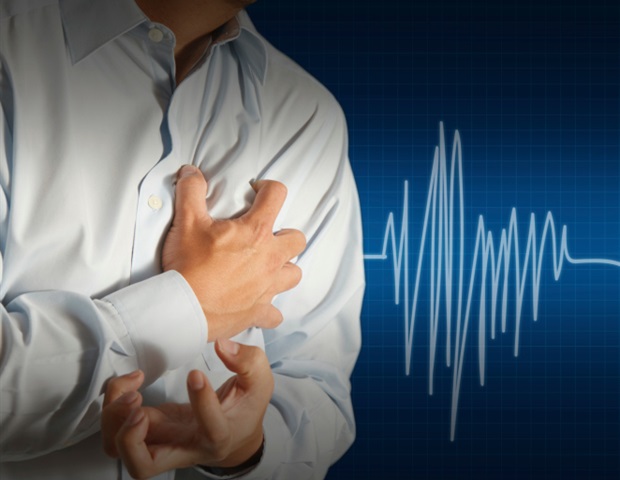
USC Scientists Win $6.9 Million to Test Stem Cell Heart Therapy
“It’s a blessing and a privilege to be selected for funding like this. Now, with CIRM’s support, we can just focus on the science and medicine.”
That’s Chuck Murry, MD, PhD, head of USC Stem Cell and the Robert A. Day Professor of Medical Innovation, Keck School of Medicine of USC, talking about the California Institute for Regenerative Medicine’s new $6.9 million grant. This funding is a critical bridge, allowing his team to prepare an investigational cell therapy for human trials. The goal is audacious: to heal the heart muscle itself after a severe heart attack, something that has never been done before.
A Race Against Time for the Heart
The problem Murry’s team is tackling is one of medicine’s most persistent challenges. After a major heart attack, the heart is often left so damaged it can’t function properly. The organ has an extremely limited ability to regenerate tissue. This condition, known as “myocardial infarction with cardiogenic shock,” is devastating. One in four patients dies within a week. Half are gone within a month.
Those who survive face a future of serious health complications. Their quality of life is eroded by further heart problems, psychological distress, cognitive impairment, and frailty. Current treatments can only manage the symptoms. They use drugs and devices to stabilize the heart and help it pump blood, but they don’t address the underlying damage. “With the current state of the art, we essentially slow the rate of decline,” Murry said. “Physicians can add years of life – and some life to those years – but it isn’t healing. We shouldn’t accept that as the status quo. I think we can do something about it.”
From Lab to Bedside: The Road Ahead
The CIRM grant isn’t for the human trial itself. Instead, it funds the crucial preclinical work needed to get the Food and Drug Administration’s approval to begin testing in people.
The research team will work with the USC/CHLA Cell Therapy Program, a facility that meets current good manufacturing practices, to refine the process. The therapy itself consists of cardiac muscle cells derived from stem cells, which are banked, developed into the final product, and frozen. When ready for a clinical trial, the cells will be thawed, washed, and administered. In parallel, final animal experiments at the Keck School of Medicine will confirm the treatment’s safety and effectiveness before it ever reaches a human patient.
Bridging the Gap for All Patients
A key part of preparing for the trial is selecting the right patients. For this, Murry is collaborating with other cardiac surgeons from USC, including Sanjeet Patel, MD, PhD, and Vaughn Starnes, MD. To identify who will benefit most, they’ll use an artificial intelligence algorithm developed by Patel.
“CIRM wants to make medicines that are accessible to patients regardless of the ZIP code they were born into,” Murry stated. “The way I see it, this therapy shouldn’t be available only to people in wealthy neighborhoods.” To achieve this, the treatment is designed to be “off the shelf,” meaning it won’t need to be customized for each individual. This manufacturing approach is scalable, which could significantly reduce costs and increase availability. “Heart failure is a disease of the masses, the No. 1 cause of death in the United States,” Murry noted. “If we want to move the needle, we need something that is scalable.”
As a tradeoff, this version of the therapy will require immunosuppressive drugs to prevent the body from rejecting the new cells. However, Murry’s lab is already working on a future generation of universal cells that could eliminate this need. The current focus, though, is on getting this first-generation therapy to the patients who need it most.
A Precarious Leap Forward
“It feels like we’re finally on the precipice of doing this,” Murry said of the upcoming trials. “I alternate between being thrilled and a bit humbled by what we’re attempting. We’re going to learn enormous things from this, and I just hope we do well for patients.”
The launch of clinical trials for this therapy is targeted for late 2027, with sites at both USC and the University of Washington.

Fourth Suspect Named in Alleged Illegal Wiretapping of President Prabowo
Indonesian Police Name Fourth Suspect in Alleged Presidential Wiretapping Scheme On Tuesday, the National Police's Criminal Investigation Department...

Ohio State Researchers Achieve About 73% Accuracy With Scentronic AI E-Nose
Researchers at The Ohio State University have developed an AI-powered electronic nose and wearable scent delivery system that...
Bail Revoked for Woman Accused of Further Letterkenny Shop Theft
Judge revokes bail for Letterkenny woman following alleged Tesco theft A 29-year-old woman has been remanded in custody...

AI-Guided Universal Bird Flu Vaccine Provides Complete Protection Against Multiple Variants
Cambridge Team's AI Vaccine Stands Up to Bird Flu's Many Faces University of Cambridge researchers have announced a...