
Underwater photographer Jeff Milisen tested the Sony a1 II in the waters off Niʻihau, Hawaii, and published his findings on Ikelite’s site, arguing that the camera’s AI-assisted autofocus and in-body stabilization make it a “technological wonder” for demanding marine environments.
Milisen writes that the a1 II improves on the original a1’s 50-megapixel sensor, 8K video, and 30-frames-per-second continuous shooting with an articulating screen and pre-capture buffering. He shot the review at sites including Vertical Awareness, a basalt pinnacle rising from 300 feet that attracts critically endangered Hawaiian monk seals, of which roughly 1,600 remain in the wild.
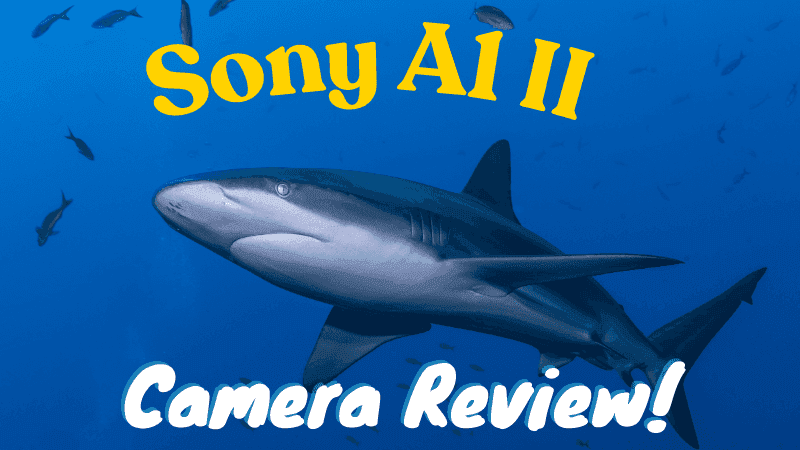
“I’ve used many different cameras in some of the world’s most remote and challenging underwater environments, and the Sony a1 II is a technological wonder,” Milisen told Ikelite. He adds that the 5-axis in-body stabilization allowed his “shaky grip” to capture “shockingly steady shots” of sandbar sharks, and that the AI focus “found the eyes and then hung on” when photographing seals and sharks at close range.
Milisen paired the body with Sony’s FE 16-35mm Power Zoom and FE 90mm Macro lenses inside an Ikelite housing with a Drylock port system. He notes the motorized zoom buttons on the 16-35mm PZ let him compose on the LCD without a physical zoom ring, and that swapping to the 90mm macro during a surface interval was “super easy” with the vacuum-equipped port.
Bluewater Photo Store, in a separate review of the same camera, highlights the a1 II's flash sync speed of 1/400 second — rising to 1/500 second in APS-C crop mode — as a major plus for balancing ambient light with strobes.
Most full-frame mirrorless cameras sync at 1/160 to 1/250 second, giving the Sony roughly three-quarters of a stop more control. Bluewater Photo Store also notes that the Sony a9 III exceeds this capability with a global shutter that removes sync-speed limits entirely, and that both the a1 II and a9 III fit the same Nauticam housing.
Milisen, a marine biologist and author of “A Field Guide to Blackwater Diving in Hawaii,” has placed in 15 international underwater photography competitions and published three peer-reviewed scientific papers. His career pivot began after winning the Ocean Art 2014 Macro category, which funded a dive trip to Kosrae and launched his ongoing work blending art, science, and open-ocean advocacy from his base in Kona, Hawaii.
Milisen shot Hawaiian morwongs at 1/200 second, f/18, ISO 400 with the 90mm macro, and split-level images at 1/200 second, f/18, ISO 1600 with the 16-35mm PZ. He concludes that when paired with Sony lenses and Ikelite’s housing and strobes, the a1 II “has a lot of potential for anyone who needs a fast underwater camera that produces incredible photos.”
Worth a look
Wheelchair User With Tay-Sachs Urges LA to Fix Sidewalks Before 2028 Paralympics
In a column for CityWatch LA, Eric Pastor argues that Los Angeles is failing to maintain safe sidewalks,...
Syracuse 5-6, Among Six ACC Teams Likely to Miss Bowl Eligibility
Syracuse sits 5-6 overall and 3-6 in the ACC with one regular-season game left, leaving the Orange among...

Suns Beat Pelicans 123-119 in OT for Fourth Straight Win
Phoenix outlasted New Orleans 123-119 in overtime Monday night, the Suns' fourth straight win against a Pelicans team...

Thunder Fall 125-120 to Pacers, Dropping to 10-8 on the Season
The Oklahoma City Thunder lost 125-120 to the Indiana Pacers on Monday night at Gainbridge Fieldhouse, dropping a...