
Armed fighters from two competing groups are locked in a series of increasingly deadly battles along Burkina Faso’s northern border with Mali, as the state struggles to maintain control over its own territory.
Conflict between the al-Qaeda-affiliated Jama’at Nusrat al-Islam wal Muslimin (JNIM) and the ISIL affiliate in Sahel Province (ISSP) has intensified since early September, Al Jazeera reported.
While the government in Ouagadougou faces a persistent security crisis, the infighting between these two groups has become a primary driver of violence in the region. According to ACLED, a conflict monitoring group, the rivalry has resulted in approximately 320 armed confrontations and more than 2,200 fighter deaths since 2019.
The stakes for local populations are immense. An estimated 4.5 million people in Burkina Faso require humanitarian assistance in 2026, according to United Nations humanitarian planning figures. For these communities, the shifting dynamics of the militant groups offer little hope for stability.
Casualty Claims Remain Unverified Following Recent Clashes
The intensity of the recent clashes has been marked by bold, often unverified, casualty claims. One of the first major confrontations occurred near Kacham, close to the Malian border, in early September.
In that instance, ISSP claimed to have killed more than 200 JNIM fighters and seized many weapons and motorcycles. Heni Nsaibia of ACLED said that if these figures were confirmed, it would represent the deadliest battle recorded between the two organizations to date.

Violence flared again on October 9 around Ganadaouri in Burkina Faso’s Oudalan province. Following this engagement, the Islamic State’s weekly publication, Al-Naba, claimed that more than 400 JNIM fighters had been killed. This figure remains unverified, and the group has not provided independent proof of such a high death toll.
The credibility of these claims came under further scrutiny on November 1, when ISSP released photographs intended to serve as evidence of its victory. While regional news outlet i-Sahel counted at least 120 bodies in the images, it said that it could not independently verify whether those pictured were victims of the reported fighting.
The discrepancy between the claimed 400 deaths and the bodies visible in the photographs shows how difficult it is to assess the true scale of the violence in remote border zones.
The Regional Security Stranglehold
Despite the infighting, JNIM continues to pose a persistent challenge to the Burkinabè state. The International Crisis Group reports that the group maintains control over extensive areas in the north, north-central, west, and east of the country. These territorial gains allow the group to challenge state authority while simultaneously conducting operations in neighboring Mali and Niger.
Some observers have suggested that the rivalry might provide authorities with a temporary advantage by forcing JNIM to divert resources away from government targets. However, the conflict is increasingly spilling across borders. ACLED has documented the spread of this rivalry into Niger’s Tillaberi and Dosso regions and Nigeria’s Kebbi State, suggesting the violence is becoming a broader West African concern.
Expanding Threats to Coastal Nations
Regional security analysts worry that Islamist militancy could move into coastal countries. Viraj Pattni, a senior associate at the security risk management firm Castor Vali, explained that JNIM’s expansion is already impacting countries further south.
“The threat of Islamist militancy spreading to coastal countries is very real. Over the past 24 months, JNIM in particular has expanded the intensity of their operations in western and southern Mali, said Pattni.”
Pattni said that JNIM’s influence in Burkina Faso’s Est Region has facilitated intensified operations in Togo and Benin throughout 2025. The group also claimed its first official attack in Nigeria’s Kwara State in October 2025. Factors such as porous borders, regional marginalization, and communal tensions continue to provide an environment where these groups can build fighting capacity.
For the millions of people living in the borderlands, the prospect of one militant group weakening another offers no immediate relief. The humanitarian crisis, characterized by disrupted farmland and blocked access to markets, remains severe. It is unclear whether the state can use this internal militant rivalry to reassert authority or what the future holds for the communities caught in the crossfire.
Worth a look
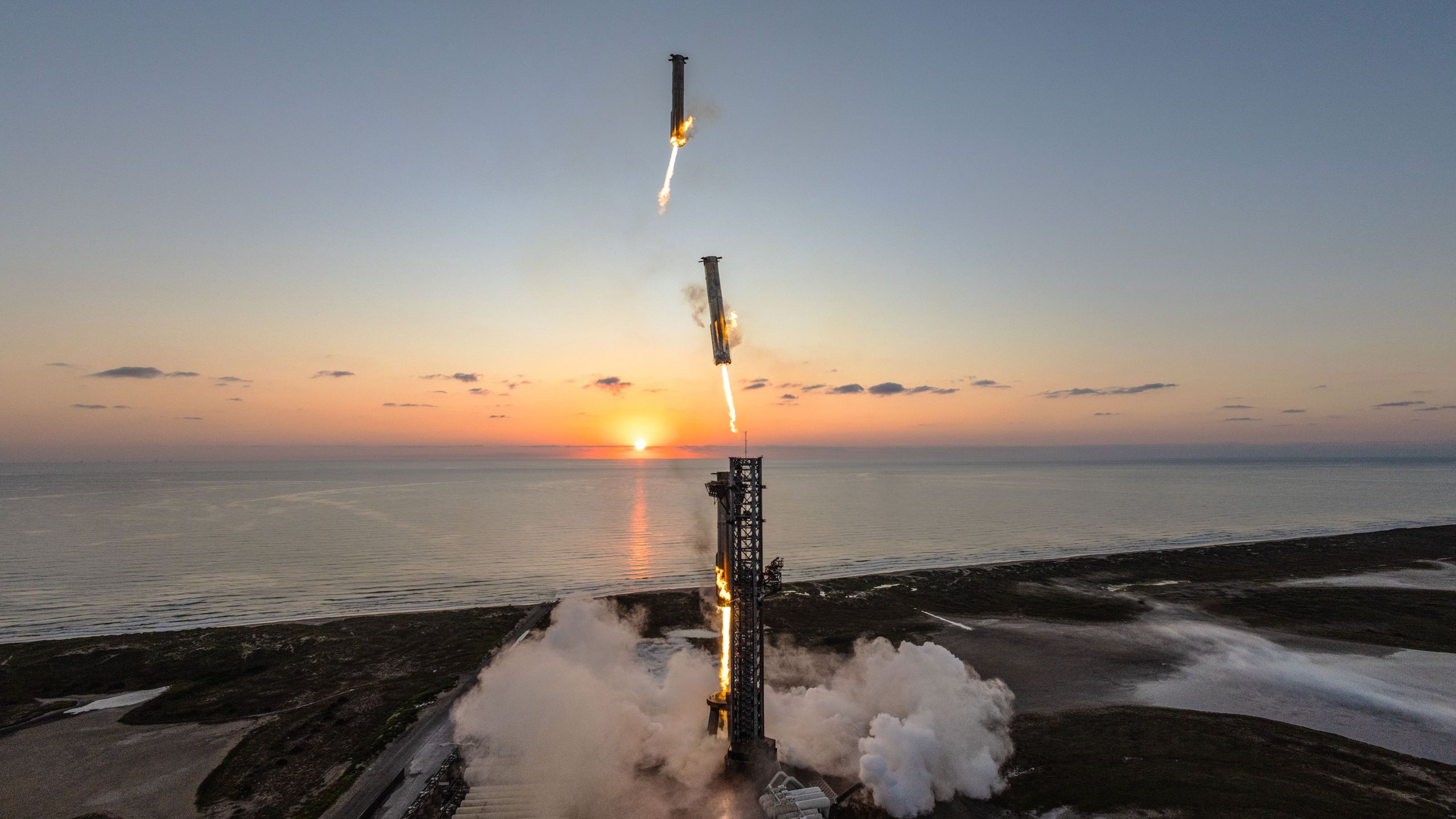
SpaceX Plans Starship Flight 15 With Double-Catch Landing Attempt
SpaceX plans to launch its Starship megarocket on its 15th test flight today during a 75-minute window opening...

West Virginia and Kansas Release Initial Injury Lists
The West Virginia Mountaineers and Kansas Jayhawks have each submitted their first availability report of the week, with...

Wisconsin Democrats to Hold Control and May Challenge Act 10
Democrats will hold total control of Wisconsin state government in just a couple of months, raising urgent questions...

No. 6 Virginia Men’s Basketball Faces Maryland at XFINITY Center
No. 6 Virginia puts its four-game winning streak on the line Friday night when the Cavaliers travel to...