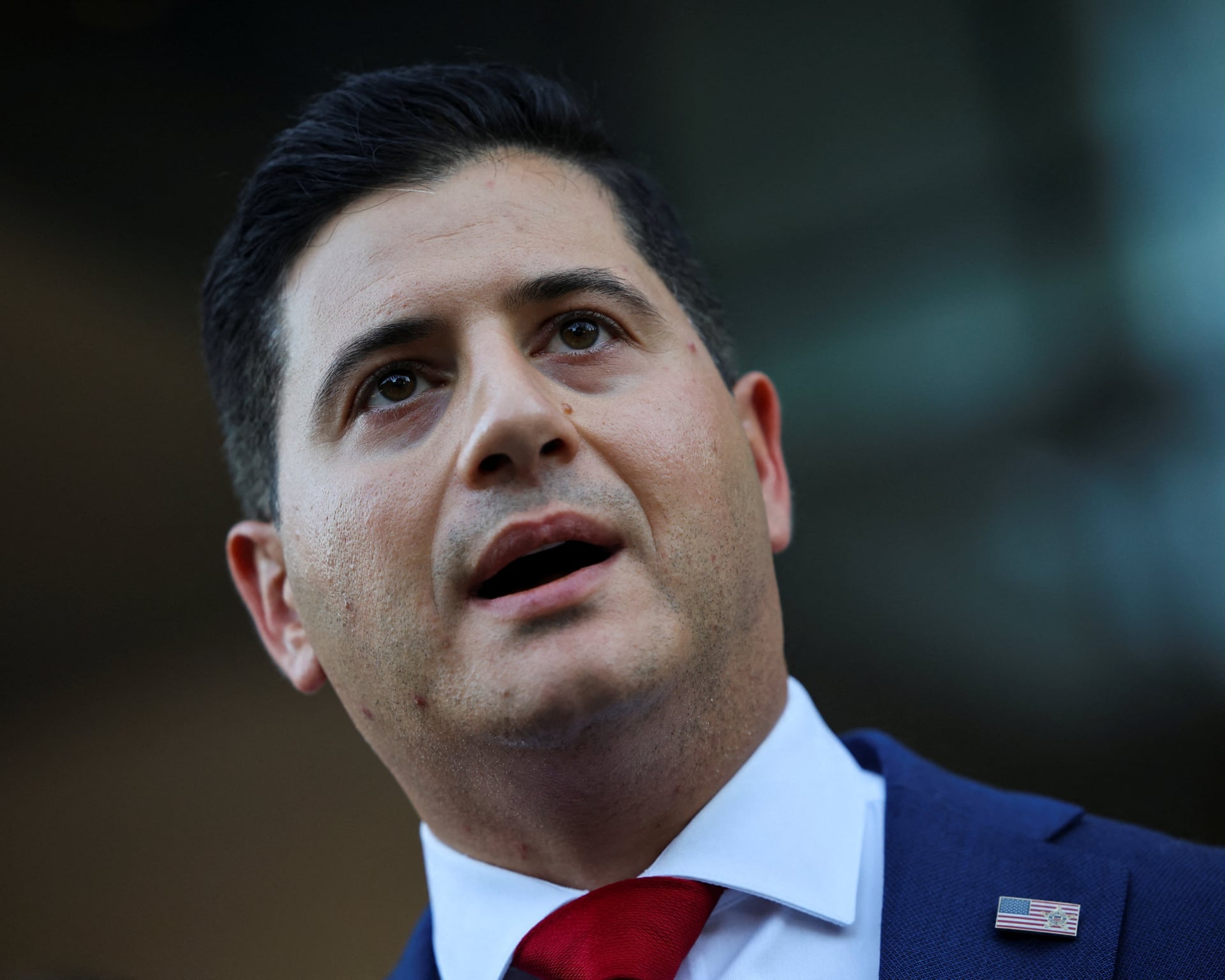
Senior U.S. District Judge J. Michael Seabright ruled on Tuesday that Bill Essayli is unlawfully serving as the top federal prosecutor in Los Angeles and barred him from overseeing two criminal cases, rejecting the Justice Department’s latest effort to preserve his authority without Senate confirmation.
A federal judge in Los Angeles delivered a fresh blow to the Trump administration’s ongoing legal maneuvers on Tuesday, October 27, 2026, finding that Bill Essayli occupies the Central District of California as an unconfirmed de facto U.S. attorney. The ruling by Senior U.S. District Judge J. Michael Seabright disqualifies Essayli from participating in or supervising two active criminal prosecutions while rejecting the Department of Justice’s revised administrative workaround.
The decision marks another flashpoint in a nationwide confrontation over the executive branch installing prosecutors outside the statutory confirmation process. Although Seabright barred Essayli from the two specific dockets, he delayed the disqualifications from taking effect while considering an anticipated government request for a stay pending appeal.
BREAKING: Bill Essayli responds to a US Judge disqualifying him from serving as F.A. US attorney:"We respectfully disagree with the court’s order. The President and the Attorney General have every right to select supervisors within the Justice Department. Importantly, today’s… https://t.co/rYKOm5UC8k
J. Michael Seabright Rejects First Assistant Designation
The legal dispute centers on how the Justice Department maintained Essayli in power after his initial interim appointment expired. Essayli took over as interim U.S. attorney in April 2025 without a formal presidential nomination or Senate confirmation. When that interim term hit its statutory limits, then-Attorney General Pam Bondi designated him as a special attorney and first assistant U.S. attorney to keep him atop the office.
Seabright ruled last year that Essayli was acting unlawfully in that capacity, though he initially permitted him to continue supervising prosecutions through his dual roles. That compromise unravelled following a subsequent ruling from the 9th U.S. Circuit Court of Appeals rejecting a virtually identical arrangement for Nevada prosecutor Sigal Chattah. The appellate court held that the Justice Department cannot bypass the Senate by simply shifting titles while keeping an unconfirmed official in full charge of an office.
So immediately after he enters a stellar argument at the TRO hearing, this happens? Of course.We don't have activist judges here, no, sir.Hey @LeaderJohnThune how about getting rid of the blue slip "tradition"? INFURIATING https://t.co/Jf43kvySUB
In response to the 9th Circuit precedent, the Justice Department drafted a revised delegation of authority that expressly withheld three specific statutory powers reserved for a Senate-confirmed U.S. attorney. Assistant U.S. Attorney Alexander Robbins argued at an October 13 hearing that the revised wording cured the defect.
Seabright disagreed, concluding that withholding those minor administrative powers changed nothing because the remaining authority still invested Essayli with the full duties of the office.
What the actual fuck? https://t.co/efZtQvNal1
In sum, Essayli is unlawfully serving as a ‘de facto’ United States Attorney.
J. Michael Seabright, Senior U.S. District Judge, via Los Angeles Times
Jaime Hector Ramirez and Tu Anh Tran Prosecution Restrictions
The disqualification order specifically targets two criminal proceedings in the Central District of California. Essayli is barred from participating in or supervising the cases against Jaime Hector Ramirez, who faces charges as a felon in possession of a firearm and ammunition, and Tu Anh Tran, who is accused of possessing property stolen from an interstate or foreign shipment.
Defense attorneys in those matters had pushed for a total dismissal of the indictments based on Essayli’s unlawful appointment status. Seabright declined that broader relief, ruling that the defendants had not demonstrated the substantial prejudice required under the law to throw out the charges.

The fallout mirrors similar challenges across the country. Alina Habba stepped down as New Jersey’s top federal prosecutor in December 2025 after an appeals court found her appointment unlawful, while in Virginia, a judge’s ruling against Lindsey Halligan led to the dismissal of indictments against former FBI Director James Comey and New York Attorney General Letitia James.
Bill Essayli and the Justice Department Prepare Supreme Court Appeal
Outside the courtroom, Essayli’s tenure has drawn intense public scrutiny. Over the past year, he has pursued cases aligned with the MAGA agenda, targeting immigrants for deportation, prosecuting protesters, and launching an aggressive campaign against voter fraud by asserting that thousands of registered voters in California are likely non-citizens—an effort state election officials have forcefully opposed.
Oh nooooooooo!!!!Turns out @USAttyEssayli was playacting!! https://t.co/MqIa2nTr1O
Following Tuesday’s ruling, Essayli defended his position in an emailed statement.
The President and the Attorney General have every right to select supervisors within the Justice Department. Importantly, today’s order is automatically stayed so the government can seek a full stay and maintain the status quo pending our appeal. This question will be decided by the Supreme Court, and I look forward to serving in my current role until then.
Bill Essayli, U.S. Attorney’s Office, via Mynewsla
Defense lawyer H. Dean Steward, who led the renewed motion challenging Essayli’s authority in August, praised the outcome as a rebuke of executive overreach.
The Trump administration ignored the laws governing the appointment of U.S. Attorneys and got caught in Los Angeles. Trump and his Department of Justice violated the law again and again in an effort to install minions as chief federal prosecutors.
H. Dean Steward, Defense Attorney, via The Guardian
Trump loyalists and administration defenders reacted with fury online, with figures like Ed Martin, who led the Justice Department’s weaponization working group, declaring that Impeaching Judges is Necessary at Times,
while conservative commentators criticized judicial intervention in executive staffing.
Under the briefing schedule accepted by Seabright, federal prosecutors have five business days from the ruling to file a formal request for a stay pending appeal. If that request is denied, the disqualifications from the two criminal prosecutions will take effect one week later.
Impeaching Judges is Necessary at Times. https://t.co/P713fLturd
>
More on Michael Seabright
Breaking: US Judge Seabright disqualifies Bill Essayli as First Assistant US Attorney in CA. Not immediate. pic.twitter.com/SJX9bjQAJP

Dolly Parton video screened at SEUS-Japan meeting in Nashville
A Posthumous Welcome at the JW Marriott A video recorded by Dolly Parton just days before her death...

Augustana vs. USF Volleyball Play-by-Play Highlights
Augustana and Sioux Falls battled through a fiercely contested volleyball showdown featuring tight scoring sequences, key substitutions, and...

Evangel University leads Columbia College 46-28 in second half
The Second-Half Momentum Shift As the clock ticked down to the 20-minute mark, the game's rhythm accelerated through...

AG Neronha: Seven Indicted in $2 Million Medicaid Fraud Scheme
Rhode Island Indicts Seven in Alleged $2 Million Medicaid Fraud Featuring AI Seven people connected to a Providence...