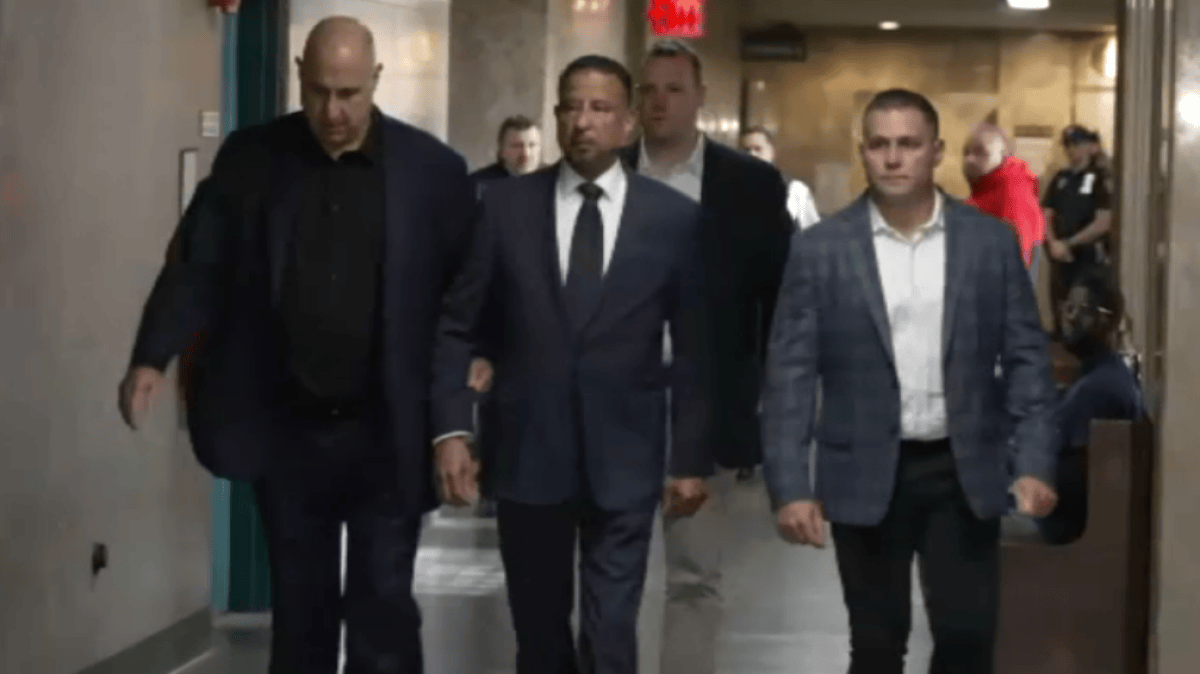
A Manhattan judge revoked $1 million bail and ordered Victor Romero to Rikers Island on Monday after he pleaded not guilty to a murder indictment in the fatal shooting of Con Edison worker Koran Irvine on the George Washington Bridge, NBC New York reported.
Prosecutors presented new surveillance video showing the Oct. 20 sequence: a near-collision on the Henry Hudson Parkway on-ramp, Romero tailgating Irvine’s sedan, then pulling into Irvine’s blind spot and firing a single shot through the back passenger window as both vehicles headed toward New Jersey, according to the Manhattan District Attorney’s office. Irvine, 46, a father of two from Rockland County, was shot in the torso; the bullet pierced his heart and both lungs. He was pronounced dead after his car struck the median.
Assistant District Attorney Matthew Sears said a 15-second clip captures the shooting.
Less than 12 hours later, another video shows Romero at a gas station near his home spending six minutes wiping down the driver’s side of the Range Rover with rags and a squirt bottle, then cleaning it again an hour later in a Manhattan parking garage, the New York Post reported. When Romero turned himself in on Oct. 21, he handed police a revolver he claimed was the weapon.
A search warrant at his Haverstraw home later yielded a Kahr 9 mm semiautomatic pistol from his bedside table that matched a shell casing on the driver’s seat floorboard and the fatal bullet from Irvine’s autopsy, Sears said. Police also recovered a Sig Sauer 9 mm, an unregistered semiautomatic pistol from a safe, multiple magazines and ammunition, and an old Dominican Republic passport. One registered firearm remains unaccounted for.
Romero charged with murder then manslaughter then indicted for second-degree murder
Romero was arrested on Oct. 21 and initially charged with murder, but the charge was reduced to first-degree manslaughter at his Oct. 24 arraignment and he posted $1 million bail, the New York Post reported. A grand jury subsequently indicted him on second-degree murder at prosecutors’ request.
On Monday, Sears argued Romero was a flight risk, citing his Dominican Republic birthplace, a house in Pennsylvania, and the cover-up evidence. Defense counsel cited Romero’s diabetes and need for daily glucose monitoring, and noted his routine cleaning of the vehicle for his chauffeur work. Justice Kathryn Paek ruled remand was necessary to assure his return to court.

Prosecutors detail alleged cover-up
Assistant District Attorney Matthew Sears told the court that a 15-second surveillance clip captures the shooting itself, showing Romero pulling into Irvine’s blind spot and firing through the back passenger window, the New York Post reported.
A search warrant at his Haverstraw home later yielded a Kahr 9 mm semiautomatic pistol from his bedside table that matched a shell casing on the driver’s seat floorboard and the fatal bullet from Irvine’s autopsy, Sears said.
Flight-risk argument and judge’s ruling
“The court does find that remand is necessary to reasonably assure his return to court,” Manhattan Supreme Court Justice Kathryn Paek ruled, the New York Post reported.
Irvine's sister expresses relief but grief persists as family attorney criticizes bail decision
“I’m ecstatic, but it’s not going to bring him back,” Irvine’s sister, Zeria Irvine, told reporters outside the courthouse, according to CBS News New York. “I feel like I lost everything.”
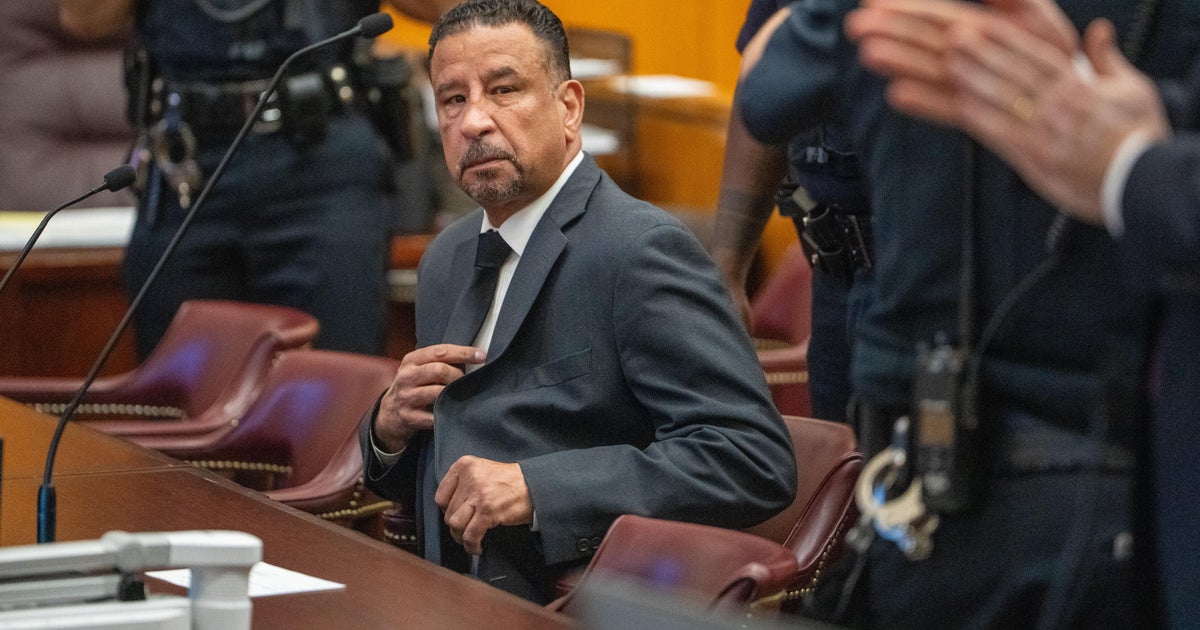
“Mr. Romero brought pain and heartache to my home and at least now I can start the healing for my family,” one of Irvine's family members told CBS News New York.
Irvine family attorney Keith White told The Post on Sunday that if Romero was charged with murder, he should have been remanded without bail, the New York Post reported. “In most serious cases involving suspects that should be charged with murder, people are remanded,” White explained, according to the New York Post.

Family and union reaction
About 100 supporters — Con Edison coworkers, union members, and Irvine’s family — filled the courtroom and hallway, chanting “shame” and “murderer” as Romero entered. Everyone says we are here for you and we love you but I feel so alone.”
Romero served six years with the NYPD before retiring in 2001.
He was working as a chauffeur for the CEO of QVT Financial, driving the firm’s Range Rover at the time of the shooting. His attorney did not immediately respond to requests for comment. The next court appearance is scheduled for late February.
Keep reading

Former Polk County Deputy Charged With Falsifying Evidence, 31 Cases Dismissed
Polk County authorities dismissed 31 criminal cases Friday after a former sheriff's deputy was charged with falsifying evidence...

Traore Scores Career-High 22 as Marquette Beats Milwaukee 61-57
Amina Traore scored a career-high 22 points to lead Marquette past Milwaukee 61-57 Monday night at the Klotsche...
First United Methodist Church Frankfort Seeks Organist for $17K-$20K
First United Methodist Church of Frankfort is seeking an organist for its traditional worship ministry, a part-time position...

Brown Splits Road Trip With Holy Cross Win, Vermont Loss
Brown men’s basketball split its three-game road trip, beating Holy Cross 74-63 last Wednesday before dropping an 84-71...