
The Juneau Assembly examined a dual-budget framework and a $600,000 increase for flood protection during a work session on Nov. 21, according to materials presented at the retreat.
No formal action was taken, but the discussions signal the Assembly’s priorities for upcoming fiscal years.
Finance officials outlined a plan to pair the city’s standard, conservative revenue forecast with a secondary “aggressive” forecast and matching expense package. The conservative budget would fund ongoing capital improvements, while the aggressive version would activate only if actual revenue exceeds the baseline — triggering one-time spending or allocations to maintenance and capital projects ranked by funding preference.
A hypothetical slide showed a $76 million forecast versus $83 million in actual revenue, with $2 million each directed to the top two projects and $1 million to the third.
The volatility driving the proposal is documented in recent interest earnings: the city budgeted $1.73 million in fiscal year 2022 but recorded a $3.58 million loss; in 2025 it budgeted $4.42 million and collected more than $15 million. Sales tax revenue also swings with visitor numbers.
The Juneau Assembly controls the city’s purse strings through its exclusive authority to pass ordinances, as required by the City and Borough of Juneau Charter; no expenditures can be made without an Assembly ordinance authorizing them.
The Assembly exercises this power year-round by appropriating new grants and reallocating unspent funds, while the annual budget season structures the process: the City Manager presents a preliminary budget, the Assembly Finance Committee meets weekly for roughly two months to take public input and balance services against property tax rates, and the cycle culminates in adoption by ordinance — described as the Assembly’s most important action of the year — before the fiscal year starts July 1.

On flood protection, the Assembly discussed raising the budget by more than $600,000, with most funds directed to operations and solution work. The city has partnered with the U.S. Army Corps of Engineers to address Mendenhall Valley flooding caused by summer meltwater filling Suicide Basin. In 2026, temporary HESCO barriers and riverbank armoring were installed along about 2.7 miles of populated and unprotected riverbank.
Repairs to the full system were requested before July 2027, and work remains ongoing. Sealaska Corp. was contracted to build a berm extending over 1,000 feet from Back Loop Road to protect the road and downstream communities. Flood response is also slated for capital investment under “General Projects,” which is receiving $30 million across seven projects.
Related reading

Eagles Erase 21-Point Deficit to Beat Cowboys 39-38
The Philadelphia Eagles erased a 21-point deficit to beat the Dallas Cowboys 39-38 on Thursday at&T Stadium, completing...

Thanksgiving Rain Floods Irvington Intersection as PBOT Responds to 50 Calls
PBOT fielded 50 flooding calls Thursday as heavy rain left ankle-deep water at Northeast 28th Avenue and Broadway...
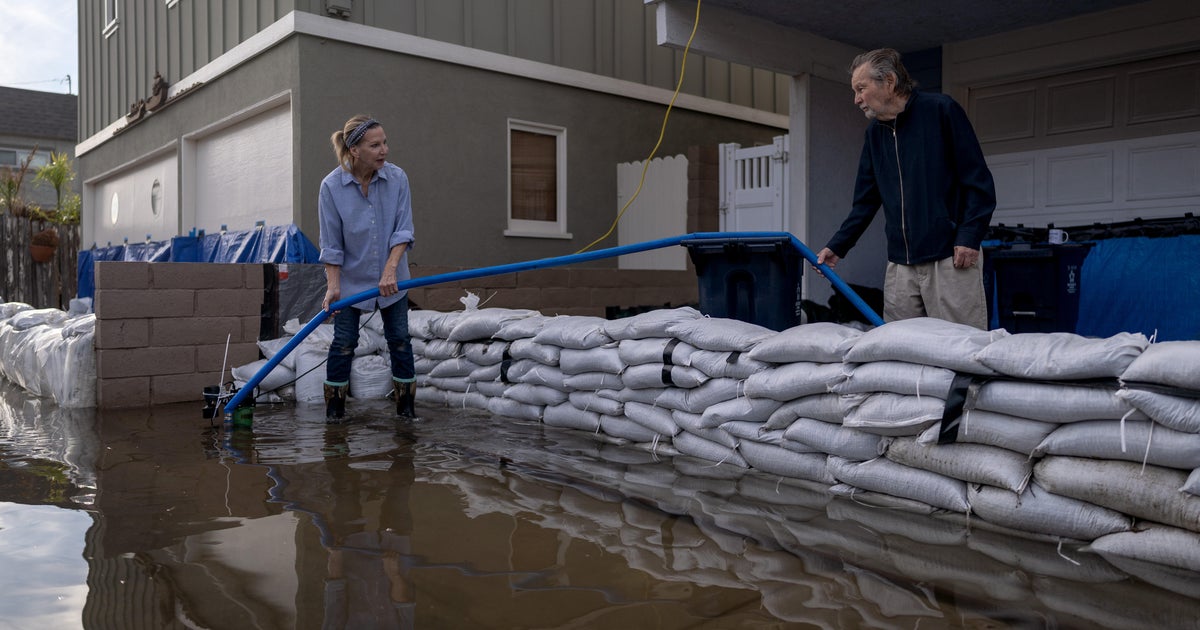
Southern California Endures Historic Coastal Flooding and Devastating Waves Over Thanksgiving
"We dodged a bullet," said Bill Sharp, a longtime resident of west Newport Beach, describing the Thanksgiving morning...

SpaceX Names $50 Billion Arizona AI Supercomputer Campus Colossus 3
SpaceX has named its planned $50 billion supercomputer campus in southeastern Arizona: Colossus 3. The aerospace company, founded...