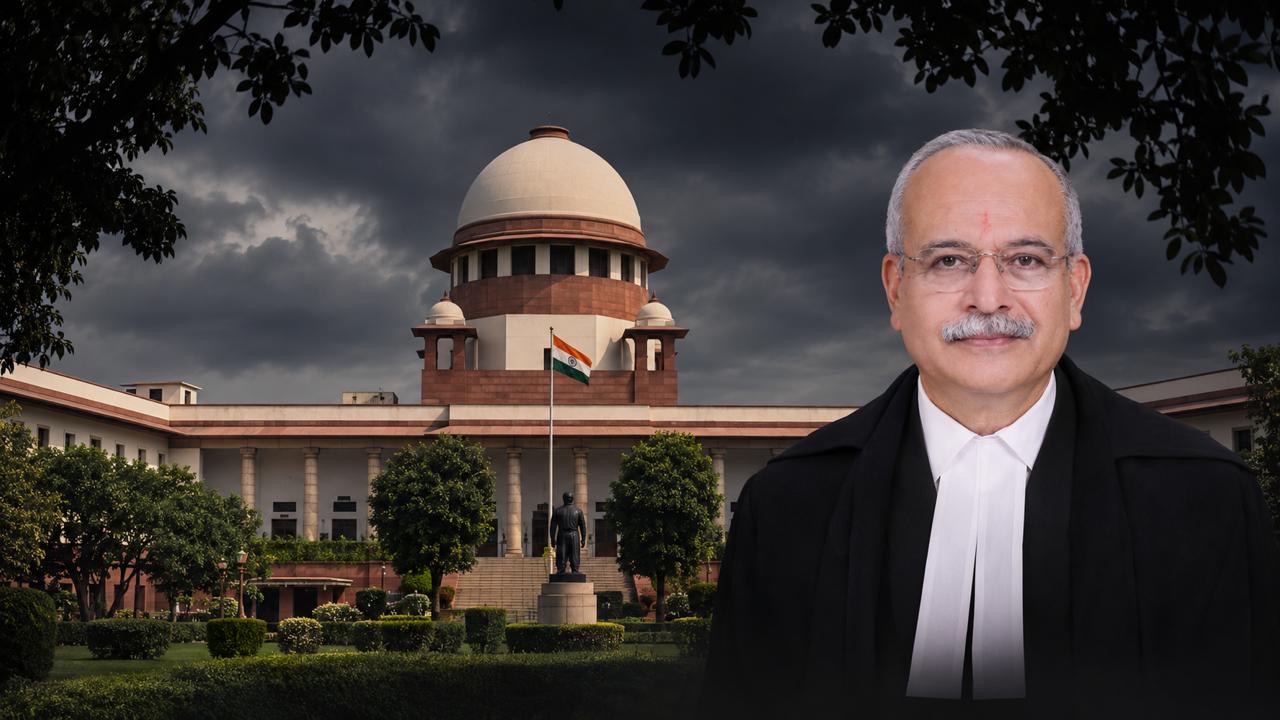
Supreme Court Justice Satish Chandra Sharma retires on November 29 after a three-year tenure, leaving an unresolved controversy over his failure to disclose his son’s role as standing counsel for the Election Commission while hearing a challenge to the law governing the appointment of the Chief Election Commissioner and Election Commissioners.
Conflict of interest alleged in CEC Act case
Live Law reported that Justice Sharma did not disclose during hearings that his son served as a standing counsel for the Election Commission of India at the Madhya Pradesh High Court. The case concerned the validity of the Chief Election Commissioner and other Election Commissioners (Appointment, Conditions of Service and Term of Office) Act, 2023.
Justice Sharma disagreed with Justice Dipankar Datta’s view that the matter did not require a larger bench reference, and his view prevailed, leading to a Constitution Bench reference — a demand the Union government and the ECI had supported.
Judges must avoid reasonable likelihood of bias
Established propriety norms require judges to declare family members’ professional associations with parties in a case and offer to recuse. Kiran D/o Purushottam Bhujade v Sudhir Shikshan Sanstha & Ors: “the test is not whether actual bias is proved, but whether there exists a ‘reasonable likelihood of bias’ or ‘real possibility of bias’, in the mind of a reasonable person as distinguished from a merely fanciful apprehension.”
The Court added that impartiality “encompasses every circumstance that creates a reasonable apprehension that the proceedings were pre-determined or biased.” Petitioners subsequently filed recall applications arguing the judgment was vitiated by the likelihood of bias.
Second case raises roster questions
The listing of that case before Justice Sharma was not as per the prevailing roster, the report said.
No explanation in farewell address
Justice Sharma did not address the controversy in his farewell remarks. He said: “I leave with a sense of satisfaction not because I believe that I have been perfect in discharging my duties but because I can say with sincerity that I have always endeavoured to perform them with fairness, independence, humility and abiding commitment to the Constitution and rule of law.”
Attorney General R Venkataramani, speaking at the ceremonial bench, referenced the CEC judgment: “A couple of months ago, Justice SC Sharma and Justice Datta delivered an important judgment. I carefully listened again to the concerns behind every statement, sentence, proposition you penned in that judgment. I think you will be remembered for that,” Live Law reported.
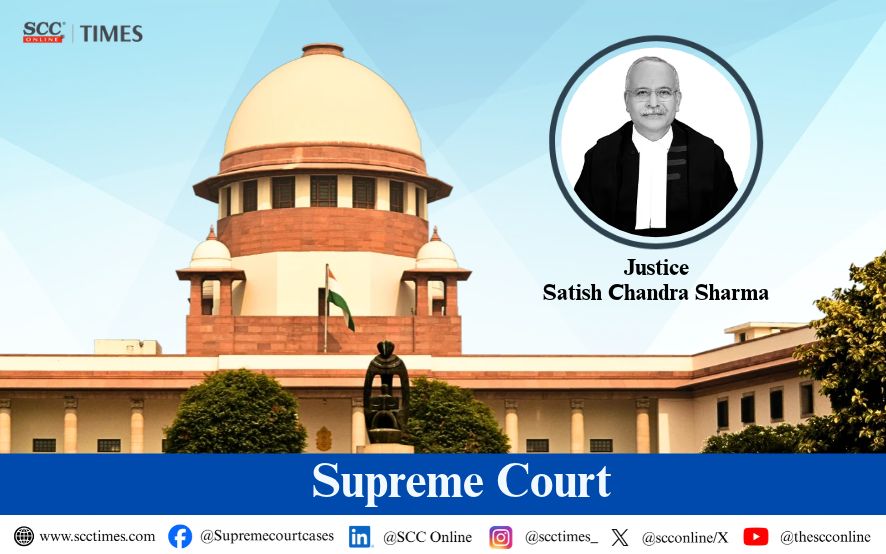
Career spanning four High Courts
Justice Sharma was elevated to the Supreme Court on November 9, 2023, after serving as Chief Justice of the Telangana and Delhi High Courts, Acting Chief Justice of the Karnataka High Court, and a judge of the Madhya Pradesh High Court for over 12 years, according to SCC Online and LawBeat.
He was designated a Senior Advocate at the Madhya Pradesh High Court in 2003 at age 42, appointed Additional Judge in January 2008 and Permanent Judge in January 2010. He authored 101 judgments in three years at the top court, with an annual average of 34, the Supreme Court Observer noted.
Colleagues praise temperament and courtesy
At the ceremonial bench on November 28, Chief Justice of India Surya Kant praised Justice Sharma’s “cheerful disposition, warmth and sense of humour” and said his contribution went beyond judgments to “temperament brought to the Bench, relationships built with colleagues and warmth extended to everyone,” ThePrint reported.
Solicitor General Tushar Mehta said the Court would miss “the smile which is always on your face” and the habit of saying “I’m so sorry” to the losing party when dismissing a Special Leave Petition, Bar and Bench reported. A former intern described him as a “very humble boss” with “no toxicity at all,” LawBeat reported.
CJI and Bar leaders honour judicial temperament
Chief Justice of India Surya Kant described Justice Satish Chandra Sharma as a judge of “considerable experience and learning” who maintained a lively disposition and a wonderful sense of humour, ThePrint reported.
The CJI said he admired Justice Sharma’s ability to remain cheerful despite the demands of judicial work and said that a judge’s contribution reflects temperament, relationships with colleagues and warmth extended to everyone in institutional life, not merely judgments or positions held.
Solicitor General Tushar Mehta said the Court would miss Justice Sharma’s smile and his habit of saying “I’m so sorry” to the losing party when dismissing a Special Leave Petition. Attorney General R Venkataramani, speaking at the ceremonial bench, referenced the CEC judgment and said Justice Sharma would be remembered for the concerns behind every statement and proposition penned in that opinion, Live Law reported.
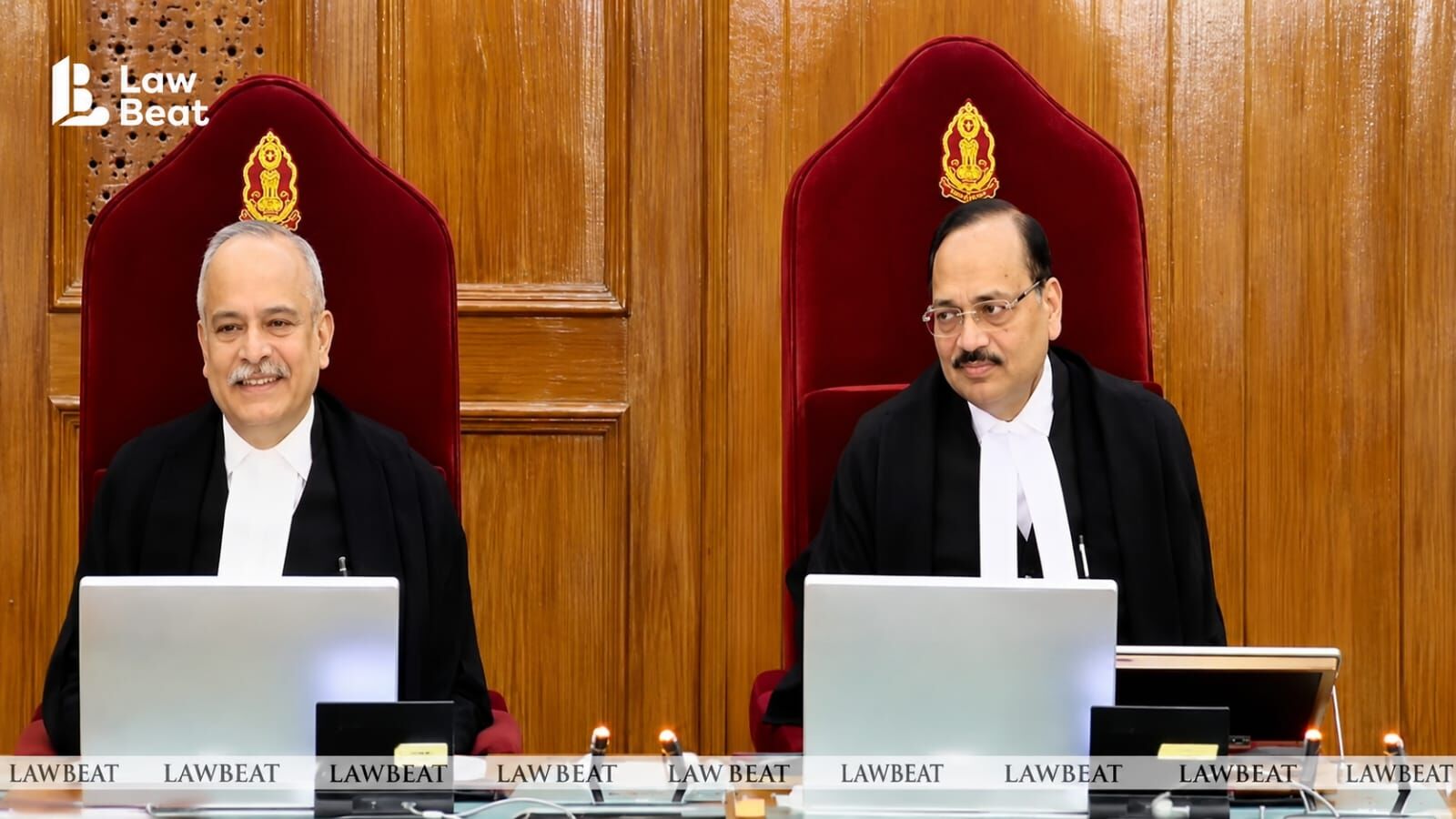
Supreme Court tenure marked by high authorship
During his Supreme Court tenure, Justice Sharma authored 41 judgements as part of 73 benches in 2024, yielding an authorship rate of 56 per cent, Supreme Court Observer data showed. In 2025, he authored 47 judgements across 88 benches, maintaining a similar output.
He also sat on benches that emphasised effective safeguards against manual scavenging, citing the Ashok Agarwal case, and ruled that mere call records cannot establish criminal conspiracy, the Observer and SCC Online recorded.
The Chief Election Commissioner and other Election Commissioners (Appointment, Conditions of Service and Term of Office) Act, 2023, enacted by Parliament in 2023, governs the appointment and tenure of the Commission’s members.
Section 7 of the Act establishes a selection committee headed by the Prime Minister with the Leader of Opposition in the Lok Sabha and a Union Cabinet Minister nominated by the Prime Minister, replacing the Supreme Court’s March 2023 interim mandate that included the Chief Justice of India.
The Election Commission of India supported the Union government’s demand for a Constitution Bench reference to adjudicate the validity of this 2023 Act, a position that prevailed when Justice Satish Chandra Sharma disagreed with Justice Dipankar Datta’s view that a larger bench was unnecessary.
Strength drops to 36 judges
With Justice Sharma’s retirement, the Supreme Court’s sitting strength falls to 36, two short of the sanctioned strength of 38. His tenure of just over three years is shorter than those of Justices A.G. Masih (4.3 years) and Sandeep Mehta (4.2 years), who were appointed the same day, the Supreme Court Observer said.

Search Halted for 14 Miners After 13 Bodies Recovered at Pongkor Mine
Search and rescue officials halted operations for 14 missing miners at an illegal gold mine in Pongkor, Bogor,...

Omega-3 and Aspirin Show Promise but Trial Excluded High-Risk Patients
A Brazilian trial suggests omega-3 supplements and low-dose aspirin could replace antibiotics for severe gum disease, but the...

Gardaí Seize Components and Detain Man During West Cork Searches
Gardaí seized firearm components, ammunition, cash and electronic devices during a two-day search in west Cork and detained...

Merv Hughes Warns Older Australians of RSV Risk After ‘Tumble Dryer’ Illness at 65
Former Australian Test cricketer Merv Hughes, marking his 65th birthday, is urging older Australians to understand their personal...