
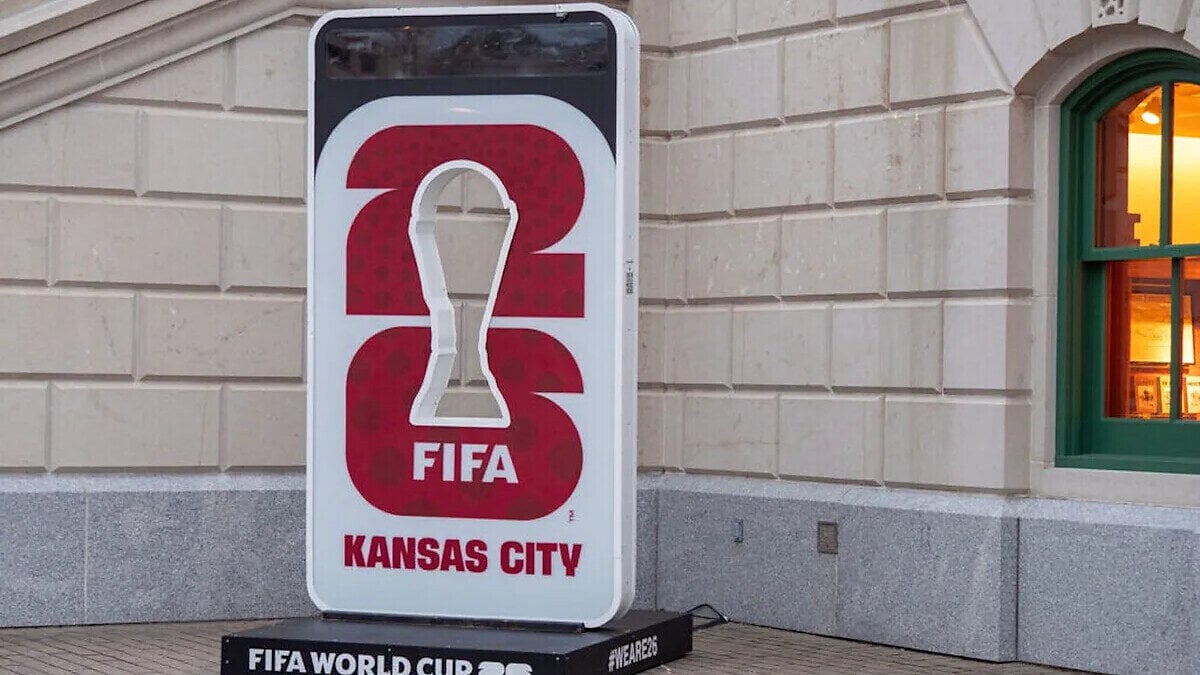
Kansas City collected an estimated $6.7 million in additional summer tax revenue from the 2026 FIFA World Cup, less than one-fifth of the $35 million projection that helped justify a $15 million public commitment to the local organizing committee.
The City Council voted in July 2023 to give KC2026 $15 million over three years, citing the $35 million tax-revenue estimate. The council’s separate $652.6 million economic-impact figure came from the Kansas City Sports Commission.
But sales from January through May, before any match, were already running 6.8% ahead. Adjusting for that pre-existing growth, the tournament produced only about $4 million in extra sales tax. In August, the first full month after the tournament, tax revenue was up just 2.6%.
Hotel taxes rose $1.7 million from June through August compared with 2025, about $1.5 million above trend. The gain came largely from higher room rates, not more guests.
Restaurant taxes rose $1.4 million over the same months, about $1.1 million above trend, but fell 6.7% in September and October, suggesting some summer spending was shifted from other months rather than entirely new. Short-term rental taxes earmarked for the city’s $15 million contribution brought in only about $60,000 more than in 2025, and earnings tax withholding showed no bump at all.

Even those gains overstate the benefit to the general budget. Convention and tourism taxes go to their own fund, which the city’s July financial report shows was up just 0.8% for the fiscal year.
KC2026’s impact report lists $136.55 million in total funding, about $101 million of it from taxpayers at the federal, state and local levels. Its 2024 tax return shows $361,000 in lobbying expenses.
The agency stated the records “are not just ‘sitting around’ in a single file” and declined to release even the methodology until payment was received.
Earnings tax withholding showed no measurable increase during the tournament period.
The Kansas City Sports Commission produced the $652.6 million figure through Visit KC, its destination marketing unit led by President and CEO Kathy Nelson, applying what it calls an industry-standard methodology across the tournament window of June 11 – July 19, 2026.
The analysis combined KC2026 attendance data, Fan Festival and KC Connect origin figures, and destination group booking records with commercial datasets from Placer.ai, CoStar, AirDNA, Azira, Symphony, and Bank of America card-spending reports covering the nine-county metro area.
“The jump was there before the tournament began”, Helling wrote.
Austin ISD Enrollment Falls to 36-Year Low Below 66,000
Austin ISD enrollment fell below 66,000 students this fall, the lowest level in 36 years, as the district...

UH Mānoa Nursing Gets $3M Grant for Rural Workforce Program
The University of Hawaiʻi at Mānoa School of Nursing and Dental Hygiene has received a $3 million federal...

Surveillance Video Shows Thief Taking ~40 Trees From Scout Troop 351 Lot, $4K Loss
Surveillance video captured a man stealing about 40 Christmas trees from the Scout Troop 351 sales lot in...
Deion Sanders Says He Wants to Return to Colorado After 5-7 Season
Colorado finished 5-7 after a 47-28 win over UCF on Saturday, leaving Deion Sanders' future uncertain after an...