University of Hawaii researchers found Kilauea was vigorously building its shield 200,000 years ago, even as the 56th lava fountaining episode pauses, burying the caldera under new rock.
Kilauea’s 56th lava fountaining episode since December 2024 paused on November 5, leaving the inner caldera buried under hundreds of yards of new rock and the volcano’s deeper history harder to reach, Hawaii Tribune-Herald reported.
- Episode 56 ended November 5 after six hours of fountaining in Halema‘uma‘u.
- Summit tilt switched to inflation; episode 57 forecast for November 21–24.
- Nearly 90% of Kilauea’s surface repaved by lava in the past 1,500 years.
- Drill cores show vigorous shield building at least 200,000 years ago.
Caldera refilled, 2018 collapse features lost
The current eruptive sequence, which began in December 2020 and resumed with episodic fountaining in December 2024, has filled the inner caldera with lava flows hundreds of yards thick, obscuring structures formed during the 2018 caldera collapse, according to the Volcano Watch article by Hawaiian Volcano Observatory geologist Drew Downs.
Tephra from the fountains has also blanketed large areas of the upper Southwest Rift Zone under multiple yards of material. “For those wishing to understand the eruptive processes of even the recent past of Kilauea, this can be challenging in places near the summit and rift zones due to frequent activity,” Downs wrote.
Surface geology largely younger than 1,500 years
A 2021 statewide geologic map series, cited by the Hawaii Tribune-Herald and KauaiNow, shows that nearly 90% of Kilauea’s surface has been repaved by eruptive activity over the past 1,500 years.
The long-lived Pu‘u‘o‘o eruption alone covered 144 square kilometers (55.6 square miles) of the middle East Rift Zone from 1983 to 2018, while the earlier Maunaulu eruption reached the coast from 1969 to 1974. West Hawaii Today said that studying the ancient past is “all but impossible except for a few localized outcrops.”
Drill cores provide deepest time markers
Researchers from the University of Hawaii at Manoa analyzed rocks from a 1.1-mile (1.7 km) deep drill core in the East Rift Zone, calculating ages that indicate Kilauea was undergoing vigorous shield building by at least 200,000 years ago.
A 0.7-mile (1.2 km) summit core, known as the Keller Well, was drilled in 1979 to study caldera structure and the hydrothermal system above the magma reservoir. “While the cores from these drill holes provide invaluable samples and data, they are limited in that they are a single point and cannot track the downhill extent of eruptive products,” Downs wrote.
Kipuka preserve isolated windows into the past
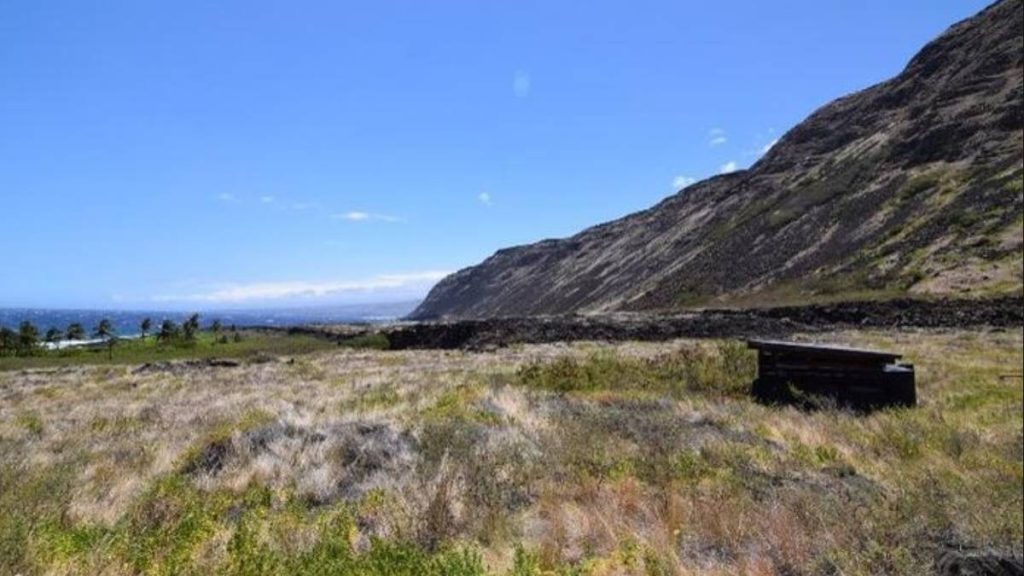
Lava flows create kipuka — islands of older rock and vegetation surrounded by younger flows. “They really stand out in places where new lava just flowed, as these kipuka tend to be a green forested patches in an otherwise black and barren landscape,” Downs wrote.
Investigating kipuka in the Pu‘u‘o‘o flow field offers clues to eruptions that would otherwise be buried. Big Island Video News published USGS photographs showing a vegetated kipuka with reddish-tan lava amid the darker 1823 Southwest Rift Zone flow, and the slopes of Pu‘ukapukapu near the Halapē backcountry campground.
Next episode forecast for November 21–24
At the end of episode 56 on November 5, the summit region switched from deflationary to inflationary tilt. The forecast window for episode 57 fountaining is November 21–24, the Hawaii Tribune-Herald reported. Sulfur dioxide emissions during pauses remain in the range of several thousand tonnes per day. No unusual activity has been noted along the East or Southwest Rift Zones. Mauna Loa is not erupting and remains at alert level NORMAL.
Related reading

Iowa Defeats Illinois 34-17 After Halftime Tie at Gies Memorial Stadium
Iowa defeated Illinois 34-17 at Gies Memorial Stadium on Saturday after the Fighting Illini held a 17-17 halftime...

Chiefs Rout Cardinals 34-7 Behind Kelce, Johnson Before Brutal Road Stretch
The Kansas City Chiefs routed the Arizona Cardinals 34-7 on Sunday at Arrowhead Stadium, building a 20-point halftime...
Vietnam’s Middle Class Projected at 26% in 2026, Straits Times Reports
Vietnam's middle class is projected to reach 26% of its 102 million people in 2026, double the 13%...

17-Year-Old Escapes Sinking Car After Trying to Save Cousin in Alaska River Crash That Left 2 Dead
A 17-year-old girl escaped a sinking car in Alaska after trying to free her younger cousin, leaving two...