“The submitted petition harkens back to the dark days of New York’s colonial founding, when rights were bestowed only to white, male, property owners,” Ben Basem, a resident and member of FLX Strong, told The Ithaca Voice.
The Lansing Town Board voted 3-2 Wednesday to ban data centers townwide, but the measure sits in legal limbo after TeraWulf, the company behind a proposed artificial intelligence facility at the former Cayuga coal plant, submitted a protest petition that could force a supermajority requirement under New York Town Law.
Town Clerk Debbie Munson did not announce whether the motion passed or failed, a customary step after a vote, leaving the outcome unresolved while officials verify the petition signatures.
The zoning amendment would define and effectively prohibit “cryptocurrency data mine,” “data center,” and “general processing” uses, which are not currently permitted under town code. Deputy Supervisor Joe Wetmore, Board Member Laurie Hemmings, and Supervisor Ruth Groff voted yes.
Members Judy Drake and Christine Montague voted no, arguing a ban was too broad and favoring a moratorium instead. “I love our trails and natural areas and will fight to preserve them. But I believe that we can also support clean modern industry and industrial places that brings in good jobs and lowers our taxes,” Montague said.
The petition, announced Tuesday at a packed public hearing at Lansing Middle School, was signed by 71 individuals representing 202 tax parcels. Gaibrielle Bryant, TeraWulf’s vice president of community engagement, told The Ithaca Voice the signatories own more than 20% of the land directly impacted by the zoning change.
“That level of support means that at least four board members need to vote yes for this ban to pass,” she said, citing the state statute. Some signers, like Cayuga Crushed Stone president Thomas Besemer, appear dozens of times for separate parcels they hold, alongside representatives from Cook Farms and Willet Dairy.

The coal ash legacy
The proposed site has serious environmental problems. The former plant property holds a roughly 40-acre coal ash pile that scored 37.63 on the Hazardous Ranking Score in a 1994 state report, well above the 28.5 minimum for the federal Superfund list, dailyithaca.com reported.
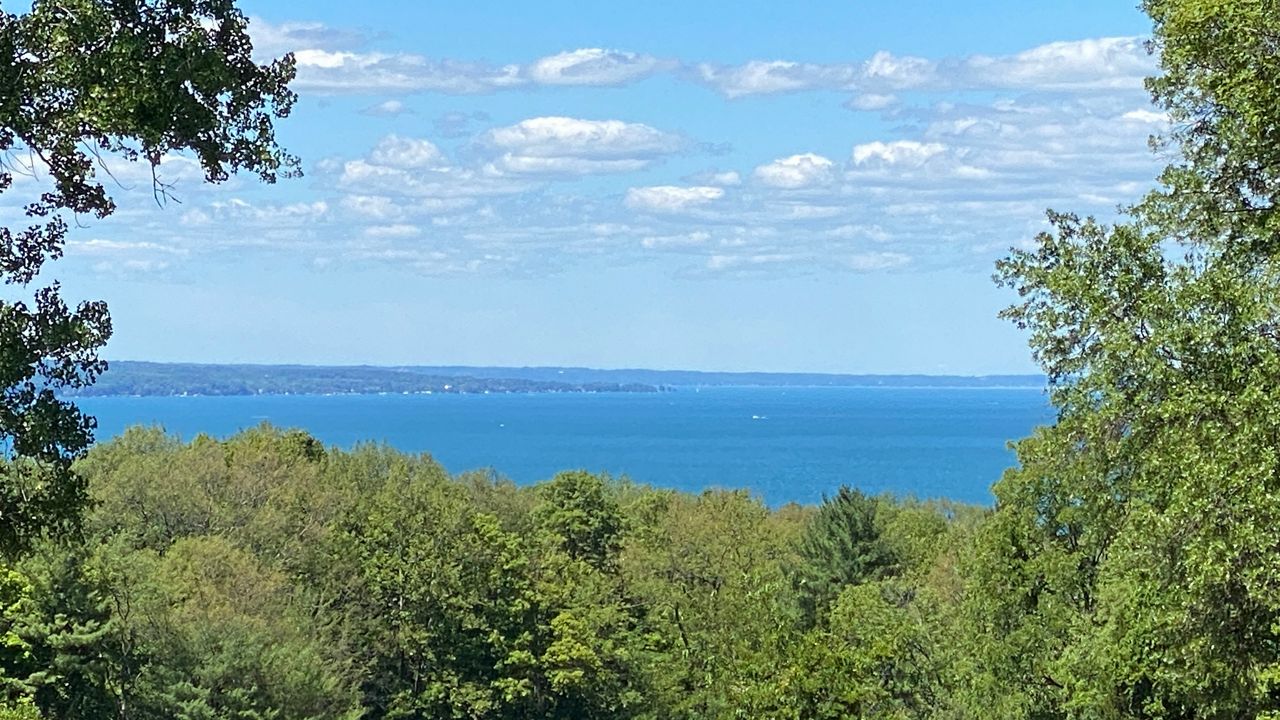
TeraWulf subsidiary Lake Hawkeye LLC signed an 80-year lease for the site in August 2025. The company wants to build an AI data center on the shores of Cayuga Lake, a plan that has drawn sustained opposition over noise, water quality, electricity demand, and the potential for cryptocurrency mining. Kathy Hochul signed a one-year moratorium on hyperscale data center environmental permitting in July 2025, adding a state-layer pause to the local fight.
Conflict costs town over $200,000 in FOIL responses
The conflict has already exacted a financial toll. Responding to Freedom of Information Law requests from TeraWulf cost the town more than $200,000 between October 2025 and mid-June, dailyithaca.com reported. In November 2025, TeraWulf filed an Article 78 petition challenging the supervisor’s FOIL responses. The company previously forced the withdrawal of a town moratorium on large developments through legal threats.
“The CEO of TeraWulf said that if we passed a ban on data centers he would sue the community and bog us down in litigation for years,” Ithaca resident Jusin Brush said at Tuesday’s hearing. “He’s saying that he will force this data center into this community whether we want it or not.”
Assemblymember Anna Kelles echoed that sentiment, telling the board their job is to represent constituents, “not a corporation that has sued us, harassed us, bullied us with endless FOILs and emptying our coffers and making taxpayers pay for those bills.” Kelles has criticized TeraWulf’s tax disputes in Somerset, New York, where the company operates its Lake Mariner data center.
Engineering the noise
Not every elected official sees the project as a lost cause. Tompkins County Legislator Mike Sigler, a Republican representing Lansing, said Wednesday he was optimistic TeraWulf could solve the noise concerns. He pointed to SpaceX catching a returning rocket booster with mechanical arms as proof of engineering capability.
“We really can’t do this? We don’t have the engineering chops to make it not have noise? That’s what we’re saying? We can’t really figure that out? I think we can,” Sigler said.
Residents opposed to the ban suggested negotiating a community benefit agreement instead. One speaker told the board the town had not accurately captured resident views before introducing the ban. Emily d’Alessandro, a Lansing resident, said “saying no is the easy answer.”
TeraWulf, incorporated in January 2021 by energy executives Paul Prager and Nazar Khan, became a publicly traded bitcoin miner on the Nasdaq through a reverse merger later that year. The company operates its flagship Lake Mariner facility in New York on land leased from a Prager-controlled entity, to which it also paid $20.3 million in management fees in 2023.
An investigative report in 2024 challenged TeraWulf’s “zero-carbon” claims, noting its ties to a coal plant revival in Montana. The firm is now pivoting toward AI infrastructure, announcing a $19 billion lease with Anthropic at a Kentucky campus in July 2026.
Petition review ongoing; four-vote threshold unlikely
Town officials are still verifying the petition, and it remains unclear when that review will conclude. If the petition is validated, the ban would need four of five votes to pass — a threshold the current board composition does not meet. TeraWulf said in a statement to Spectrum Local News it is committed to remaining in Lansing for the long run.
Related reading
Gov. Kay Ivey Announces Mobile Bridge Financing Named 2026 Southeast Deal of the Year
Gov. Kay Ivey announced Thursday that the $3.786 billion financing package for the Mobile River Bridge and Bayway...

Twins Announce Two-Year, $55 Million Deal With Sonny Gray
Sonny Gray is heading back to Minnesota on a two-year, $55 million deal that includes an opt-out after...
Vermont Chamber, Tourism Dept. Open 2027 Marketing Enrollment
The Vermont Chamber of Commerce and the Vermont Department of Tourism and Marketing opened enrollment this week for...

Blue Raiders Open 2026 Paradise Jam Against Temple in First Meeting Since 2006
Middle Tennessee State University Athletics reported Friday that the Blue Raiders, sitting at 4-1, will open the 2026...