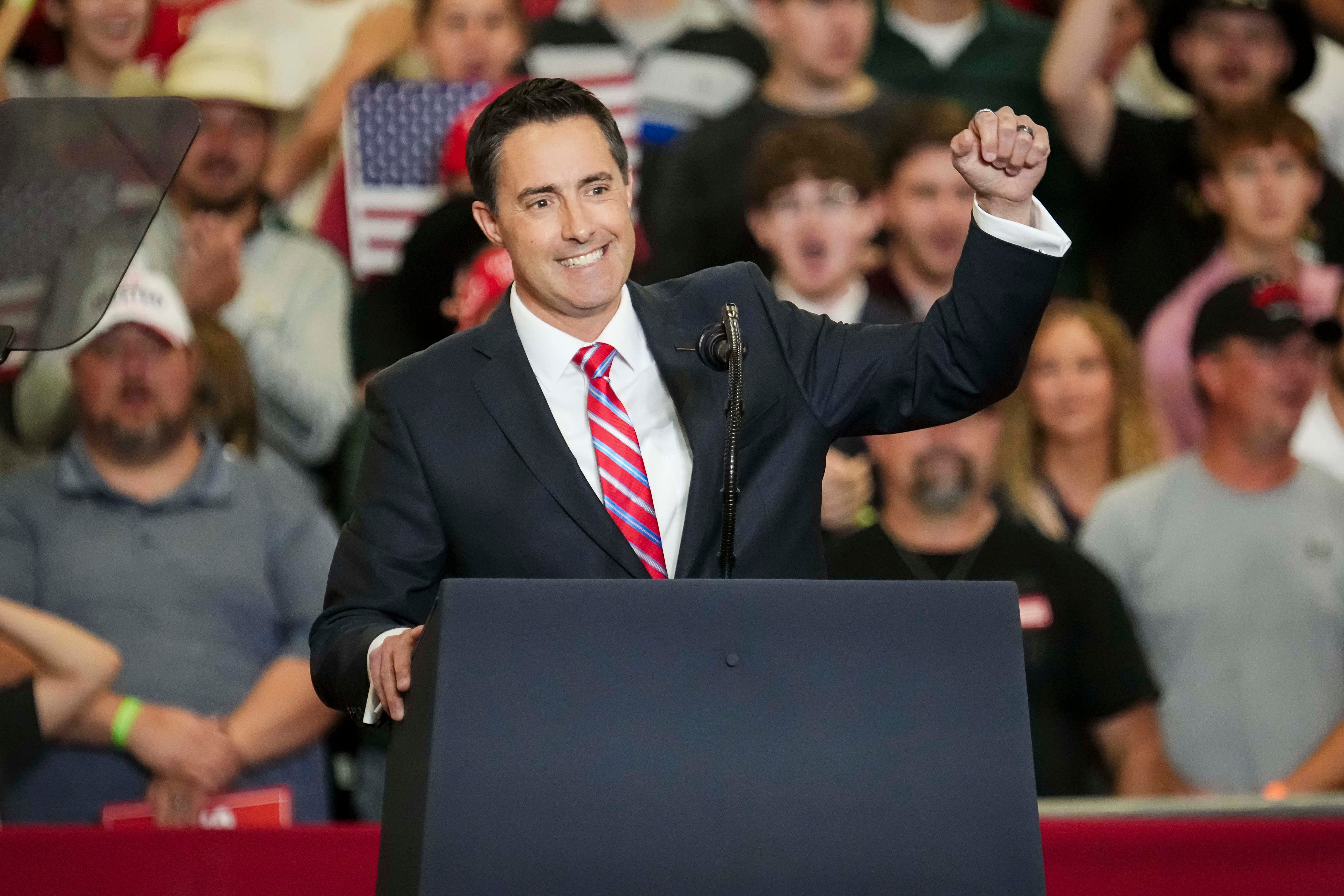
Ohio Secretary of State Frank LaRose refused Friday to break deadlocked votes in Hamilton and Delaware counties, leaving provisional ballots uncounted in races separated by only a handful of votes.
The decision freezes the outcome in a state legislative race where Republican Rep. Cindy Abrams of Harrison faces a close race in Hamilton County and a Delaware County commissioner contest where Republican Renee Vaughan holds a slim unofficial lead over Democrat Ryan Grissinger.
County boards in both counties split over whether to count ballots cast by voters who moved between counties and voted at a polling place rather than the board of elections office. LaRose, in letters sent Friday, wrote that the matter was “not suitable for a tie-vote determination” and declined to issue a substantive ruling.
His office advised the boards that a 3-1 vote is required to count the ballots; without it, the ballots will be rejected. Hamilton County’s board convened an emergency meeting at 4:30 p.m. Friday to weigh next steps, while the Ohio Supreme Court considers a parallel challenge from a GOP legislative candidate in Lucas County where officials have already counted similar ballots.
The procedural trap
The dispute centers on a specific subset of provisional ballots: those cast by registered voters who moved from one Ohio county to another but voted at their new polling location on Election Day instead of traveling to the county board of elections. Republicans in six counties challenged these ballots, arguing they should not be counted because the voters did not vote at the county board of elections.

Election officials in Hamilton and Delaware counties deadlocked on the challenges. LaRose determined Friday that this particular dispute does not meet the threshold for a tie-vote determination.
“Because I find that this matter is not suitable for a tie-vote determination, I will not issue a substantive decision,”
The practical effect is immediate: if the boards remain divided along partisan lines, the ballots stay sealed. In Hamilton County, 740 provisional ballots hang in the balance. In Delaware County, the number of affected ballots has not been publicly specified, but the margin in the commissioner race is similarly razor-thin.
Voters followed instructions, advocates say
Voting-rights advocates argue the voters being penalized did exactly what poll workers told them to do. The League of Women Voters of Ohio said its organization was “very disappointed” in LaRose for what it called “hiding behind procedural excuses.”
“These ballots should not be thrown out simply because they were filled out at a polling location rather than a board of elections. Poll workers gave them these instructions in good faith and these Ohio voters followed the instructions that were given to them. It should not be complicated. These ballots should count.”
During Friday’s emergency meeting, Democrat Alex Linser moved to approve the ballots but keep them separated in case of a court decision. That effort was rejected, leaving the board at an impasse. The board indicated it would not count the ballots unless a court orders them to.
Lucas County precedent looms
LaRose pointed the county boards toward the Ohio Supreme Court, which is reviewing a case from Toledo’s Lucas County. There, election officials counted the same category of provisional ballots. A GOP state legislative candidate challenged that decision, creating a direct conflict: ballots counted in one county, rejected in two others, all under the same state law.
The Ohio Secretary of State has overseen elections since statehood in 1803, though the office was chosen by the General Assembly for its first half-century. The 1851 constitution made it a statewide elected post, and a 1954 amendment lengthened the term to four years, setting elections in off-cycle even-numbered years.
The court’s eventual ruling could resolve the discrepancy retroactively. Until then, the races in Hamilton and Delaware counties remain officially undecided, with no certification date in sight.
Related reading

Illinois Man Charged With Generating Child Abuse Material Using Super Intelligence
By ByteWire News Staff NEWARK, N.J. — Friday, November 20, 2026 Federal prosecutors charged a 47-year-old Joliet, Illinois...

No. 3 West Virginia Targets NCAA Cross Country Title After Record Regional Win
West Virginia put four runners across the line before most teams had one, scoring a program-record 19 points...

UCA Bears Open ASUN Crossover at Jacksonville, North Florida
The University of Central Arkansas Bears step onto the floor at Swisher Gymnasium on Saturday afternoon carrying a...

Downtown Development Review Board Grants Final Design Approval for UF LaVilla Building
Jacksonville's Downtown Development Review Board voted 7-0 Thursday to grant final design approval for the University of Florida's...