
Las Vegas, Nevada, is a major metropolitan hub located in the Mojave Desert, roughly 260 miles northeast of San Diego, California. Known globally as the Entertainment Capital of the World, the city serves as a primary economic engine for the region, anchored by a 4.2-mile stretch of resorts and casinos known as the Strip.
Spanish Origins and Urban Growth Define Las Vegas
The city’s identity is inextricably linked to the landscape. The name Las Vegas translates from Spanish to “The Meadows,” a nod to the natural spring-fed oases that once provided a critical water source for early travelers and settlers crossing the harsh Mojave terrain. This geography determined the city’s early viability, but its modern footprint has expanded well beyond those original springs.
Today, the city supports a population exceeding 650,000 residents, a figure that swells significantly when accounting for the millions of visitors who arrive annually. The urban layout remains deeply segmented. While the Strip serves as the high-visibility corridor for tourism, the surrounding residential areas—such as Summerlin and Henderson—provide the infrastructure for a permanent workforce and suburban life that functions independently of the gaming industry.
Luxury Resorts Drive the Strip While Downtown Preserves History
The Strip operates as the city’s primary economic engine, characterized by a high concentration of luxury resorts like the Bellagio and the Venetian. This 4.2-mile boulevard functions as a dense, high-stakes commercial zone that serves as the primary destination for international tourism. However, the city’s historical core remains anchored in Downtown.

Fremont Street acts as the focal point for this older district, preserving a different era of Nevada’s gaming history. The Fremont Hotel and Casino, which opened in 1956, stands as a legacy structure in this area. Unlike the sprawling, self-contained resorts of the Strip, the Fremont Street Experience utilizes a pedestrian-only model, catering to a different demographic of visitor and maintaining a distinct architectural and cultural footprint.
Beyond the Gaming Floor
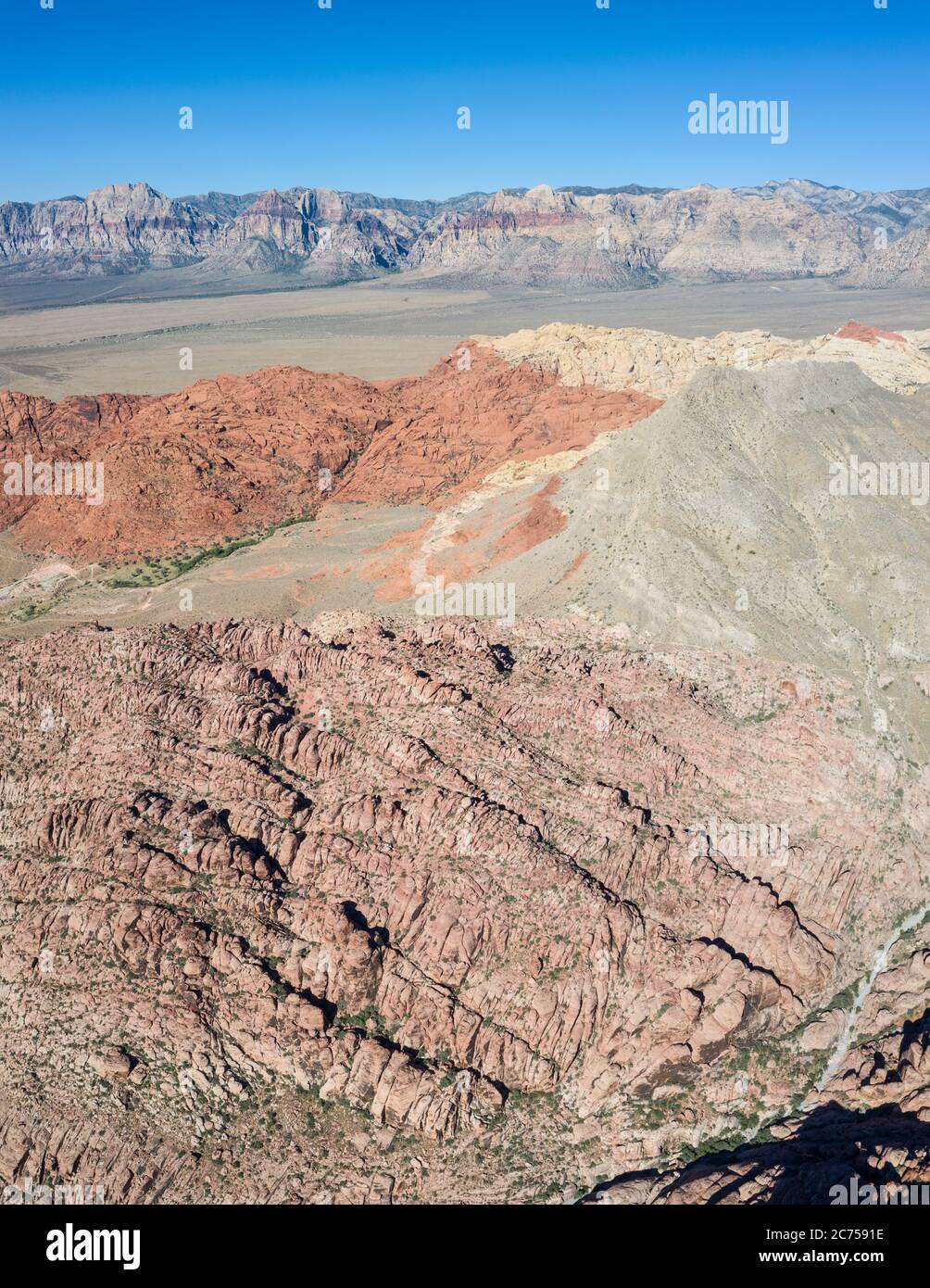
The economic and cultural life of the city is supported by a diverse array of non-gaming attractions. The Arts District has evolved into a center for local creative industries, while the Red Rock Canyon National Conservation Area and the Valley of Fire State Park offer access to rugged landscapes that contrast sharply with the neon-lit interior of the city.
These natural assets are managed by federal and state agencies, providing a necessary recreational balance for both the local population and tourists.
Entertainment remains a specialized industry within the city. Productions such as O at the Bellagio, Le Rêve at the Wynn, and Absinthe at Caesars Palace represent a high-production value model that requires significant infrastructure and specialized labor.
These venues operate on a business model that integrates performance, hospitality, and fine dining, exemplified by high-end culinary destinations like Joël Robuchon at the MGM Grand and E by José Andrés at the Cosmopolitan.
Logistical Realities for Visitors
Navigating the city requires an understanding of its specific transit and safety patterns. The Regional Transportation Commission of Southern Nevada (RTC) provides the primary public transit framework, supplemented by the Las Vegas Monorail and private ride-sharing services. For those planning a visit, logistics are a primary concern given the density of the Strip.
Travelers are advised to research and book accommodations, shows, and attractions in advance to take advantage of exclusive deals and packages.
Security and public safety remain constant topics for local authorities. As is typical for major international tourist destinations, visitors are advised to maintain situational awareness, particularly in high-traffic pedestrian zones. While the city offers a wide range of experiences, the most effective way to navigate the environment is to plan around established traffic patterns and utilize the designated pedestrian corridors.
The city continues to evolve, balancing its historical reliance on the gaming industry with a growing emphasis on residential growth, outdoor recreation, and large-scale entertainment production. For travelers or those looking at the city’s long-term economic trajectory, the reality of Las Vegas is found in the interplay between its desert environment and its high-density urban core.

Madison Voters to Consider Setback Rules, ATV Access and Cannabis Laws
Madison voters gather on Tuesday at the Main Street Middle School auditorium to decide whether to shrink the...

Washington State Crushes Colorado State 73-7 in Rushing Dominance
Washington State rushed for 535 yards and nine touchdowns on Saturday night at Gesa Field, routing Colorado State...

Virginia State Gets 24 Bench Points in 80-66 Victory Over East Stroudsburg (PA)
Virginia State men's basketball leaned heavily on its bench production to secure an 80-66 victory over the East...

Burlington Infant Westen Hagen Needs Liver Transplant to Survive
Ten-month-old Westen Hagen needs a live liver donor to survive a rare genetic condition, FOX6 News Milwaukee reported....