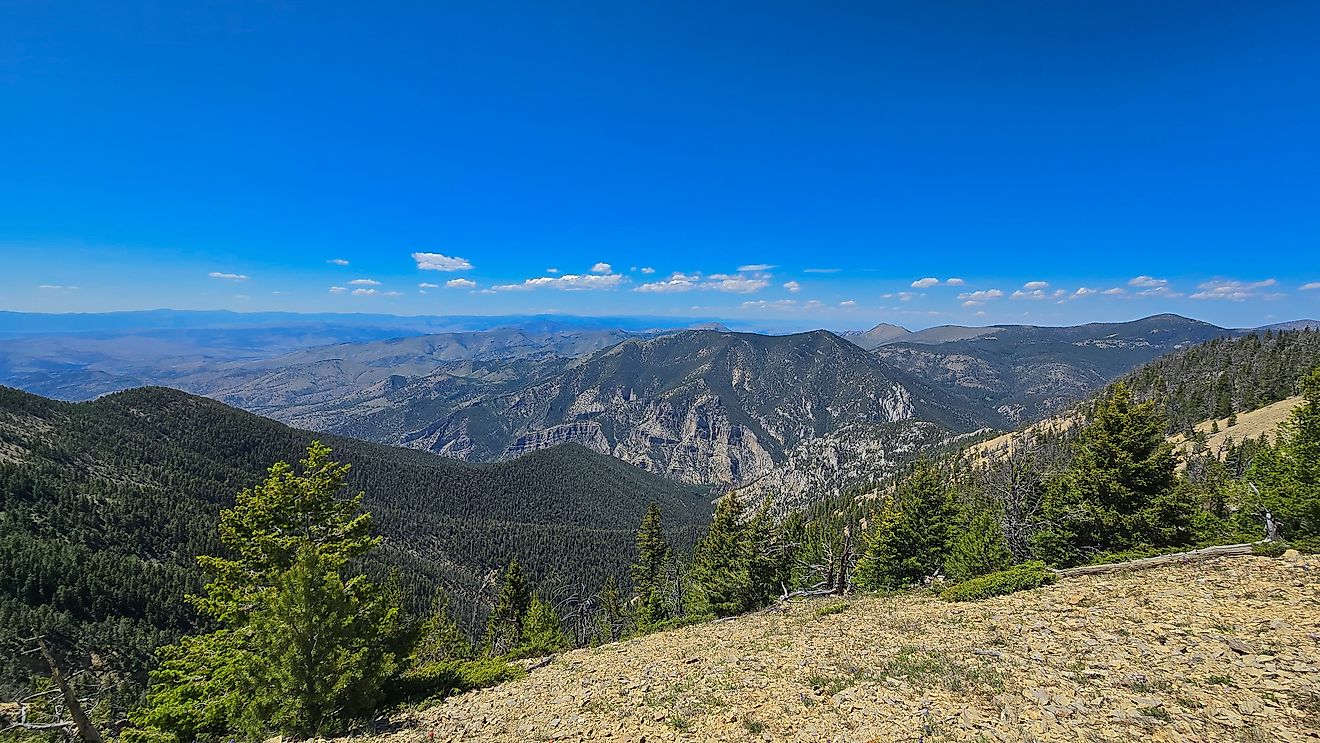
Lewis and Clark National Forest in Montana logged 269,000 visits in its survey year, while Nantahala-Pisgah in North Carolina drew 5.1 million — a nineteen-to-one gap that has nothing to do with scenery and everything to do with who lives within driving distance.
The U.S. Forest Service counts visitors through its National Visitor Use Monitoring program, but it does not rank the forests. Each unit is surveyed roughly once every five years on a rotating schedule, so a forest measured in 2012 cannot be lined up against one measured in 2022. World Atlas reported that anyone publishing a definitive “least-visited” list is reading more into the data than it supports.
What the numbers do show clearly is that remoteness from population centers, not a lack of beauty, drives the totals. Over half of all national forest visits come from people living within 50 miles of the boundary, and about one-fifth travel more than 200 miles. More than 15 percent of visits come from locals who return more than 50 times a year. A forest’s visitor count is largely a function of its catchment area.
“The NVUM data answers the question of why some forests are empty more directly than any ranking could,” the report said, highlighting that proximity explains most of the variance across the system.
Lewis and Clark’s FY2012 survey recorded 361,000 site visits, with designated wilderness accounting for just 23,000 of them. The average group size was 2.8 people, and the average vehicle carried 2.2 axles — a quiet indicator of the pickup-and-trailer traffic typical of rural recreation. At that forest, 80 percent of visits involved only a single site; system-wide, the figure runs between 82 and 93 percent. Visitors drive to one trailhead or campground and go home.
Utah’s Manti-La Sal appears in the FY2018 Intermountain Region report with 352,000 day-use developed site visits and 387,000 in the comparison column. It sits in two separate blocks — one above Moab, one in central Utah — high country surrounded by desert that limits the season and casual traffic.
Kisatchie, Louisiana’s only national forest, draws overwhelmingly local visitation; non-local segments there register some of the smallest figures in the southern region. A forest in a state with no alpine draw collects day users from nearby towns and very little else.
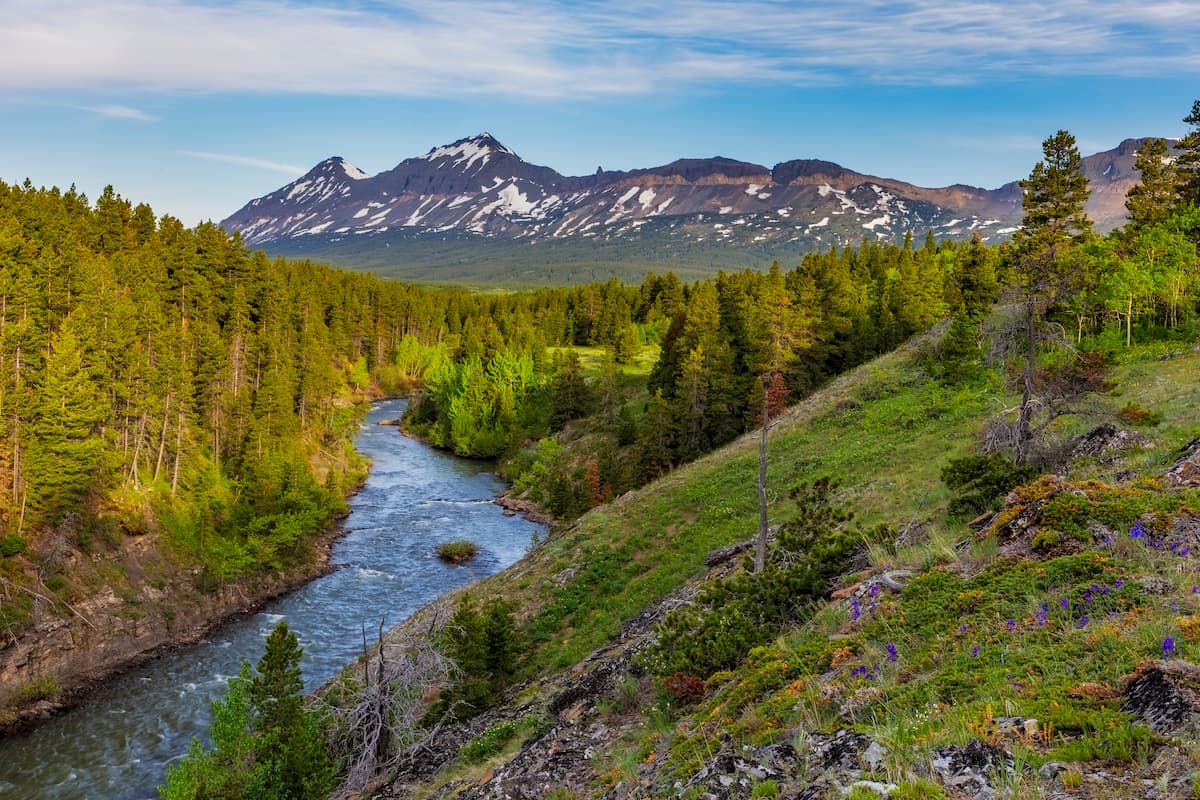
Nebraska National Forest is unusual on its own terms. Much of its tree cover in the Sandhills is the result of deliberate planting rather than natural forest. The Dismal River runs through it, and McKelvie carries planted ponderosa pine. A hand-planted forest in a grassland state, hours from any city, was never going to trouble the visitation tables.
System totals keep rising. National forest visits climbed from about 150 million in the FY2014–2018 window to 159 million for FY2018–2022, and 164 million in the 2024 report — an average increase of roughly 600,000 visits a year. A pandemic-era shift toward dispersed, uncrowded settings pushed daily visitation up in general forest areas specifically. The quiet forests are getting quieter in relative terms because the overall tide is rising.
No agency publishes a least-visited national forest. The staggered five-year survey cycle makes a league table impossible. What the data does support is naming forests with genuinely low recorded numbers: Lewis and Clark at 269,000, Manti-La Sal in the mid-300,000s, and Kisatchie and Nebraska drawing almost entirely local traffic.
Against Nantahala-Pisgah’s 5.1 million, those are rounding errors. The reason is not scenery. Over half of all visits come from within 50 miles, and these forests do not have fifty miles’ worth of people.
Keep reading
Seventeen Senate Work Days Remain This Year to Pass a Farm Bill That Has Been Stalled
Seventeen Senate work days remain this year to pass a farm bill that has been stalled since the...

Montgomery Parks Starts Winter Programming With Holiday Events as Three Bike Parks Close for Repairs
Montgomery Parks kicks off its winter programming this week with a slate of holiday events that runs through...

Salem to Host Free ‘Trick or Turkey?!’ Event Nov. 20 After Nor’easter Postponed Trick-or-Treat
Salem swapped its downtown Halloween parade for a school gymnasium on Friday, two months after a September nor'easter...

North Dakota Bipartisan $25 Insulin Cap Enacted; Self-Funded Plans Excluded
North Dakota enacted a bipartisan law capping insulin costs at $25 for a 30-day supply on state-regulated plans....