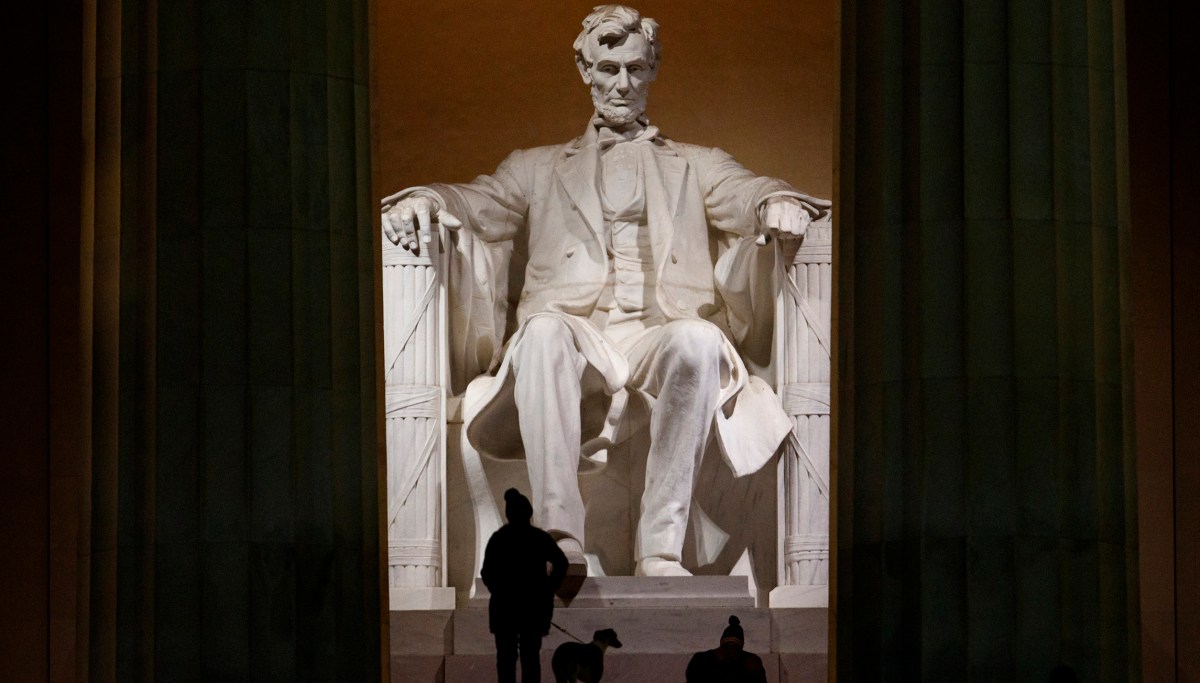
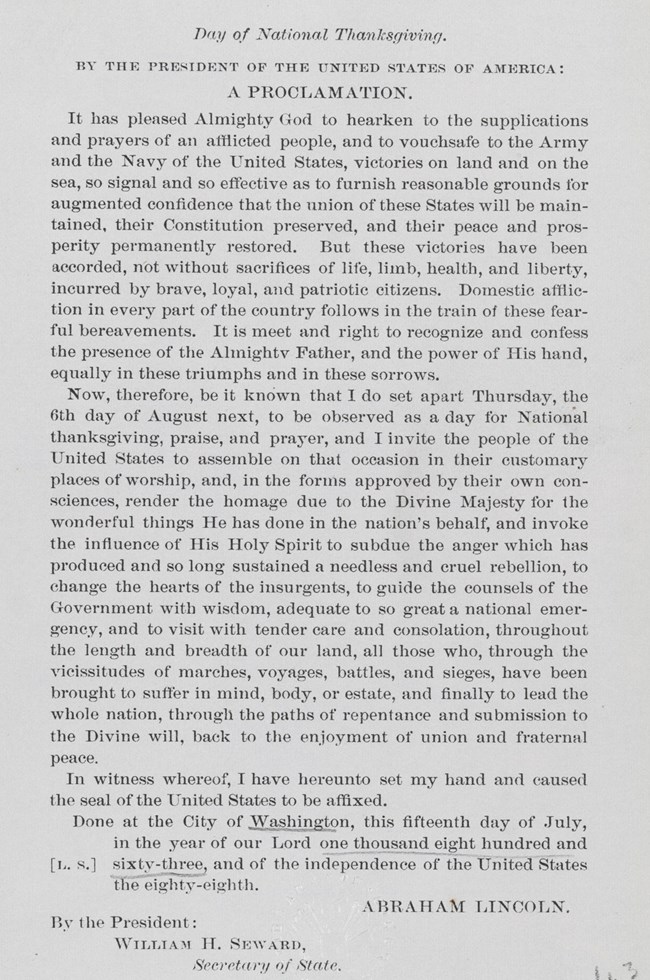
President Abraham Lincoln issued a proclamation on Oct. 3, 1863, inviting “fellow citizens in every part of the United States, and also those who are at sea and those who are sojourning in foreign lands, to set apart and observe the last Thursday of November next, as a day of Thanksgiving.”
This would eventually become the modern Thanksgiving holiday.
The proclamation acknowledged the blessings of the past year despite the ongoing Civil War.
“The year that is drawing towards its close has been filled with the blessings of fruitful fields and healthful skies. To these bounties, which are so constantly enjoyed that we are prone to forget the source from which they come, others have been added which are of so extraordinary a nature that they can not fail to penetrate and soften even the heart which is habitually insensible to the ever-watchful providence of Almighty God.” Lincoln wrote.
In the midst of the conflict, Lincoln said that “peace has been preserved with all nations, order has been maintained, the laws have been respected and obeyed, and harmony has prevailed everywhere, except in the theatre of military conflict.”
He attributed the nation’s strength to divine providence, stating “No human counsel hath devised, nor hath any mortal hand worked out these great things. They are the gracious gifts of the Most High God, who, while dealing with us in anger for our sins, hath nevertheless remembered mercy.”
Lincoln called for a day of gratitude and prayer, urging Americans to “commend to His tender care all those who have become widows, orphans, mourners, or sufferers in the lamentable civil strife in which we are unavoidably engaged.” The proclamation was signed in Washington on Oct. 3, 1863.
Lincoln’s Timeline
- November 21, 1860: President-elect Lincoln arrives in Chicago, Illinois to meet Hannibal Hamlin, his Vice President-elect.
- November 19, 1863: President Lincoln delivers the Gettysburg Address at the new soldiers cemetery in Gettysburg, Pennsylvania.
- November 20, 1863: President Lincoln writes to Edward Everett, the principal speaker at Gettysburg, thanking him for his “kind remarks” about the Gettysburg Address.
Keep reading

Indian Pueblo Kitchen Serves Native Cuisine at Cultural Center on Route 66
Along Route 66 in Albuquerque, a museum café has become a destination for Native American cuisine, drawing locals...
Contra Costa Mayors and Officials Issue Joint Statement Following ICE Enforcement Activity
Federal immigration enforcement activity in Contra Costa County has prompted nine mayors and dozens of local elected officials...
Light on Trail Pierre-Percée 2027 Set for 4 April with Three Distances
The 2027 edition of LIGHT ON TRAIL Pierre-Percée will take place on Sunday 4 April 2027, with three...

Ohio Family Searches for WWII Bronze Star Sold at Tennessee Thrift Store
An Ohio family is searching for a World War II Bronze Star medal belonging to their grandfather, Robert...