
The 2027 living wage for Bergen County, New Jersey, stands at $38.46 an hour per worker for a typical family of four, Living Wage for Us reported.
The calculation assumes full-time work at 2,080 hours a year and about 1.75 full-time-equivalent workers per household, producing a required pre-tax income of $11,647 a month, or $139,768 annually, according to Living Wage for Us. The rate uses cost-of-living data from Essex County, the lowest-cost commuting county within a one-hour radius; using Bergen County’s own costs would yield $42.18 an hour.
Housing consumes the largest share of the monthly budget at $2,057, followed by health care at $1,664 and taxes at $1,872, Living Wage for Us data show. Food, transportation, care and other necessities each range between $1,268 and $1,453, with a $466 resiliency margin for unexpected costs.
If a single earner supported the family, the required wage would reach $67.20 an hour, Living Wage for Us noted.
In New Jersey, 20.2% of two-adult families with children rely on one earner.
The MIT Living Wage Calculator, using 2026 data, estimates a living wage of $36.87 an hour for the same two-adult, two-child household with both adults working, compared with a state minimum wage of $15.92 and a poverty wage of $7.93, MIT reported.
Occupational averages in the region run far higher: computer and mathematical roles pay $122,030 a year on average, while business and financial operations average $104,360, MIT data show.
Living Wage for Us offers two employer certifications: a Leading Living Wage Certification at the full $38.46 rate and a Pledged Living Wage Employer tier set at $21.00 an hour, with annual checks to close gaps at 3% of wages for workers below the threshold.
The family’s required pre-tax income is $139,768 a year, and the organization divides that by 2,080 hours multiplied by 1.7471 typical workers per family to reach $38.46 an hour, Living Wage for Us reports.
The MIT Living Wage Calculator draws its poverty wage from the Department of Health and Human Services’ 2026 Poverty Guidelines, converted from an annual value to an hourly figure for comparison, and its minimum wage from the Labor Law Center as of January 2026, MIT states.
The $11,647 monthly budget allocates 17.7% to housing at $2,057, 16.1% to taxes at $1,872, 14.3% to health care at $1,664, 12.5% to other necessities at $1,453, 12.4% to transportation at $1,441, 12.2% to care at $1,426, 10.9% to food at $1,268, and a 4.0% resiliency margin of $466 for unexpected costs, Living Wage for Us details. The organization emphasizes the figure is a floor, not a ceiling, and notes total compensation including benefits, bonuses or tips can meet the rate, Living Wage for Us says.
Keep reading

Needham Girls Soccer Falls 1-0 to Bishop Feehan in MIAA Division 1 State Final
Needham High School’s varsity girls soccer team fell 1–0 to Bishop Feehan in the MIAA Division 1 championship...

Armenian Rangers Violate Safety Protocols in Brown Bear Release, Wyoming Experts Say
Wyoming grizzly experts said Armenian wildlife rangers violated basic safety protocols during the Oct. 23 release of a...

Kate Troll Urges Juneau to Limit Cruise Ships to Preserve “Poetry of Place”
In a column for the Juneau Independent, longtime Alaskan Kate Troll argues that Juneau must impose daily cruise-ship...
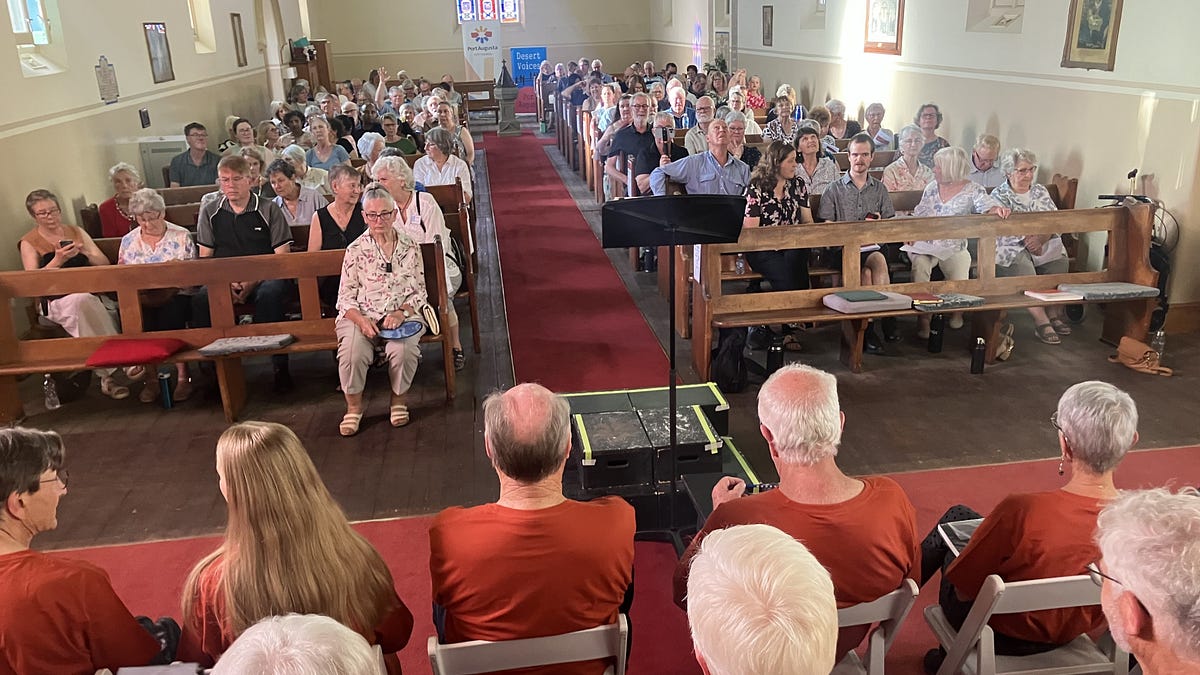
Regional Choirs Unite for Massed Messiah in Port Augusta as Desert Voices Marks 30th Anniversary
Desert Voices marked its 30th anniversary with a massed performance of Handel's Messiah and a satirical "12 Days...