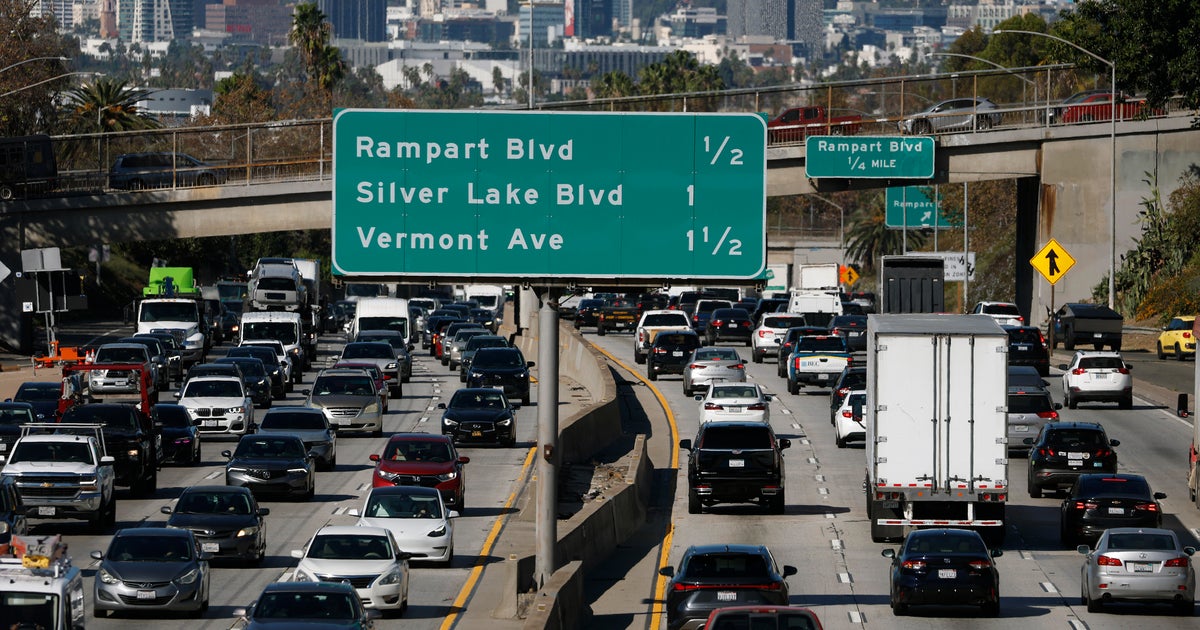
Los Angeles topped a new ConsumerAffairs ranking for worst holiday traffic as Thanksgiving travel began Tuesday, with daily congestion reaching eight hours and 27 minutes — nearly double the national seasonal increase, CBS News reported.
The study of the 50 most populous U.S. metro areas found Los Angeles already led the nation with seven hours and 34 minutes of summer congestion, defined as traffic moving below 90% of free-flow speed. That figure grew 11.7% during the holiday period, compared with a 5.9% national increase, according to ConsumerAffairs data. The seasonal jump adds 53 minutes of daily gridlock.
“When a highway is already operating near capacity, even a relatively tiny increase in traffic can trigger a disproportionately large increase in delays,” said Chenfeng Xiong, assistant professor of civil and environmental engineering at Villanova University, as quoted by the New York Post.
Miami ranked second with six hours and 18 minutes of daily holiday congestion and a 24-minute seasonal increase. Houston placed third at six hours and 22 minutes but with a larger 49-minute jump. Memphis and Seattle rounded out the top five. ConsumerAffairs evaluated metros on congestion duration, seasonal increases, estimated traffic volume and fatality rates under different weather conditions.
| Metro area | Daily holiday congestion | Seasonal increase |
|---|---|---|
| Los Angeles | 8 hours 27 minutes | 53 minutes |
| Miami | 6 hours 18 minutes | 24 minutes |
| Houston | 6 hours 22 minutes | 49 minutes |
| Memphis | 3 hours 14 minutes | 48 minutes |
| Seattle | 7 hours 7 minutes | 18 minutes |
National travel volume rises for Thanksgiving
AAA projects nearly 73 million Americans will travel by road this Thanksgiving, according to the American Automobile Association.
AAA spokesperson Kandace Redd said the holiday rush is officially upon us, with more than 72 million Americans traveling by car. That national figure contrasts with a slight increase in California road travelers versus last year, while the association expects fewer people to travel overall compared with 2025.

Traffic fatalities decline as congestion metrics shift
Memphis recorded three hours and 14 minutes of daily congestion but is associated with higher deadly accidents in both favorable and unfavorable weather, the Economic Times reported.
Drivers can reduce delays by adjusting departure times
Heavy holiday traffic can be avoided by wisely timing trips, the Economic Times reported.
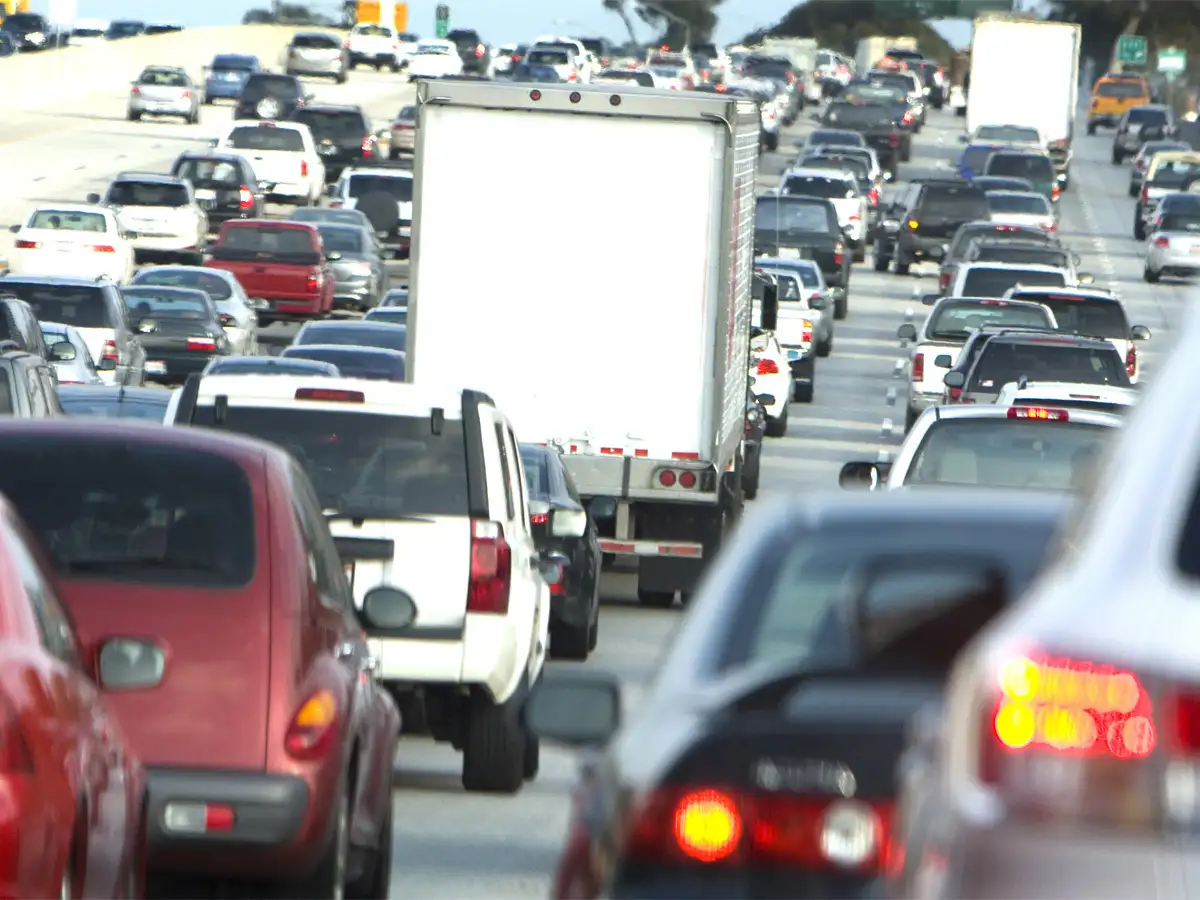
Vehicles travel along State Road 836 in Miami ahead of holiday weekends, illustrating the congestion patterns measured across the top five metros.
Other California cities in the top 10 included San Francisco (fourth), San Jose (ninth) and Riverside-San Bernardino (10th), with San Diego, Fresno and Sacramento also listed. Los Angeles also topped ConsumerAffairs’ overall traffic rankings in May, with average weekday congestion up 36 minutes from the prior year and a 30-minute average one-way commute, the sixth highest nationally.
Nearly 6 million Californians — 87% of the state’s holiday travelers — are expected to drive more than 50 miles between Tuesday and the Monday after Thanksgiving, a slight increase in 2026 versus last year, the Automobile Club of Southern California said. Nationally, AAA projects more than 72 million Americans will travel by car, though the association notes fewer people will travel overall compared with last year.
“Thanksgiving travel, holiday rush — it is officially upon us,” AAA spokesperson Kandace Redd said in a news release. “Most people will be driving. We’re talking about more than 72 million Americans traveling by car, and that includes nearly 6 million right here in California.”
AAA said Tuesday and Wednesday would be the busiest days for rental-car pickups and noted driving “remains the cheapest and easiest way to get around” for holiday travelers.
Thanksgiving also ranks as California’s most “distracted holiday,” according to an Insurify analysis of six major holidays. Drivers in the state spend about 2% more time on their phones than on comparable days, Insurify economic analyst Julia Taliesin said.

Committee Ranks Indiana No. 14; Hoosiers Need Big Ten Title for Automatic Bid
The College Football Playoff selection committee ranked Indiana No. 14 on Tuesday, leaving the Hoosiers needing a Big...
India Mahal Reopens on Thanksgiving in Wilmington After 13 Years
India Mahal, Wilmington's first Indian restaurant, reopens Thursday at 5 p.m. on South College Road, 13 years after...

Madison Proposes Ban on Hyperscale Data Centers
Madison officials on Friday unveiled a proposal that would permanently ban hyperscale data centers and cap any new...
Illinois Hospital Board Recommends License Revocation for Vista, Gateway Regional Medical Center
An Illinois hospital licensing board voted unanimously Monday to recommend that the state suspend or revoke the licenses...