
LSU played forward R.J. Luis in a season-opening win over UL-Monroe on Wednesday, defying an SEC rule barring athletes with professional contracts from returning to conference competition. An East Baton Rouge Parish judge granted Luis a preliminary injunction hours before tip-off, allowing him to suit up while the league threatens disciplinary action that could include expulsion.
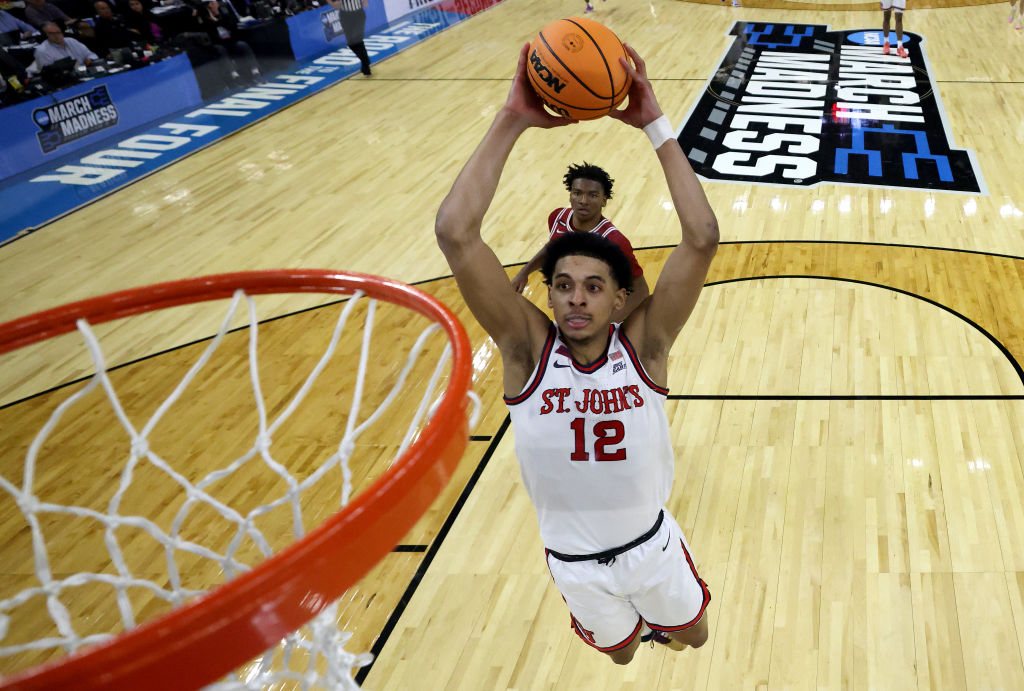
The Tigers won 79-67 behind 11 points and nine rebounds from Luis, a transfer who earned Big East Player of the Year honors at St. John’s last season. He declared for the NBA draft, went unselected, and signed a two-way deal with the Utah Jazz before being traded to the Boston Celtics.
Luis never appeared in an NBA or G League game, but the SEC’s new bylaw — passed in August after Lane Kiffin and Ole Miss plucked players off NFL waiver wires — treats the act of signing a professional contract as a permanent break in collegiate eligibility.
The Louisiana playbook
This is the second time in four months that LSU has used a hometown court order to sidestep an SEC roster restriction. In August, a state judge cleared the way for two football players cut from NFL camps to return to the Tigers’ roster.
The conference relented then rather than escalate. This time, Commissioner Greg Sankey called LSU’s actions “inconsistent with the expectations and responsibilities of membership in the Southeastern Conference,” language multiple athletic directors told ESPN they consider a prelude to sanctions.
Jeff Landry has backed the university publicly, framing the dispute as a state sovereignty issue. “LSU is committed to compliance with the NCAA and SEC rules,” the school said in a statement, “but it is equally committed to obey the orders of Louisiana’s courts.”
The phrasing mirrors the argument Landry’s office made in the football standoff: a federal consent decree governing Louisiana higher education gives state courts the final say on athlete eligibility.
The rule Luis tested
The SEC adopted the “no pro players” amendment on August 23, 2024, by a unanimous vote of the league’s presidents and chancellors. It reads: “A student-athlete who has signed a professional contract… is ineligible for intercollegiate competition in the SEC.”
Luis’s camp argues he began the formal NCAA reinstatement process before that date, so the rule cannot apply retroactively. The conference counters that the bylaw governs status at the moment of competition, not the date paperwork was filed.
Luis’s attorney upped the ante Wednesday by filing a motion asking the court to hold Sankey and the SEC in contempt for the commissioner’s public statement.
Meanwhile, Georgia Attorney General Chris Carr sent a letter to the conference demanding penalties “up to and including expulsion” from a league LSU helped found in 1932. Multiple SEC athletic directors told ESPN they are exploring whether member schools can refuse to play the Tigers without forfeiting NCAA tournament seeding.
Rival coaches see injunction as institutional pattern
Coach Will Wade is central to the subtext. The SEC fired him in 2022 after an FBI wiretap captured him discussing “strong-ass offers” for recruits — conduct that was illegal under the old amateurism model. When name, image, and likeness rules changed, LSU rehired him last spring.
“NIL stands for Now It’s Legal,” Wade joked at his introductory press conference. Rival coaches view the Luis injunction as the same institutional mindset: find the gray area, litigate it, and dare the conference to blink.
A federal judge in Alabama added a surreal sidebar this week. During a hearing on a separate LSU filing accusing the SEC of “hallucinating” legal citations — an allegation the school blamed on AI drafting — the judge demanded “heartfelt” and “robust” public apologies from the university.
Louisiana Attorney General Liz Murrill called the order “improper for an Alabama federal judge to compel speech from the State of Louisiana,” invoking the First Amendment in what one SEC staffer described to ESPN as “the legal equivalent of making fun of the other guy’s mother in a bar fight.”
Luis, a junior wing from Miami, led St. John’s to its first outright Big East regular-season title in 40 years and became the program’s first conference Player of the Year since Walter Berry in 1985-86. He averaged 18.1 points and 7.1 rebounds per game, ranking fourth in the league in scoring and sixth in rebounding.
Injunction holds until full hearing scheduled
The injunction lasts until a full hearing on the merits, which has not been scheduled. The SEC’s next meeting of athletic directors is December 9 in Birmingham. Sankey has authority to impose fines, suspend Luis retroactively, or refer the membership question to the conference’s executive committee.
No SEC school has ever been expelled. The Tigers’ next game is Saturday against Louisiana Tech; the conference has not said whether it will sanction LSU before then.
Keep reading

The Las Vegas Grand Prix was supposed to be a spectacle
The Las Vegas Grand Prix was supposed to be a spectacle. Instead, its debut delivered nine minutes of...
Westin Seattle to Lay off 423 Staff as Operator Change Ends in Late January 2027
WHC Payroll Company will lay off all 423 employees of The Westin Seattle early next year after the...
JLL CFO Kelly House Details Q3 Records, Raised 2026 EPS Outlook on NYSE Live
JLL’s third quarter delivered record revenue and adjusted earnings, giving the firm enough confidence to lift its full-year...

HMRC Dismantles Illegal Cigarette Factory Capable of 200,000 a Day in Lincolnshire Raid
A factory in Lincolnshire was capable of churning out more than 200,000 illegal cigarettes a day before HM...