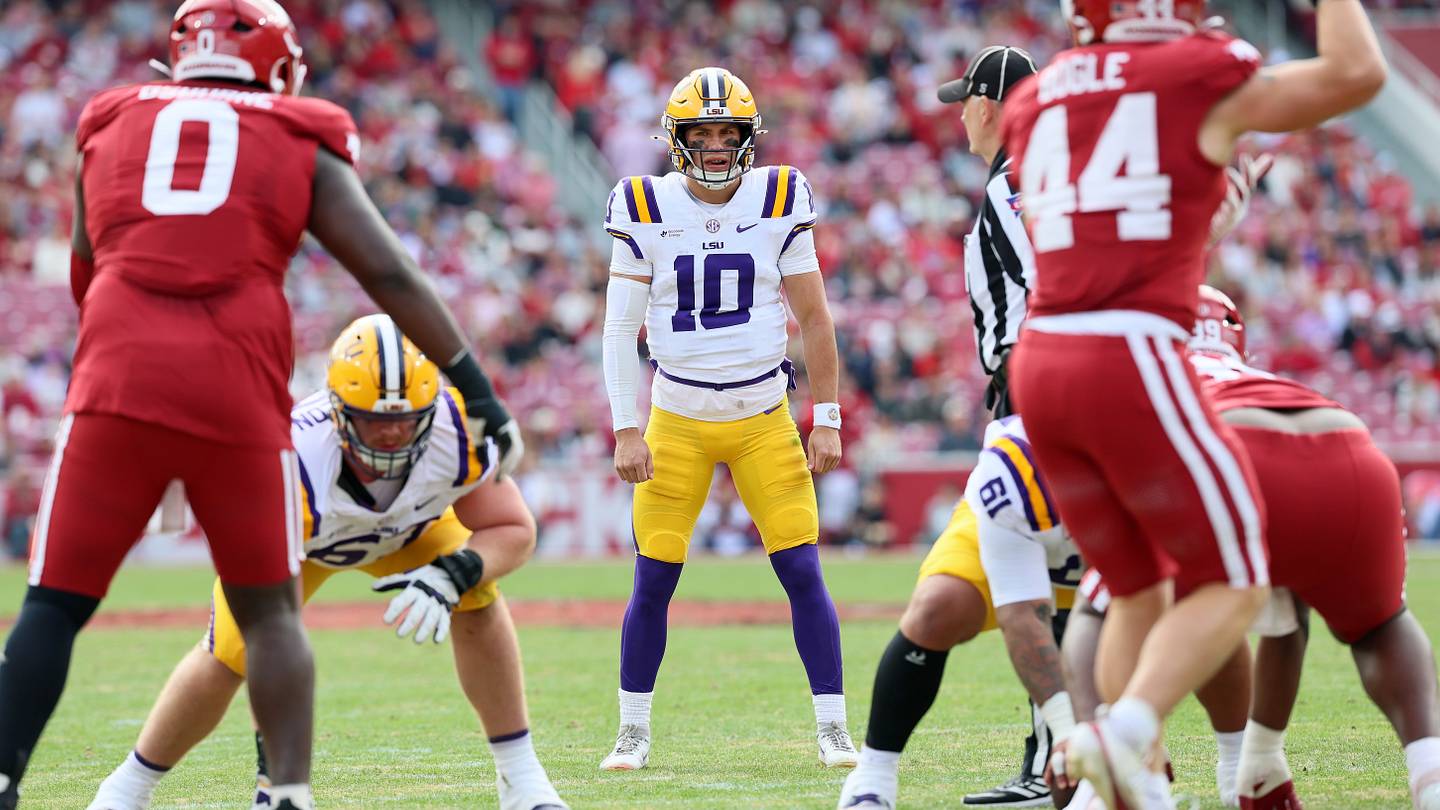
LSU athletic director Verge Ausberry said annual roster expenditures across all sports could reach $70 million.
LSU closed one of the most expensive regular seasons in program history with a 25-10 win over Arkansas on Saturday, finishing Lane Kiffin’s first year at 7-5 and retaining the Golden Boot.
The result underscored a structural problem the sport has yet to solve: the cost of retaining a roster keeps rising regardless of whether the initial investment produced the desired results, LSU Tigers On SI reported.
Quarterback Sam Leavitt arrived in Baton Rouge last offseason on a reported multimillion-dollar deal as the face of Kiffin’s rebuild. After an inconsistent season, his future with the program remains uncertain, and retaining him could require an even larger financial commitment.
“College athletes spent decades watching universities, coaches and television networks capitalize financially on their abilities,” the outlet wrote. “They deserve the opportunity to do the same, and Leavitt would be foolish not to maximize his earning potential.”
These fans defended this kid and lane for a whole year. I’m done with it. This is the culture you’ve installed @Lane_Kiffin. When you get in bed with someone who up and left a good relationship don’t expect them to be loyal to you. I’m so done with this shit. https://t.co/0zyUMefavD
LSU athletic director Verge Ausberry recently said on Matt Moscona’s radio show that annual roster expenditures across all sports could reach $70 million. The concern is not the figure itself but the possibility that it becomes the price of maintaining an existing competitive position.
If LSU adds $10 million to its football budget, Texas, Texas A&M and Georgia have every incentive to match it, leaving the same hierarchy in place at a higher cost.
“Even if every SEC institution could afford a $50 million football roster, there wouldn’t suddenly be 16 national championship contenders,” LSU Tigers On SI reported.
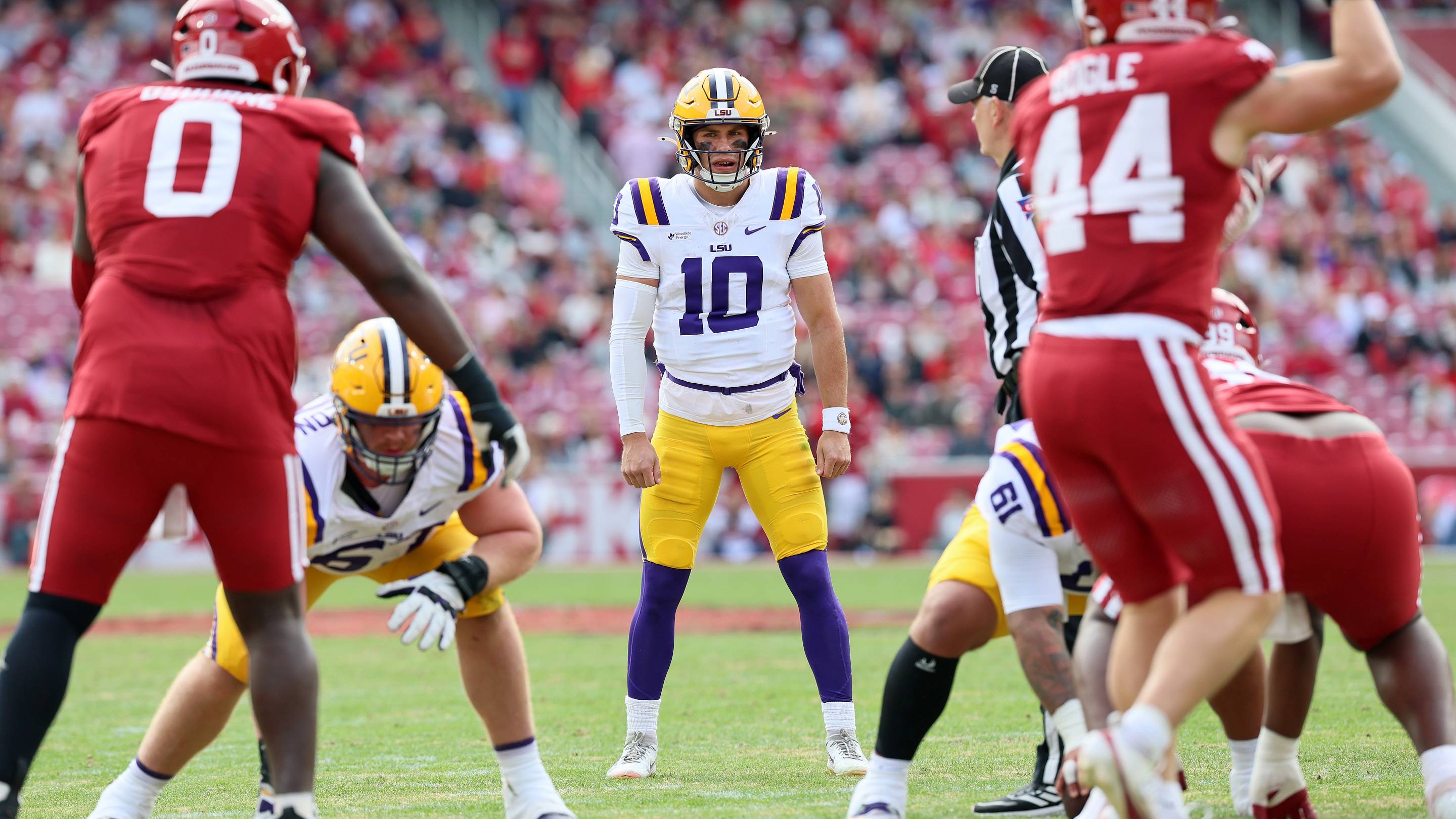
Unlike professional leagues, college departments must fund non-revenue sports. The current model has adopted the financial characteristics of pro sports — annual free agency via the transfer portal — without the mechanisms that make pro sports sustainable: collectively bargained salary caps, multiyear contracts and consequences for poor personnel decisions.
“College football, meanwhile, has essentially established an annual free agency period in which players can reassess their market value and explore alternative opportunities,” the outlet wrote.
Tyrann Mathieu reacts to Sam Leavitt's postgame exit after losing to Texas "10 years ago, college was about culture and community. You don't get that vibe anymore… that's just where we're at with the transfer portal. Not raising your own children. That's what they act like." pic.twitter.com/WVUC4NP6Jc
Former LSU star Tyrann Mathieu said on his In The Bayou podcast this month that the transfer portal and NIL have eroded the connection between players, schools and fans.
“10 years ago, college was about culture and community. You don’t get that vibe anymore… that’s just where we’re at with the transfer portal. Not raising your own children. That’s what they act like,” Mathieu said.
Sam Leavitt asked by Jacques Doucet about leaving before the singing of the Alma Mater…his answer is….yeah….just watch. What the hell….https://t.co/oh95j8d0hZ pic.twitter.com/lDiE5Lxsnu
After LSU’s home loss to Texas on Nov. 15, Leavitt went straight to the locker room rather than stay for the alma mater. Asked about the criticism Tuesday, he told WAFB reporter Jacques Doucet, “Oh yeah, I don’t even know what you’re referring to, like staying and singing the song after, you’re saying?” according to SportAndState.com.
Team captain Trey’Dez Green, a Louisiana native, retrieved teammates who had left the field; several returned. Leavitt did not. LSU Odyssey reported that athletic department officials are frustrated with Leavitt’s behavior this season and view a return as unlikely despite his public comments.

Louisiana-born players now make up 37.5% of LSU’s 2026 roster — the lowest share since at least 2000 and down from 55.7% on the 2019 title team and 67.2% on the 2003 champions, TigerBait’s Preston Guy noted.
“There’s so much history in this place,” Green told After Further Review before the Texas game. “You feel it when you walk down Victory Hill, you walk in Death Valley.”
BREAKING FROM https://t.co/tNNgw54tdV: Regardless of his status over the next 2 games, LSUOdyssey has been told by a few top level sources in and around the program that starting QB Sam Leavitt's return is "just about impossible" after his behavior on Saturday night, as well as… pic.twitter.com/FquMY1iiu4
The solutions under discussion include a collectively bargained salary cap, a luxury tax, standardized multiyear contracts or comprehensive revenue sharing. Whatever the mechanism, the system needs to reward development, encourage continuity and allow departments to make responsible financial decisions without sacrificing competitiveness.
Leavitt could return next season and fulfill the expectations that accompanied his arrival. Even if he does, the underlying dynamic remains: a program spent millions chasing a championship, finished 7-5, and may have to spend more just to try again.
Worth a look

Sioux Falls Skyforce Rout Wisconsin Herd 100-71
The Sioux Falls Skyforce routed the Wisconsin Herd 100–71 on Saturday, leading by 35 points after the first...
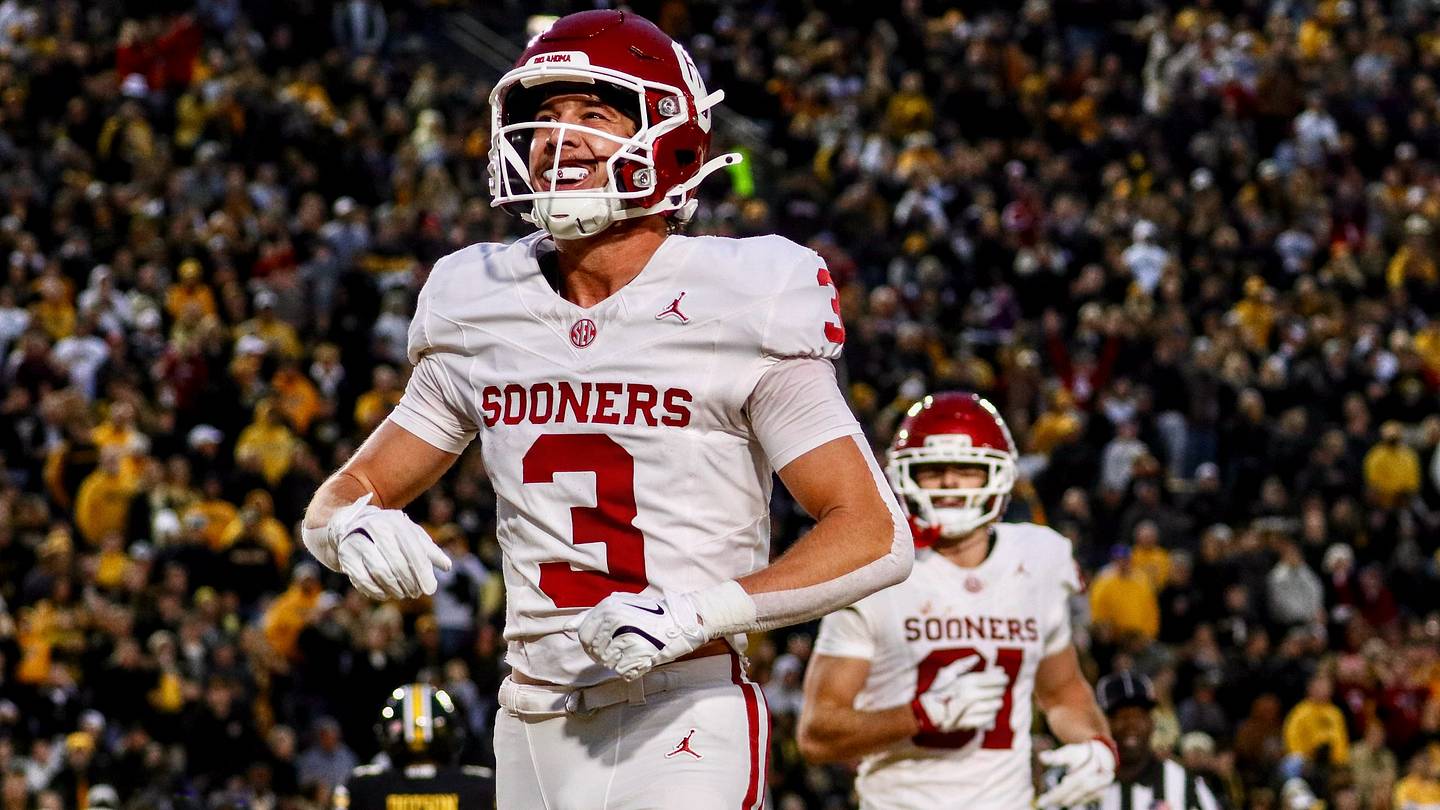
No. 17 Oklahoma Overcomes 20-Point Deficit to Beat No. 23 Missouri 34-31
No. 17 Oklahoma erased a 20-point deficit to beat No. 23 Missouri 34-31 on Saturday at Faurot Field....

Penn State Erases 23-3 Deficit, Beats Maryland 27-26; Postgame Brawl Bloodies Jahmir Joseph
Penn State erased a 23-3 halftime deficit to beat Maryland 27-26 on Saturday at SECU Stadium, winning on...

FBI Boston Warns Holiday Scams Cost $503M Nationally, $7M in Massachusetts
FBI Boston warned holiday shoppers Friday that non-delivery and non-payment scams cost victims more than $503 million nationally...