
- Leaders aim to lock in a deal by 31 December before a wave of 2027 national elections, starting with France in April–May.
- The current draft totals €1.582 trillion over seven years, including €140 billion to repay pandemic borrowing.
- Germany conditions any budget deal on all 27 members backing a €45 billion loan for Ukraine in 2027.
- Slovakia, Hungary and the Czech Republic object; Bulgaria said it would join only for non-military aid.
French President Emmanuel Macron set the year-end deadline himself, saying that after 31 December he would no longer be “in a position, politically or democratically, to reopen discussions on the budget and bring them to a conclusion, as we will be entering a period far too close to the presidential election in France.”
German Chancellor Friedrich Merz echoed the same target.
Far-right leader Marine Le Pen has vowed to end aid to Ukraine and slash France’s EU contributions. She called the accelerated talks “underhanded political manoeuvring to thwart the democratic will of the French people.”
Macron responded on the summit sidelines: “It is an odd kind of arrogance to behave as if she is already in charge of France’s destiny because, as things stand, she has not been elected,” RTÉ reported.
Ukraine loan becomes budget prerequisite
Merz made unanimous support for a €45 billion EU loan to Ukraine — split between military and civilian needs — a condition for any broader budget agreement. “When the European Union provides funding, it does so as the European Union – and that union consists of 27 member states, not 23 or 24,” he told reporters on arrival, according to The Guardian.
Slovakia, Hungary and the Czech Republic rejected the link.
Slovak Prime Minister Robert Fico accused Germany of “blackmail,” while Czech Prime Minister Andrej Babiš dismissed Merz’s stance, The Journal reported. Hungarian Prime Minister Péter Magyar said tying the budget to Ukraine aid was “not a good approach.”
Bulgaria, previously opposed, shifted position. Prime Minister Rumen Radev said Bulgaria would contribute to the loan “for non-military support for Ukraine,” citing a historic Bulgarian diaspora there. “We are going to contribute, but no money from Bulgaria for weapons,” he said.
Frugal leaders skip negotiating sessions
European Council President António Costa organised smaller group meetings to find common ground, but the leaders of Denmark, Sweden, Austria and Belgium refused to attend, according to The Irish Times.
Costa told reporters after the summit ended around midnight that work must continue to bring member states closer. The frugal camp, led by Germany and including the Netherlands, Nordic states, Austria and Belgium, had already made clear they wanted a smaller overall package.
This is not just a budget. It is Europe's investment plan for the future. In people. In businesses. In schools. In hospitals. In roads. In jobs. In security. As I told leaders at today's #EUCO, @Europarl_EN wants an agreement. As soon as possible. https://t.co/iqNlKeyC9R
Austrian Chancellor Christian Stocker acknowledged the deadlock, saying that even though differences could not be bridged, the talks may have clarified what is needed for success at the next meeting.
Commission proposes digital tax revenue to narrow gaps
The plan includes potential revenue from a digital tax to help close the divide between net contributors and net beneficiaries.

Net contributors versus net beneficiaries
The budget fight mirrors a deeper split. Germany, the Netherlands, Sweden, Finland, Austria, Denmark and Belgium — dubbed the “frugal” or “Sensible Seven” — want a smaller pot and spending redirected toward competitiveness against the US and China. France, Italy, Poland, Greece, Estonia and 12 other “friends of cohesion” defend agricultural subsidies and regional development funds, arguing both are needed to sustain public support for the EU.
Greek Prime Minister Kyriakos Mitsotakis warned: “We cannot talk about a strong Europe with a weak budget,” euronews reported. Italian Prime Minister Giorgia Meloni told reporters leaders were “light years” away from a deal.
European Council President António Costa proposed a €1.78 trillion draft — a €204 billion cut from the Commission’s original €2 trillion plan — and suggested revenue from a digital tax to narrow gaps, The Journal reported.
The current working figure stands at €1.582 trillion, including the €140 billion pandemic repayment.
Costa called for a deal “by the end of this year” and said leaders must negotiate with “an open mind, a constructive approach, and a sense of compromise.” Mr Costa acknowledged the stalemate: “Even though we were apparently unable to bridge our differences today, we may know what is necessary to ensure success next time.”
Donald Tusk posted on X on 26 November: “A cheap Europe could turn out to be a very expensive mistake. Security comes at a price,” RTÉ reported.
Hundreds of farmers protested in Brussels against cuts to agricultural subsidies, warning of larger demonstrations during the December summit, RTÉ reported.
The last long-term budget negotiation in 2020 lasted four days and four nights, The Irish Times noted. Leaders reconvene 17–18 December.
More on Ukraine
My message for today: a cheap Europe could turn out to be a very expensive mistake. Security comes at a price. As simple as that.
We have just concluded a first round of discussions at #EUCO on my proposal for the EU’s next long-term budget. Leaders have heard each other’s positions. We are now breaking for consultations with groups of member states. pic.twitter.com/KsmQ7ZD8wp
Worth a look
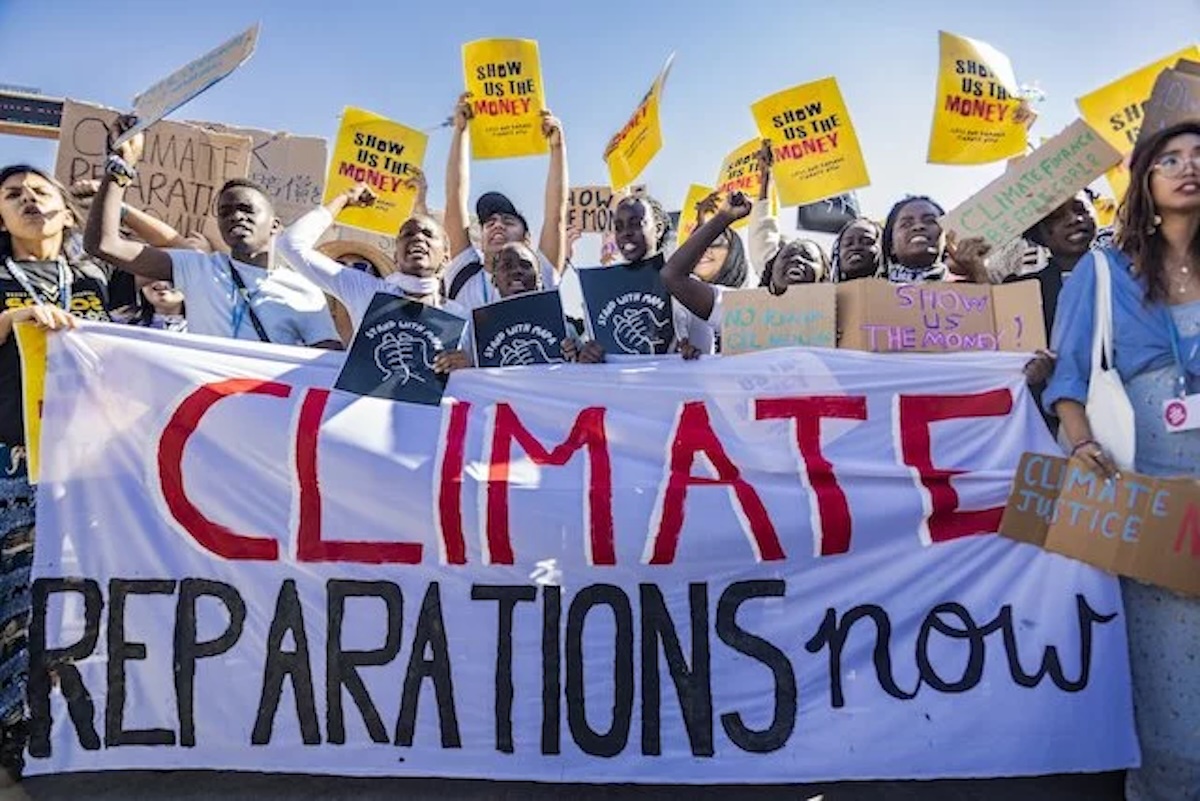
COP31 Summit Collapses in Antalya as Climate Finance Target Dropped
COP31 climate summit collapsed in Antalya, Turkey on Sunday, the first UN climate summit to fail since Copenhagen...

Rachel Clarke Jailed 26 Weeks for Asda Theft and Assault
Rachel Clarke was jailed for 26 weeks after pleading guilty to theft and assaulting a security guard with...

JoJo Siwa and Chris Hughes split, Source Tells People
JoJo Siwa and Chris Hughes have split after a year and a half together, a friend of the...

ICJ Rules Myanmar Committed Genocide Against Rohingya
“The Myanmar military tried to convince the world that we had lied. Today, the truth has been recognized,”...