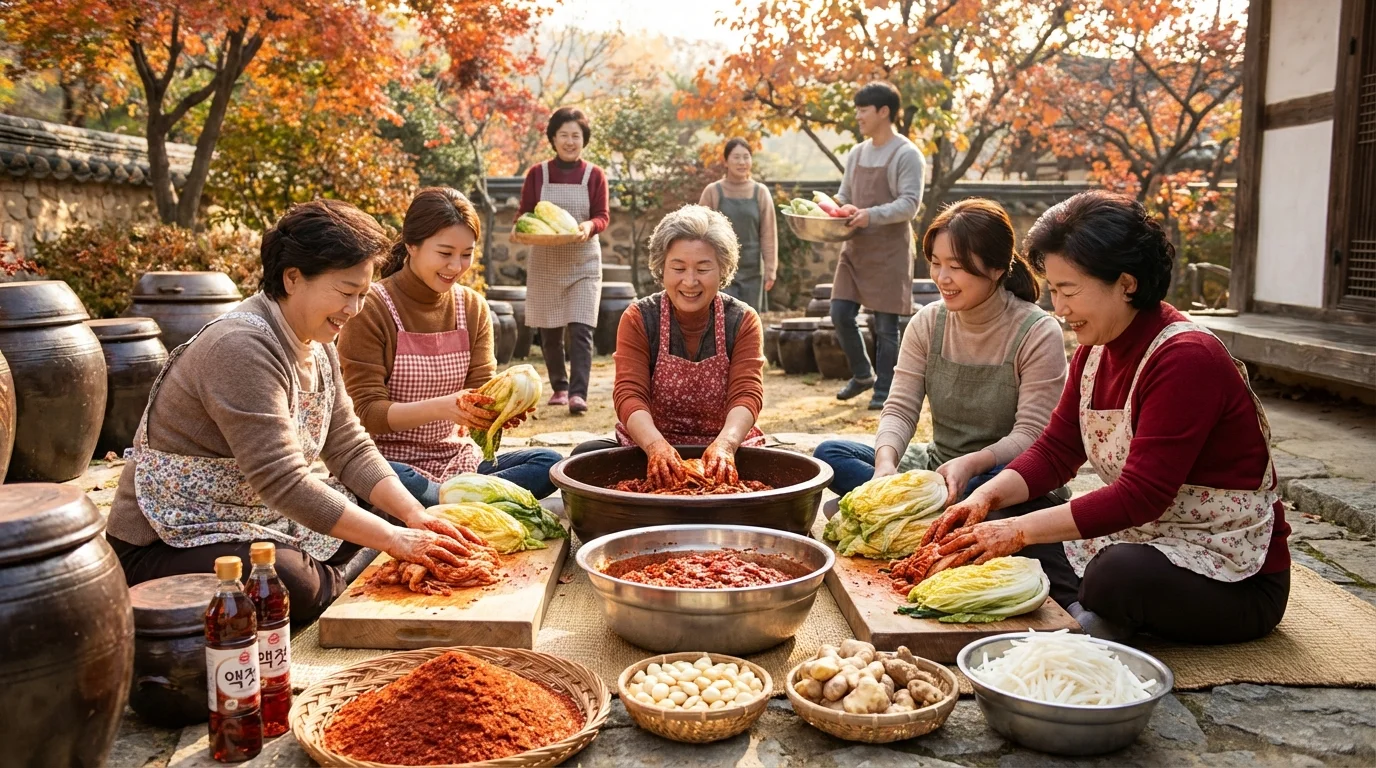
On November 8, twenty people gathered at Island Creek Oysters in Portland, Maine, for the sixth annual kimjang hosted by Onggi, a fermentation shop and café, Civil Eats reported. The free, donation-based event adapted the Korean communal tradition of preserving the fall harvest for winter using Maine-grown vegetables, local honey, salt, and fish sauce from Maine Garum Co.
Onggi co-owners Marcus Im, Erin Zobitz, and Amy Ng organized the workshop with Alli Conroe, who works full-time on disaster response and leads the shop’s workshops. This year’s donations supported Niweskok, a food sovereignty nonprofit in northern Maine run by members of the Wabanaki Confederacy.
Kimjang roots and UNESCO recognition
Kimjang has been practiced in Korea for thousands of years as a way to preserve the last vegetables of the harvest before winter. Traditionally, communities made large batches together, packed them into clay vessels called onggi, and buried them so the ground regulated fermentation temperature.
The practice was recognized by UNESCO for its contribution to intangible cultural heritage.
“It was also a way to strengthen the ties of people in the community and reinforce the value of everyone coming together to care for each other,” Conroe told Civil Eats.
Adapting the tradition to Maine
Maine’s climate parallels much of Korea, with short growing seasons and long winters, making the preservation logic familiar. Onggi sourced daikon radish, carrots, and rutabaga from Dandelion Spring Farm and Bumbleroot Organic Farm for what they called their Local Roots Kimchi. Participants left with a jar ready to ferment on their countertop for several days.
“Folks get really excited. By the end of the session, they have a jar of kimchi that is ready to ferment for several days at home on their countertop. They get to chat with their neighbors and make some new friends,” Conroe told Civil Eats.
Resilience and food sovereignty
Conroe described kimjang as a place-based practice that builds resilience in both a literal and relational sense. “Should something happen, we have a store available to eat from in a very literal sense. In a relational sense, we’re able to come together with neighbors to preserve this food with them,” she told Civil Eats.
Im connected the practice to food sovereignty. “When you make kimchi, we hope it makes people more conscious about where their food comes from and cherish what is grown here locally during the season,” he told Civil Eats. “Practicing kimchi or any other type of preservation helps us access that same food throughout the non-growing months.”

A model for other communities
Im said he hopes Onggi’s kimjang inspires similar communal food traditions elsewhere. “There’s power in food. It brings us together with our environment, with our neighbors, and with the produce nearby,” he told Civil Eats.
Conroe pointed to existing New England traditions like communal maple syrup harvesting and apple cider pressing.
“It would be really great to see people continue to expand upon that, but then also innovate and do something that feels fitting for their particular communities, what’s available to them, and what they might want to make together,” she told Civil Eats.
Worth a look
Torrington Attorney and Community Leader Charles Frederick Brower Dies at 88
Charles Frederick Brower, a Torrington attorney and community leader, died November 15, 2026, at age 88, Phalen Funeral...

Sue Ann Litster Thomas, 79, Dies in West Valley City, Utah; Known for Voice, Potato Salad
"She could reach notes with her voice so high she gave you chills," the obituary said of Sue...

2023 Lincoln Corsair Standard Listed at $30,995 With 5.99% APR Financing Offer in Vandalia, Ohio
A 2023 Lincoln Corsair Standard is listed for sale as a certified pre-owned vehicle at Beau Townsend Nissan...

Leanne Morgan Brings ‘Time of Our Lives’ Tour to North Charleston Coliseum; Calls Charleston a Second Home’
Comedian Leanne Morgan will bring her "The Time of Our Lives" tour to the North Charleston Coliseum on...