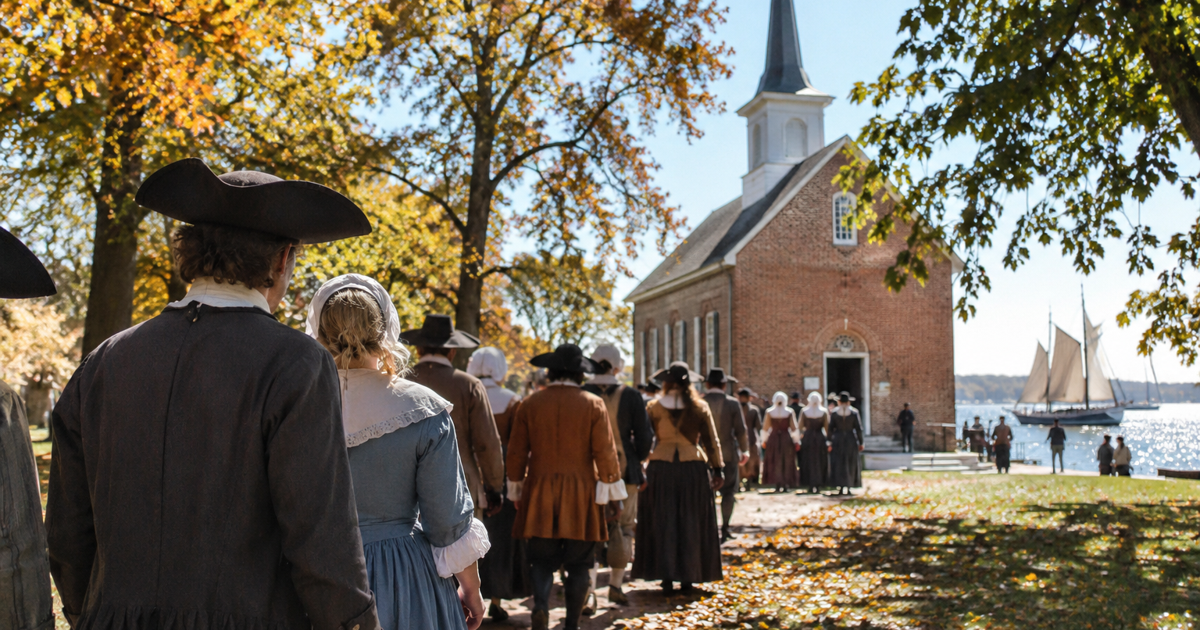
Thanksgiving in colonial Annapolis 330 years ago involved no Black Friday sales or football games, as Maryland celebrated the holiday twice in 1696 through proclamations issued by Governor Francis Nicholson.
Why did Maryland celebrate twice in 1696?
Governor Francis Nicholson published a decree on September 16 designating the following day as a public Thanksgiving specifically for Annapolis, while setting a second colony-wide observance for October 22. Favorable weather, promising prospects for corn and tobacco harvests, secure maritime arrivals, and positive reports from England all contributed to the gratitude felt by Marylanders.
Farming and trade served as essential pillars for survival and prosperity in colonial Maryland. News from England took weeks to cross the Atlantic, making timely updates and safe maritime journeys critical for the developing capital.
Was it a feast or a day of prayer?
The governor did not announce a feast when he issued the orders. He called for a day of prayer and public worship where residents were expected to put aside their usual work.
Ministers were tasked with preaching, while sheriffs carried the responsibility of spreading the word across the colony. Back in May of that same year, Nicholson called for another observance following news of English military successes and the king’s safe return.
Where do these historical records survive today?
Annapolis was still settling into its role as Maryland’s new capital at the time, with the Chesapeake acting as a lifeline for commerce, transportation, and communication. Both proclamations survive in the Maryland State Archives, offering insight into what colonial residents valued.
Today, Thanksgiving arrives every fourth Thursday in November regardless of harvest conditions or weather. In 1696, the observance focused entirely on recognizing the immediate good fortune of the moment.
Worth a look

Former GIANT Employee Charged With Skimming Customer Credit Cards at Harrisburg Gas Station
Harrisburg police have charged a former GIANT gas-pump attendant with using a hidden skimming device to steal banking...

Timberwolves Beat Blazers Twice in Two Nights, 106-98 and 106-105, to Bounce Back From Worst Loss of Season
The Minnesota Timberwolves beat the Portland Trail Blazers twice in two nights at Target Center, 106-98 Monday and...

NSU Demons Face No. 14 Oklahoma in Third Power-Conference Test
Northwestern State heads to Norman on Thursday for a 6 p.m. tip against No. 14 Oklahoma, the third...
Governor DeWine Announces SBA Disaster Assistance for Ohio Counties
Ohio Governor Mike DeWine secured two federal disaster declarations Wednesday for counties battered by September storms, unlocking low-interest...