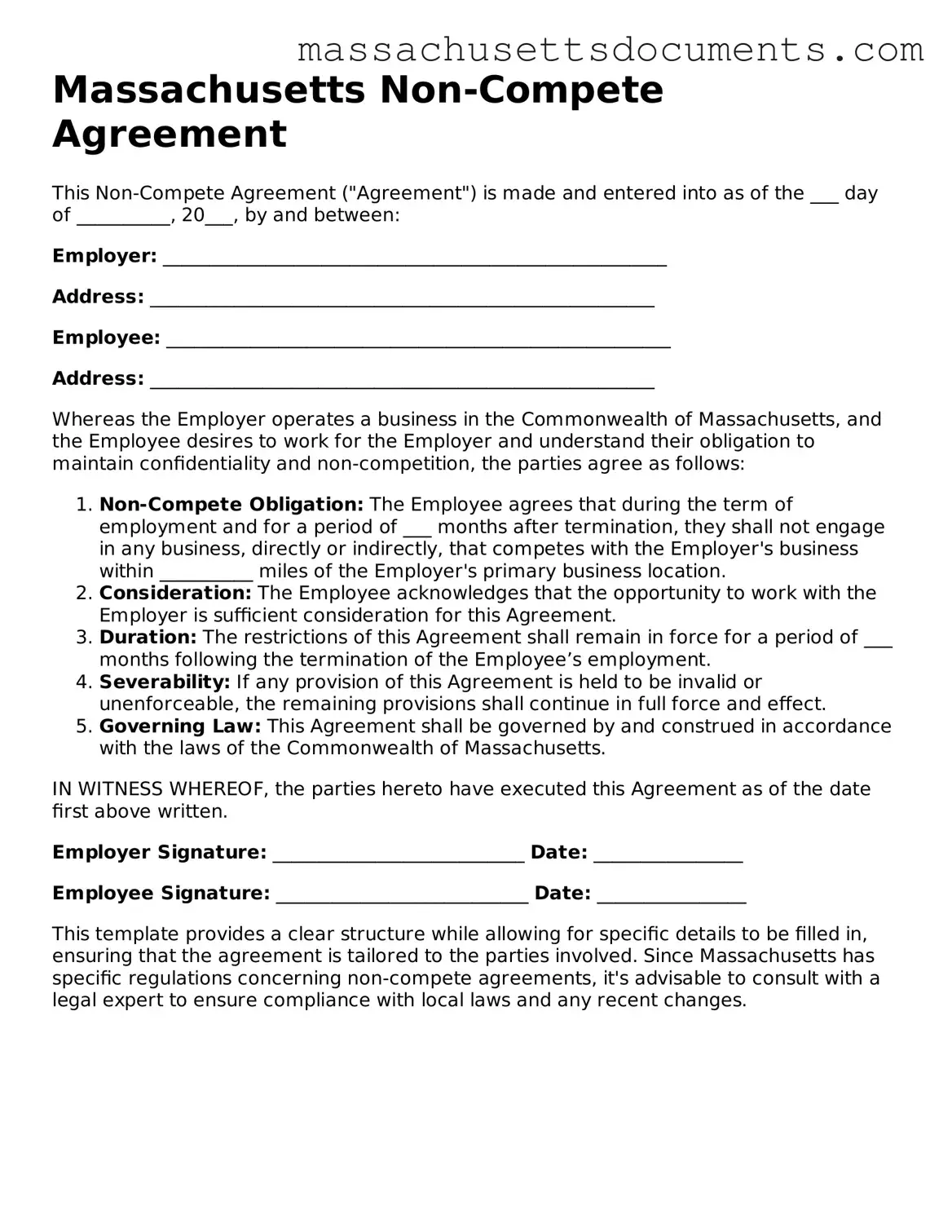
The Massachusetts Supreme Judicial Court ruled that a non-compete agreement signed only by a parent company and an employee is unenforceable because the employee’s direct employer did not sign it, as required by state law.
The decision invalidates a common private equity structure where management receives equity in a holding company in exchange for restrictive covenants intended to protect the operating subsidiary. The court held that the Massachusetts Noncompetition Agreement Act (MNAA) applies to agreements arising from an employment relationship even when an affiliated entity is the signatory, JD Supra reported.
Why did the court reject the parent company’s arguments?
The case involved an enterprise software employee who signed three equity incentive agreements with an indirect parent company. Those agreements included a 12-month non-compete and named the employing subsidiary as a third-party beneficiary. When the employee moved to join a competitor, the employer and its parent sought enforcement.
The court rejected the argument that the parent qualified as the employer simply because it provided equity compensation. It also rejected the claim that the MNAA did not apply because the agreement was with a non-employer entity. The parent’s signature and the subsidiary’s beneficiary status did not satisfy the statutory requirement that both the employer and employee sign the agreement.
What does this mean for private equity sponsors?
The ruling creates vulnerability for sponsors and portfolio companies that route management equity through holding companies. Sponsors should review existing incentive agreements to confirm the direct employing entity is a signatory. The decision mirrors recent Delaware rulings limiting restrictive covenants to affiliate entities of private equity-backed employers, JD Supra reported.
The court did not bar parent companies from enforcing non-competes categorically. It clarified that such arrangements must comply with the MNAA’s statutory requirements, including execution by the actual employer.
Related reading
JoJo Romero Signs Three-Year $21M Deal With Padres After Brewers Re-sign Antonio Senzatela
Left-handed reliever JoJo Romero agreed to a three-year, $21 million contract with the San Diego Padres on Monday,...
Star-News Highlights Donkey Sanctuary, Graduate, Nurse, Teacher
The Wilmington Star-News highlighted three people whose stories defined 2026 across southeastern North Carolina: the founder of a...
Las Vegas Hip-Hop Club Crawl Draws Criticism From Attendees on Nov 27
A Las Vegas hip-hop club crawl, promoted with promises of two venues, a party bus with free drinks,...

Packers Fall to Rams 26-13 on Thanksgiving Eve in Los Angeles
Packers fall to 6-5 after 26-13 loss to Rams on Wednesday night. Green Bay dropped its Thanksgiving Eve...