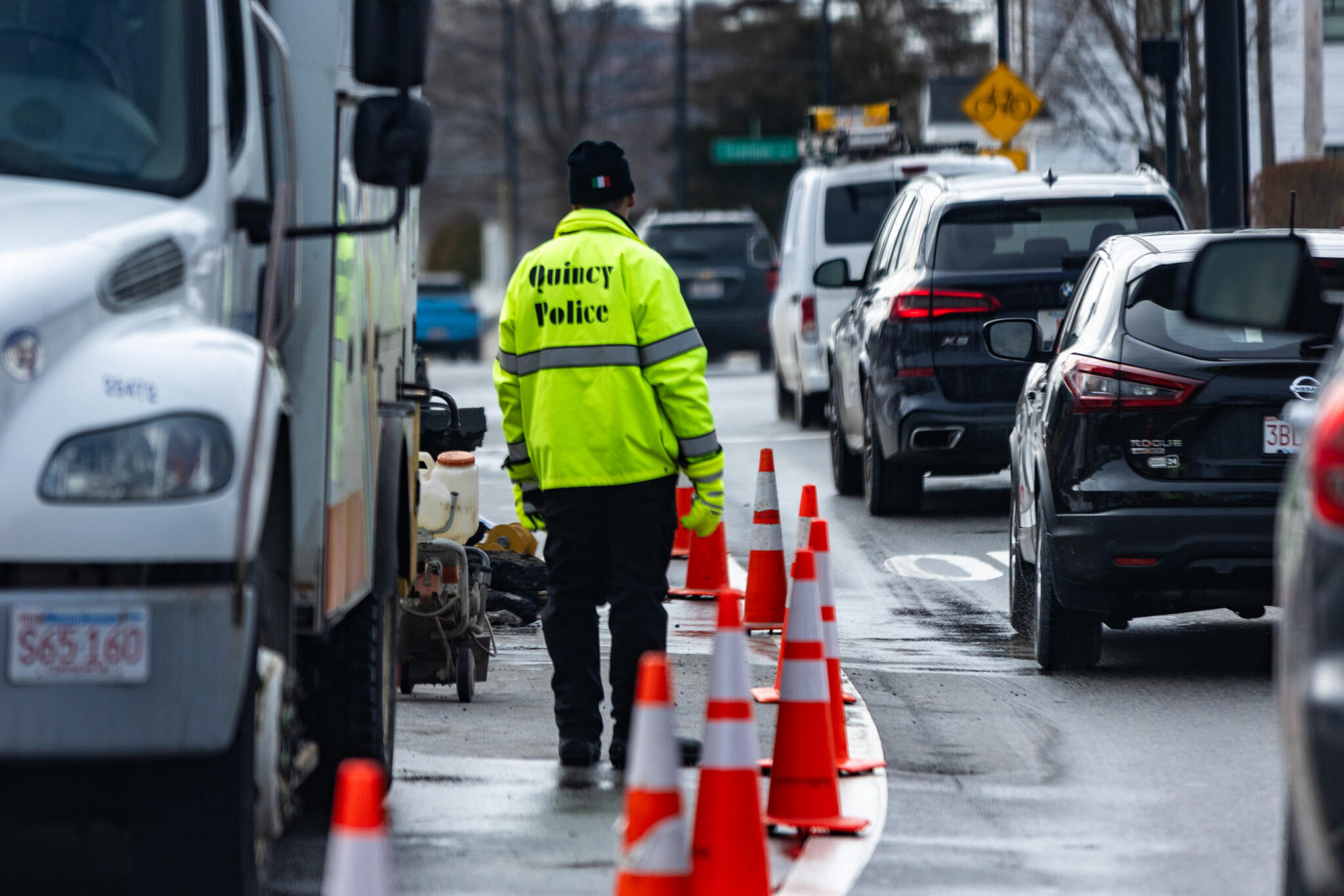
The Massachusetts Senate sent a compromise bill to the House Thursday that would expand the state’s “Move Over” law to cover utility crews and disabled vehicles while raising fines to $2,500 for repeat violations that cause injury, WBUR reported.
The bill still needs acceptance by the House before it can head to Gov. Maura Healey’s desk, after the Senate sent a compromise version that reconciles differences with the House bill passed earlier this session.
What vehicles does the expanded law cover?
The current statute applies to emergency vehicles, road work crews, and tow trucks. The compromise bill adds utility workers and any disabled vehicle on the shoulder with flashing or hazard lights activated.
“Applying this to all vehicles — essentially all vehicles that are on the side of the road — makes sense,” said Sen. Brendan Crighton, Senate chair of the Joint Committee on Transportation. “They are very vulnerable being in that position,” he told WBUR.
How do the new fines compare to current penalties?
The existing law sets a flat $100 fine. The compromise creates a tiered structure: $200 for a first offense, $400 for a second, and $1,000 for subsequent offenses. A second or later violation that injures someone carries a $2,500 fine. The House had proposed up to a year in jail for injury crashes; that provision was dropped in favor of the higher fine, MassLive reported.
| Offense | Current Law | Senate Original | House Original | Compromise |
|---|---|---|---|---|
| First | $100 | $100 | $250 | $200 |
| Second | $100 | $250 | $1,000 | $400 |
| Subsequent | $100 | $500 | $2,500 | $1,000 |
| Injury (2nd+) | $100 | — | Jail + fine | $2,500 |
Why is the Legislature acting now?
Work on the bill began about three years ago after a police officer and a National Grid worker were struck and killed during a roadside detail in Waltham. Lawmakers cite 23 people killed while outside disabled vehicles in Massachusetts from 2019 to 2025. AAA estimates an average of 24 emergency responders and roadside assistance providers are struck and killed nationally each year on major roadways.
What other provisions does the bill include?
The compromise retains two House additions: an annual Registry of Motor Vehicles public awareness campaign and insurance surcharge rules. A first offense would not count against a driver’s insurance, but a second or later offense could. “I’m glad we’re including an awareness campaign as part of this, too,” Crighton said. “We believe it will protect all those vulnerable individuals and save lives,” he told WBUR.
The Massachusetts Senate operates within a bicameral General Court where bills must pass both chambers in identical form before reaching the governor. When the House and Senate approve different versions, a six-member House-Senate conference committee — three from each branch — is appointed to negotiate a single compromise report, as seen with the Move Over law expansion sent to conference in the 2025–2026 session.
Once the conference committee files its report, both the full Senate and full House must vote to accept it without amendment; the bill then goes to Gov. Maura Healey for her signature.
House must accept Senate compromise before governor signs
The House must accept the Senate’s compromise version before the bill goes to Healey for her signature. Crighton said he expects quick action: “Hopefully get it to the governor’s desk soon.”
Worth a look

The Minnesota Daily Lists 5 Twin Cities Holiday Markets for Winter
European Christmas Market at Union Depot opens Friday with 60+ vendors and weekend entertainment. Dayton’s Holiday Market marks...

Ruth R. Gardepe, Zion Lutheran Volunteer, Dies at 92
Ruth R. Gardepe, a longtime volunteer at Zion Lutheran Church in Geneva, New York, died November 21, 2026,...

Montpelier Hearing Dec. 16 Reviews $630K State Home Repair Grants
The City of Montpelier will hold a final public hearing Wednesday, Dec. 16, at 6:30 p.m. at 39...

Stricter SNAP Work Rules Took Effect in Tennessee a Year Ago
Stricter SNAP work rules took effect in Tennessee a year ago, and Hamilton County enrollment has fallen eight...