Georgia-based employment and business programs are working to bridge the gap between military service and civilian careers for the state’s 650,000 veterans, WABE reported.
Many veterans struggle to secure stable work after returning from service, often facing skepticism from hiring managers regarding their transferable skills. This disconnect impacts many workers, as roughly 200,000 people transition out of the military every year, meaning approximately 500 veterans enter the civilian job market daily.
Dan Clare, a Marine and Air Force veteran and spokesperson for Disabled American Veterans, shared personal experiences of being overlooked by employers. He said that even entry-level positions can be difficult to secure due to perceived gaps in traditional experience.
“I applied to work at Cheesecake Factory, and I was told that I did not have enough experience for a job at Cheesecake Factory,” said Clare.
Clare suggested that employers may harbor hesitations regarding veterans with disabilities, which affect more than five million people nationally. He said that some employers might worry about the necessity of workplace accommodations for those with conditions such as post-traumatic stress disorder.
To address these barriers, the Disabled American Veterans organization is hosting a free virtual job fair on Nov. 24. The event aims to connect veterans and military spouses directly with potential employers who recognize the value of military training.
Bridging the skills gap through business education
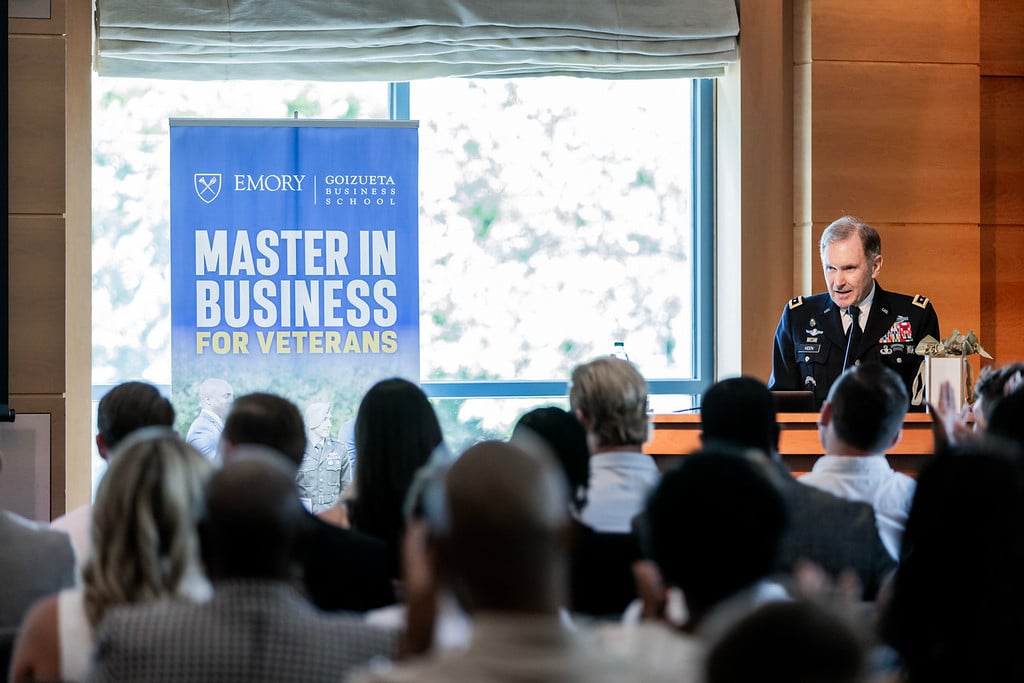
While job fairs provide immediate connections, academic programs are attempting to translate high-level military leadership into corporate expertise. Emory University’s Goizueta Business School operates a Master of Business for Veterans program designed specifically for senior leaders, including both commissioned and non-commissioned officers.
Matt Smith, an Army and National Guard veteran who runs the program, argues that the corporate sector is missing out on a unique talent pool. He believes the ability to manage complexity is a primary asset that veterans bring to the table.
“Veterans have spent however long they served solving complex problems in very ambiguous, sometimes volatile and complex environments. And American business stands to gain by harnessing that experience,” said Smith.
The Georgia-based program is currently in its third year. It follows a model established 14 years ago by a counterpart at the University of Southern California. Smith said that, aside from the USC program, there are currently no other known institutions that have formally integrated business education with a specific transition program for senior veterans.
By May, the alum count for the Emory program is expected to reach 108. Smith expressed interest in expanding this educational model to universities across the country.
Challenging the perception of veteran capability
Cultural stereotypes drive much of the employment challenge. Smith argued that pop culture, including social media, movies, and books, often portrays veterans as “damaged and broken.”
He countered this narrative by pointing to broader data regarding veteran stability and success. According to Smith, federal and state statistics indicate that veterans often experience lower rates of homelessness, higher education rates, and lower unemployment rates than general population trends might suggest.
“I have heard the phrase post-traumatic growth used in different veteran contexts, and I have to say I think it’s a much better phrase than assuming everybody has some sort of disorder because of their service in it,” said Smith.
Smith emphasized that while military service involves many challenges, many individuals undergo tremendous personal and professional growth as a result of those experiences.
The disparity between the actual economic performance of veterans and the public perception of their capabilities remains a central hurdle for recruiters. As the daily influx of 500 new veterans continues, the success of these specialized business programs and job fairs will likely determine how effectively the American economy integrates this specialized workforce.
Tennessee Basketball Players Propose Historic Collective Bargaining Term Sheet for College Sports
Tennessee men's basketball players released a first-of-its-kind collective bargaining term sheet on Tuesday, offering a direct alternative to...

Fetterman Faces Potential 2028 Primary Rivals
Democratic Senator John Fetterman faces more primary challengers as his support among Pennsylvania Democrats drops. The collapse in...

USHL Power Rankings: Mid-November Men’s Ice Hockey Team Standings
The Madison Capitols jumped four spots in the USHL power rankings this week after a decisive road sweep...

One Dead, 12 Injured After Brooklyn Building Collapse in Flatbush
A partial building collapse in Flatbush, Brooklyn, left at least one person dead and at least 12 others...