
Mayor Rick Blangiardi appointed Jared Kuroiwa as Honolulu’s Chief Data Officer, a role in which he will lead efforts to integrate data across city departments and deploy artificial intelligence under a new governance framework.
- Mayor Rick Blangiardi appointed Kuroiwa to lead the Office of Data and Innovation.
- Voters approved a charter amendment creating the office.
- Kuroiwa drafted a citywide data governance policy and interdepartmental sharing agreement.
- He previously built an AI-powered 3D mapping platform for affordable housing.
From civic tech to city hall
Kuroiwa’s path to the role began in 2012 when he independently developed a searchable database of Hawaiʻi campaign finance records from home and co-founded Hawaiʻi Open Data.
His professional background includes leadership and technology roles at aio Hawaiʻi, Oceanic Time Warner Cable, PBS Hawaiʻi, the University of Hawaiʻi at Mānoa, and the Cancer Research Center of Hawaiʻi, according to the city’s announcement.
Most recently, as an Affordable Housing Advisor in the Department of Housing and Land Management, he used AI to build an interactive 3D mapping platform that integrates property parcel information and permitting records. “With that information updated daily and in one place, questions that took weeks now take minutes,” Kuroiwa told Cities Today. “I want to bring that to more departments.”
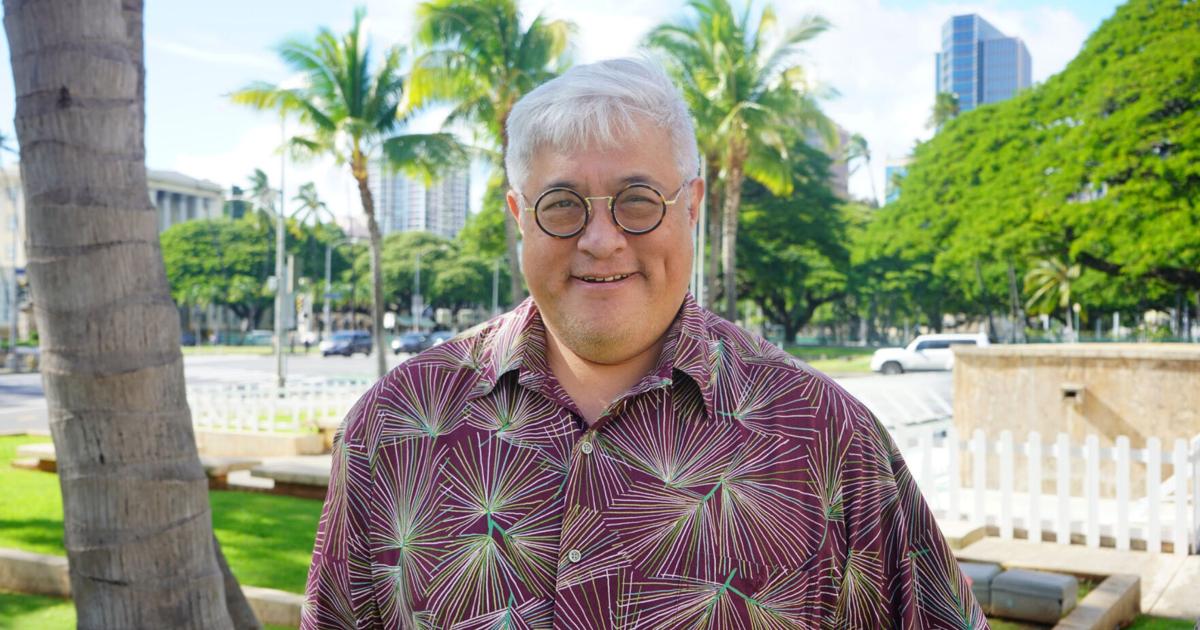
Kuroiwa said earning and maintaining public trust is a core responsibility. “I believe one of our greatest responsibilities in public service is earning and maintaining the public’s trust,” he said. “That means being transparent about what we’re doing, accountable for the results, and willing to find better ways to serve our residents.”
Institutional barriers remain the hardest part
Kuroiwa said technical challenges are secondary to earning trust across departments. “It may sound surprising, but solving technical problems is the easy part of the job,” he told Cities Today. “The biggest challenges are institutional and can only be solved through building trust. Departments understandably worry about privacy, their data being misread, and losing control of that data.”
He expects both the citywide data governance policy and the interdepartmental data-sharing agreement to be adopted within his first year.
AI as a tool, not a replacement
The city is already testing AI to assess proposed City Council bills against existing laws and to evaluate whether municipal incentives are increasing housing supply. Kuroiwa stressed that AI-generated information must identify its source and undergo human review.
“Artificial intelligence is an incredible tool,” he told Cities Today. “But it is just that, a ‘tool’. It is not something that can replace the human critical thinking and empathy required to serve our residents.”
Mayor Blangiardi, who previously worked with Kuroiwa in Hawaiʻi’s broadcasting industry, said the appointment offers a chance to transform municipal operations. “He has demonstrated time and again an extraordinary ability to turn bold ideas into real, measurable results,” Blangiardi said in the city’s announcement.
Voters approved a charter amendment in the November 2024 general election that formally establishes the Office of Data and Innovation within the Mayor’s office, headed by a Chief Data Officer appointed and removed by the Mayor.
The charter language assigns the office specific powers including creating and enforcing a city data plan covering governance, privacy, security, interoperability, and responsible AI use; leading an enterprise data strategy with inventory, sharing, and lifecycle management across executive agencies; and coordinating open data publication for transparency.
The office is charged with reviewing proposed AI and automated decision systems for fairness, transparency, accountability, and compliance with adopted standards; establishing systems for agencies to evaluate and report on minimum key performance indicators; and developing staff capacity in data, analytics, and AI.
Kuroiwa said his first-year goals include more departments sharing data through a common platform, more public data that updates automatically, and the city’s AI policy in practice so residents can see when and how the tools are used.
Keep reading

Arkansas Times Picks 5 Essential Little Rock Beers and Cocktails
Arkansas Times writers selected five essential Little Rock drinks, including a $5 house margarita offered by El Sur...

CIF LA City Section Football Championships Set for Nov. 27-28: Carson Seeks Open Division Repeat, Banning-Hamilton Highlight Division 1
Banning and Hamilton will meet in the Division 1 final as Carson seeks a second consecutive Open Division...
Tarpley: Annual Birthday Trips Sustain Cross-Country Friendship for Eight Years
In a column for Business Insider, Laura Grace Tarpley writes that annual birthday trips have sustained a friendship...
Arizona Voters Ban New Traffic Cameras; Six Phoenix-Area Cities Face 2027 Vote on Existing Programs
Maricopa County voters overwhelmingly approved Proposition 319 this month, a statewide measure that bans new automated ticketing systems...