
In a column for the Star Tribune, Elder Voice Advocates executive director Kristine Sundberg argues that Minnesota government must restructure to meet the demands of a rapidly aging population.
More than 1 million Minnesotans are now 65 or older, outnumbering the state’s school-age children, Sundberg writes. By 2030, about one in five residents will be an older adult, and in many rural counties the ratio will approach one in four.
“We are living on fixed incomes, trapped in homes whose property taxes we can’t afford, living in communities without the infrastructure that meets our needs and lacking adequate, affordable health care,” Sundberg writes.
She says responsibility for aging is spread across a dozen state agencies — including Human Services, Health, Housing, Transportation, Employment and Economic Development, Veterans Affairs, Commerce, Agriculture and Public Safety — creating overlap and unowned gaps. “It is hard for anyone, legislators included, to know what we are spending and what we are getting for it,” she writes.
Sundberg calls for a government efficiency review to inventory programs, statutory authorities, staffing, contracts and performance measures tied to aging. She also proposes an Office of Aging in Community reporting to the governor’s office, with a small staff and an advisory council of older Minnesotans.
The office would be funded through a cooperative agreement among the agencies whose work shapes how Minnesotans age, similar to the existing Office of Inclusion model.
The recommendation builds on the Legislative Task Force on Aging, which in January 2025 recommended a Cabinet-level entity within Minnesota Management and Budget under the governor’s direction. Sundberg says EVA is engaged in and supportive of MMB’s Healthy Aging Plan, due in April 2027.
Elder Voice Advocates (EVA), led by executive director Kristine Sundberg, was formed in response to widespread abuse and neglect in long-term care settings and works to ensure older Minnesotans can age in their chosen communities with dignity and independence.
In August 2024, Sundberg testified before the Legislative Task Force on Aging that the state’s current infrastructure is fragmented and ineffective, urging creation of a dedicated department for community aging to coordinate planning across agencies and bridge service gaps.
She framed the issue as one of ageist attitudes that prioritize children while leaving elders vulnerable, contrasting the new Department of Youth, Children, and Families with the lack of equivalent focus on aging.
“We don’t need bigger government. We need smarter government,” Sundberg writes. “Minnesota is aging. Our government must adapt. Our communities must be prepared.”
Worth a look

Christina Lauren Visits Vancouver Set of Netflix’s ‘in a Holidaze’ Film
Netflix will release the time-loop holiday film In a Holidaze on Dec. 2, adapting Christina Lauren's 2020 novel...

Illinois Lawmakers Target Dec. 1 Vote on Bears Stadium Deal After Veto Session Delay
Illinois lawmakers aim to vote on a Chicago Bears stadium deal during the second week of the fall...

United Airlines to Cut Boeing 737 MAX from 27 International Routes in 2027 Schedule Shift
United Airlines will pull its Boeing 737 MAX fleet from 27 international routes in 2027 compared with this...
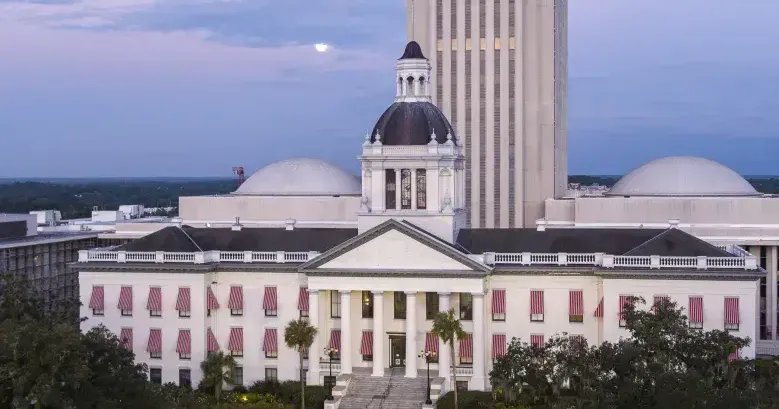
Florida Democrats Break GOP Supermajority, Win Largest House Caucus Since 1990s
Republicans entered Tuesday’s swearing-in expecting to keep their two-thirds lock on the Florida House; instead they lost it....