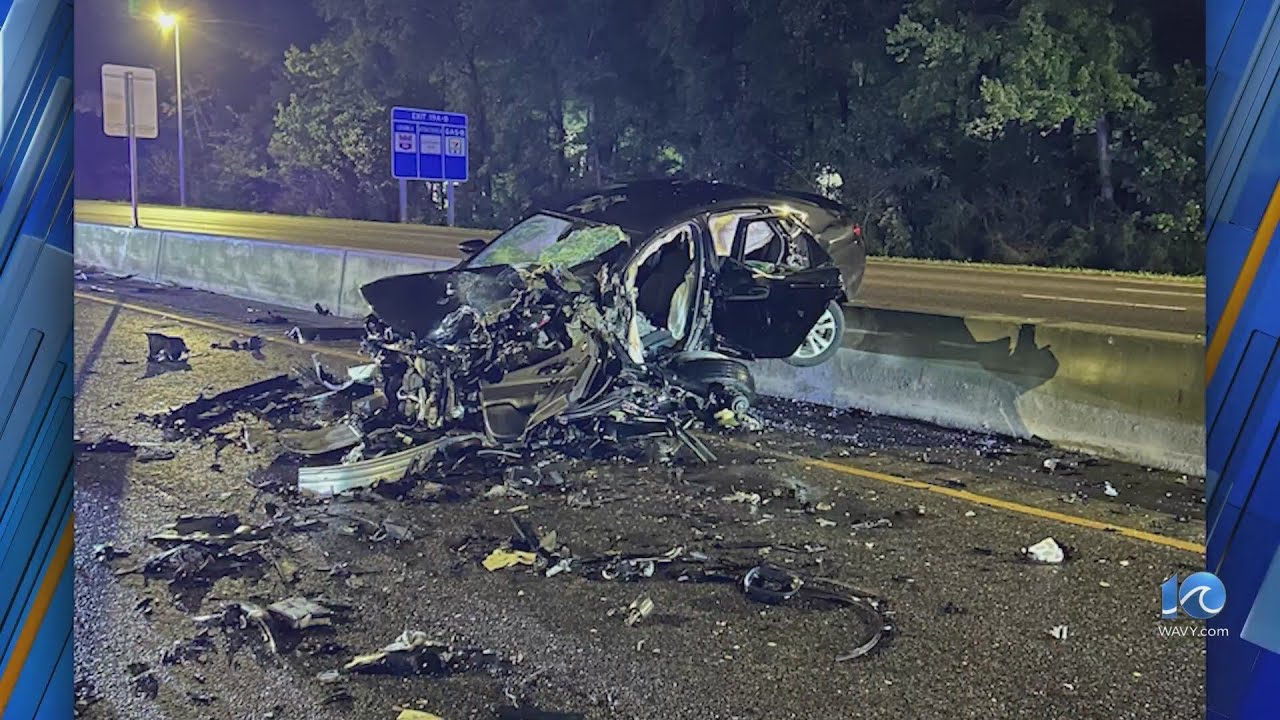
The Mississippi Court of Appeals affirmed Elijah Atkisson’s aggravated DUI conviction and 20-year sentence on Monday, rejecting claims that an undisclosed rebuttal witness and alleged juror misconduct required a new trial. The Hinds County Circuit Court convicted Atkisson of driving the wrong way on Interstate 20 and killing Marcel Walker in a 2020 crash.
The three-judge panel found no reversible error in the circuit court’s decision to allow Shelby McCoy to testify as a rebuttal witness without prior disclosure. McCoy, who worked security at Club Eclipse, testified that a $17 Cash App payment from Atkisson was for marijuana, not the club admission fee Atkisson claimed.
| Element | Detail |
|---|---|
| Crash date | October 3, 2020 |
| BAC results | .234 at 4:07 a.m.; .217 at 4:10 a.m. |
| Legal limit (age 18) | .02 |
| Trial dates | November 18–22, 25, 27, 2024 |
| Appeal decision | November 17, 2026 |
Atkisson objected at trial that the State had not disclosed McCoy as a witness and that his testimony about a drug transaction constituted improper character evidence under Mississippi Rule of Evidence 404(b). The State argued McCoy was called to impeach Atkisson’s testimony about the Cash App payments after Atkisson said the $17 was for admission and a $3 transfer completed the cover charge. The court overruled the objection. “The State is saying that they put this witness on to show” Atkisson’s testimony about the payments was false, the opinion states, though the court’s full reasoning is cut off in the available record. Atkisson also argued the circuit court should have held a hearing to question jurors about possible prejudicial misconduct. The Court of Appeals found no error in the court’s refusal to convene such a hearing. The crash occurred around 1:30 a.m. on October 3, 2020, after Atkisson left the Eclipse club in Jackson. He entered I-20 via an exit ramp and drove eastbound in the westbound lanes, striking Walker’s vehicle head-on. Walker died at the scene. Officers at the scene reported smelling alcohol on Atkisson’s breath and observing slurred speech, bloodshot eyes, and unsteady balance. Atkisson initially told Officer Robert Alexander he had consumed four to five drinks at a party, but later told DUI Officer Lakeith Williams he had only one White Claw.
Intoxilyzer tests administered after 4:00 a.m. showed blood-alcohol concentrations of .234 and .217 — more than ten times the .02 legal limit for an 18-year-old. The machine had been calibrated on September 1 and October 1, 2020, according to Mississippi Forensics Laboratory testimony. Atkisson’s defense presented witnesses who said he appeared sober at the club. Caitlin Hudson and Alexis Little testified Atkisson was acting normally and not drinking. Little acknowledged on cross-examination she had been at the club for four hours and was drunk that night. Dr. O’Donnell, who had a doctorate in pharmacy and a master’s degree in clinical nutrition, was accepted as an expert in pharmacology and alcohol testing.
He also said body camera footage showed Atkisson alert and coherent, inconsistent with a .21 BAC. Atkisson testified he drank one White Claw, held a beer for a friend, and paid $20 in two Cash App transactions for admission plus $10 for the drink as a tip. His mother, Olivia Boone, said he helped her paint until 9:45 p.m., texted coherently at 11:45 p.m., and spoke clearly by phone after the crash.
She later took him to a hospital where a broken foot was diagnosed — an injury the defense said could explain his stumbling at the scene. The Court of Appeals affirmed the conviction and sentence in an opinion by Judge Emfinger, with Presiding Judge Carlton and Judge McDonald concurring.
The Mississippi Court of Appeals serves as the state’s intermediate appellate court, created by the Legislature in 1995 to relieve the Supreme Court’s case backlog. Its ten judges, elected from five districts for eight-year terms, hear appeals assigned by the Supreme Court, typically involving settled law but disputed facts, and their decisions stand unless the Supreme Court chooses to review them.
Keep reading

URI Wild Turkey Census Shows High Juvenile Rate, Suggesting Strong Productivity
URI researchers caught 205 wild turkeys across Rhode Island last winter and fitted 66 with transmitters. About 30...
Houston Pilot Jefferson Charged in First U.S. Seaman’s Manslaughter Case Over Fatal Channel Collision
A Houston ship pilot faces the first federal seaman's manslaughter charge in U.S. history after a fatal 2024...

Exploitation or Opportunity? The Fight Over Amazon’s New York Drivers | The City Reporter
“NYC Council could add up to $5 per order,” a pop-up notice on Amazon’s app and website warned...

Massachusetts SJC: Parent Company Signature Insufficient for Subsidiary Noncompete Compliance
Massachusetts' highest court ruled that a parent company's signature on a noncompete agreement cannot satisfy the state's employer-signature...