
“Great, we agree,” the MLB Players Association declared Monday, accepting the owners’ proposal to share all media revenues equally across 30 clubs.
The agreement arrived hours before the current collective bargaining agreement expires at 11:59 p.m. ET on Dec. 1. But the deal did not move the sides closer to a resolution. Major League Baseball still insists on a salary cap and floor. The union still refuses one.
The league’s latest offer is explicitly conditioned on the union accepting a cap system. This offer includes a $1 million minimum salary in 2027. It also offers earlier free agency for 30-year-olds and new signing bonuses for arbitration-eligible players and veterans.
MLB spokesman Glen Caplin said the proposal meets player priorities. “MLB is trying to reach an agreement with the players by meeting their objectives on a number of important issues, including earlier access to free agency and increased compensation for players earlier in their careers.”
MLB and the owners will use the Tarik Skubal $450 million contract to try and prove that the league needs a salary cap pic.twitter.com/u5CpWqdQN8
Pre-arbitration players with a full year of service time would receive at least $100,000 through a bonus program. This would push their total compensation to at least $1.1 million. That is a 41 percent raise. The league says the pre-arbitration bonus program would distribute roughly $33 million annually to an average of 175 players.
Bruce Meyer said the proposals “don’t add a single dollar in overall player compensation as compared to prior proposals, and once again are expressly conditioned on accepting their salary cap and other anti-player restrictions.”
Meyer said benefits for certain classes of players are taken from the pockets of other players. He said these are outweighed by the negative effects of the cap and other MLB restrictions. These effects include a reduction in overall compensation. They also include the end of fully guaranteed contracts and restrictions on career choices.
The salary cap blocks a deal
Every other major professional sports league in North America operates with some form of a salary cap. The league has offered a 50-50 revenue split. But the union says deductions before the split mean players would receive a lower percentage than they do today.
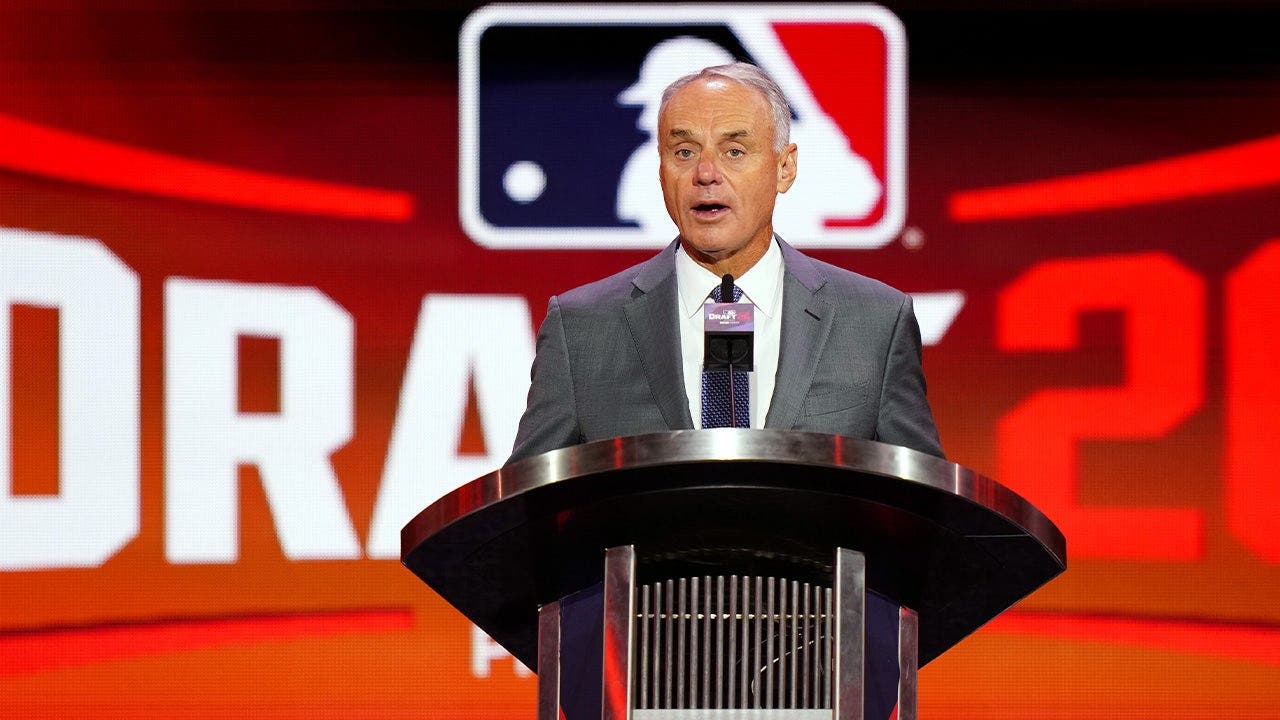
Commissioner Rob Manfred said there is “plenty of room for compromise”. The league’s opening cap proposal set a $258.2 million ceiling and a $180.2 million floor starting in 2028. The 2027 season would be played under current rules.
The union proposed expanded revenue sharing instead. This would increase assistance to low-revenue clubs from roughly $700 million in 2026 to more than $950 million in 2027. They also want rewards for revenue-sharing recipients that qualify for the postseason or finish with a better record than the worst postseason qualifier.
Monday’s revenue sharing agreement
The union agreed to the owners’ media revenue-sharing proposal. This would share all MLB media revenues equally across the 30 clubs. The union also maintained its proposal to increase assistance to low-revenue clubs. It projects over $1 billion in additional assistance over the life of the next CBA.
In return, MLB agreed to two union proposals from May 27. One proposal reduces free agency from six years to five for players who turn 30. This affects 512 players currently on 40-man rosters. Another proposal eliminates draft-pick compensation tied to free-agent signings.
MLB free agency with a lockout on the horizon has suddenly turned into an NBA/NFL free-agent signing spree instead of the usual slow drip of signings. There have been nearly $900 million worth of signings in the last 48 hours
The reserve-period change would be the first time the period has dropped below six years since 1976. Both concessions are contingent on the adoption of a cap-and-floor system.
The league also proposed new signing bonuses for arbitration-eligible players and veterans. MLB estimates the pre-arbitration bonus program would distribute roughly $33 million annually to an average of 175 players.
Owners use long contracts to justify caps
Owners point to Trea Turner’s 11-year, $300 million deal with the Philadelphia Phillies. They use it as evidence that even mid‑tier markets can be trapped by a single signature.
They also point to Giancarlo Stanton’s contract with the New York Yankees. They use it as a warning that wealthy clubs also suffer from the back half of lengthy commitments. Owners see these examples as justification for a salary‑cap system.
Union challenges ownership tactics
The union maintains a proposal to transfer hundreds of millions in non‑media revenue from high‑revenue teams. It estimates these measures would deliver over $1 billion in additional aid over the life of the next CBA, according to Yahoo Sports.
MLB’s newest proposals provide benefits for all classes of players: – Minimum salary of $1 million for all players. Increases to $1.1 million for pre-arbitration players with a full year of service – New centrally-funded 5% signing bonus for all arbitration-eligible player… pic.twitter.com/8jIpMFSjKk
Awful Announcing reported that part of the owners’ public‑relations campaign involves sleight of hand. The owners argue the league links a salary cap to ending local blackouts. But blackouts can be eliminated without a cap. The outlet said it has documented this tactic extensively as a way to win fan support for a cap.
The union argues the league links a salary cap to ending local blackouts even though blackouts can be eliminated without a cap. The league and its teams could have struck non-exclusive deals if they were willing to take less money.
Union salary growth and owner war chest show lockout readiness
The average salary was $13,722 when the players’ union formed in 1954. That is about $170,000 in today’s dollars, according to OnLabor. This shows how far compensation has risen and how central the cap issue has become.
Owners have amassed a $2 billion “war chest” to withstand a work stoppage, according to OnLabor. This shows their readiness for a prolonged lockout. The union says it is prepared for an extended fight based on its history of solidarity.
Andrew Miller, the MLBPA’s director of collective bargaining and strategic initiatives, told Awful Announcing that the idea this is about competitive balance is clearly not true and that the owners are simply pursuing their business interests.
Today, players reaffirmed their commitment to reaching a fair deal by agreeing to the owners’ proposal to share all MLB media revenues equally across the 30 clubs. The MLBPA also maintained its previous proposal to transfer hundreds of millions in additional non-media revenues… pic.twitter.com/GkzJEzN2aQ
The lockout timeline looms
A lockout is widely expected as the CBA expires Dec. 1. The last lockout, following the 2021 season, lasted 99 days. The last strike lasted 232 days from Aug. 12, 1994 to April 2, 1995.
Under the proposed system, Major League Baseball has offered a 50-50 revenue split. However, the union argues that specific deductions taken before this split would result in players receiving a lower percentage of total revenue than they currently do without a cap.
Players do not get paid during the offseason. They would not be paid if a lockout is still going when the regular season starts March 24.

Illinois Lawmakers Return With Three Days to Pass Stadium Bill
Illinois lawmakers return to Springfield Tuesday with three days to pass a stadium financing bill before the veto...

CAS Reinstates Senegal as 2025 Africa Cup Winners
Senegal reclaimed the 2025 Africa Cup of Nations title on Tuesday after the Court of Arbitration for Sport...

Alexandra Eala Returns to Abu Dhabi Open Ranked No. 15, Report Says
Filipina tennis star Alexandra Eala will make her third appearance at the Mubadala Abu Dhabi Open when the...

Arsenal Host Dortmund in Champions League Matchday 5 Clash
Premier League leaders Arsenal host Bundesliga leaders Borussia Dortmund at Emirates Stadium on Tuesday at 8pm UK time...