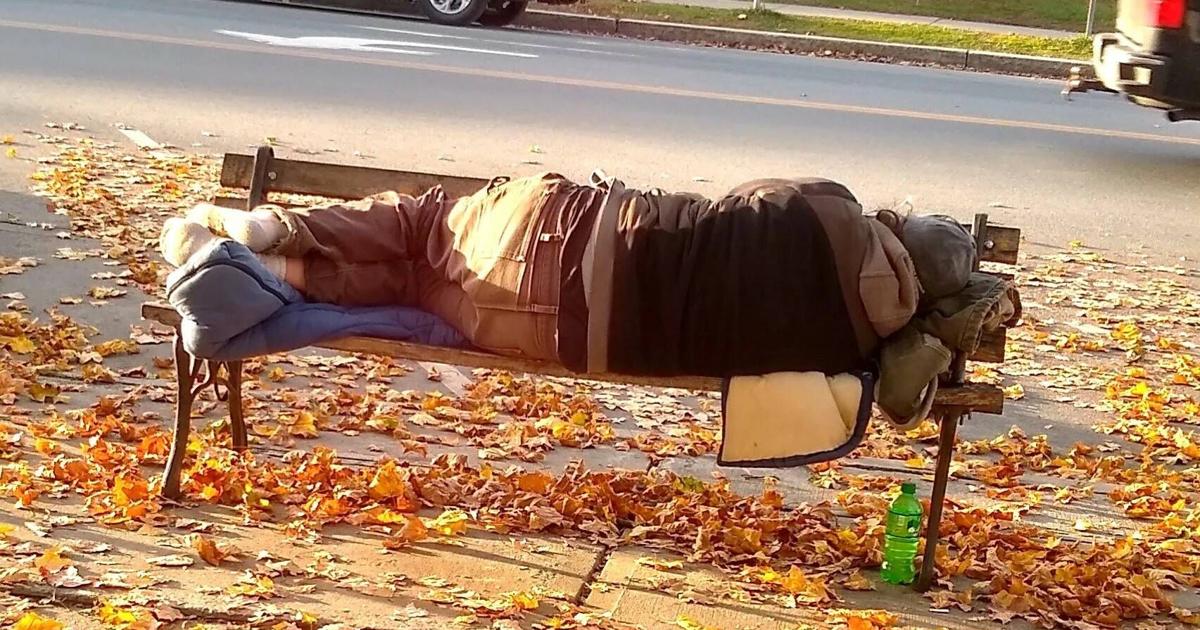
“These people are really struggling, and we do have a responsibility to help them,” said Rev. Jay Voorhees, a member of the Montpelier Homelessness Committee and pastor of Trinity United Methodist Church.
The committee, which began as a pandemic-era task force in 2019 and became a permanent advisory body in 2022, is now recruiting new members to continue bridging the gap between unhoused residents and city policy.
The committee has no authority to spend money or enact ordinances; it identifies needs, gathers input from people with lived experience, and recommends responses to the City Council. “The committee doesn’t have the authority or power to make dramatic changes or take a lot of action,” said City Councilor Cary Brown, who serves as the council liaison. “It’s really just an advisory body.”
One concrete example of the committee’s reach—and its limits—is the locker program. The city previously installed 12 lockers behind the recreation center on Barre Street, giving people a place to store belongings they cannot carry all day. Brown said the units have deteriorated and are no longer adequately weatherproof.
City staff are researching alternatives, but the timeline and funding depend on staff and council action, not the committee itself. The hope, Brown said, is that people who have more stuff than they can carry around will have a safe place to keep it.
The committee meets twice a month over Zoom. Agendas typically cover updates from city staff, the council, and outreach workers, along with ongoing issues and potential projects. Turning recommendations into action requires coordination with city staff and officials, Voorhees and Brown said.
Beyond practical solutions, the committee is trying to shift how the community understands homelessness. “The work that we’re doing for the most part right now is working on education for the community, because there are a lot of myths about homelessness that get passed around,” Voorhees said.
Some narratives involve where homeless people are originally from or why they settle in Vermont. Those misconceptions, he said, influence how residents respond when proposed solutions affect public spaces or neighborhoods.
Voorhees described a tension between supporting a shelter in principle and opposing it when it is proposed nearby. He also pushed back on the perception that unhoused people are dangerous, arguing there isn’t enough data to back up those assertions. “There’s a tendency to dehumanize those who are experiencing homelessness,” he said.
The city is currently accepting applications for the committee. Residents can attend meetings, which are open to the public, or apply through the city’s website; appointments are made by the City Council. A hard copy of the application is available by contacting Evelyn Prim at [email protected] or stopping by City Hall, according to a notice from the city.
The Montpelier Homelessness Committee operates with seven voting members and a non-voting police department representative, meeting twice monthly on Zoom. Its original 2019 charge from the City Council required data-backed recommendations on both immediate needs and long-term structural improvements, including a preliminary budget and timeline.
The committee also reviewed existing regional systems and strategies from other cities that could adapt to Vermont’s changing seasons. In August 2025, the Council amended the city’s Encampment Response Policy, adopting a general non-involvement approach toward emergency campsites while authorizing relocation from designated high-sensitivity areas with an offer of shelter connection.
“It became clear that in the midst of the pandemic there was going to need to be some coordination around how we’re dealing with the growing homeless population in Montpelier,” Voorhees said.

Des Moines Council Ends Argonne Armory Talks With White Lotus
The Des Moines City Council will vote Monday on whether to kill a second redevelopment deal for the...

NU Regents Call Emergency Meeting to Vote on Project Health Hospital
The University of Nebraska Board of Regents called an emergency session for Friday at 10:30 a.m. to decide...
Trump Administration Moves to Dismiss Lawsuit Challenging Peltola Win
"Now that the election is over and the voters sent a very clear message about the direction they...

Bears Host Saints at Soldier Field After Bye Week
The Chicago Bears, sitting at 7-2 after a bye week, host the 3-6 New Orleans Saints on Sunday...