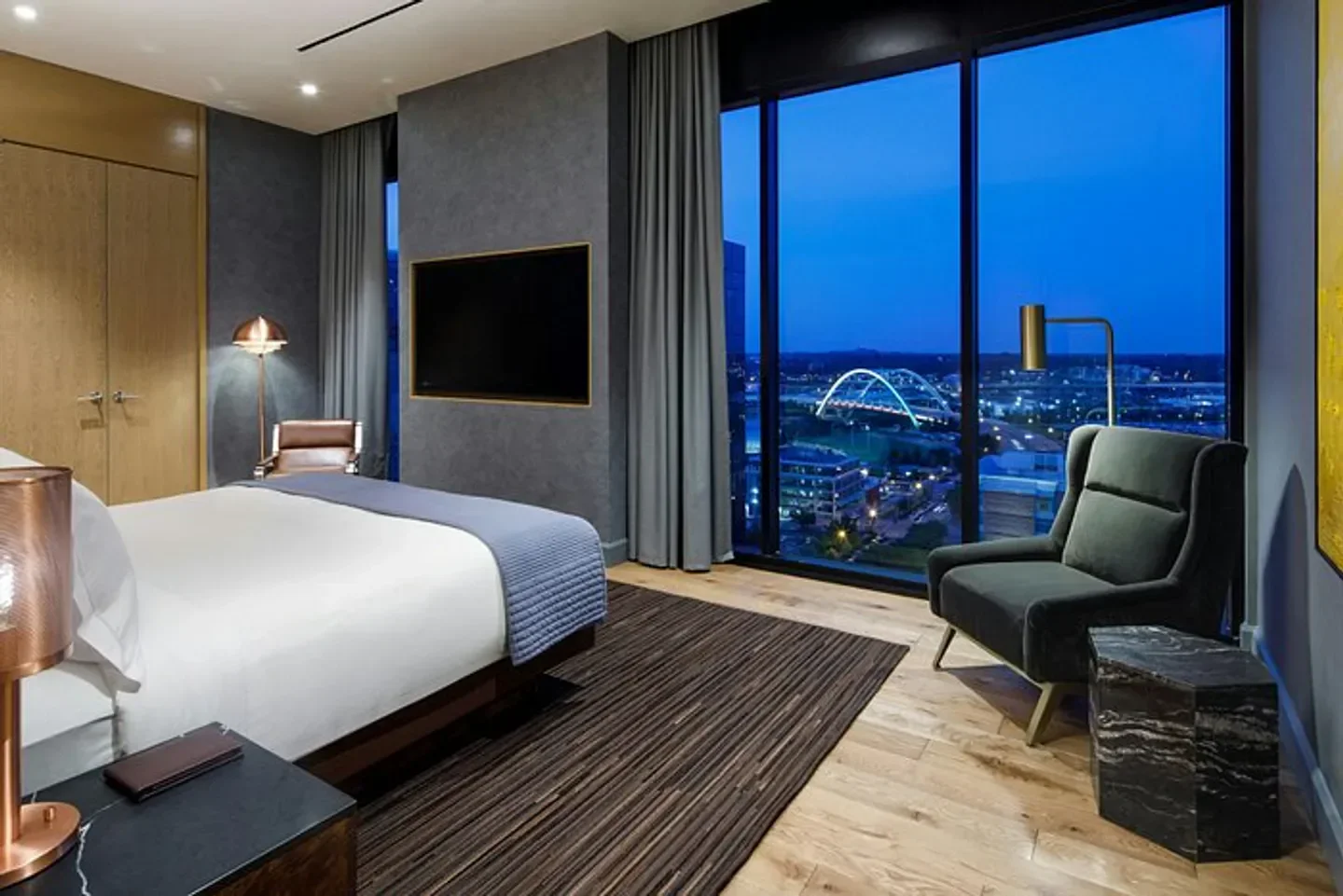
Nashville’s luxury hotel inventory has surged to 5,150 rooms from just 703 in 2016, according to CoStar data cited by Axios, with Ritz-Carlton, St. Regis and Nobu properties in the works or under discussion.
The shift reflects a deliberate marketing pivot by the Nashville Convention and Visitors Corp. “Our product has really elevated over the last few years,” Deana Ivey told Axios. “As different hotels started coming online, we looked at our marketing and started switching it up a little bit to go after a higher-end demographic that would stay in those hotel rooms and pay to eat at those restaurants that are a little more expensive.”
Travelers earning $200,000 command travel budgets six times higher than those below that threshold, Ivey said. Placer.ai data shows 18% of Nashville visitors fall within the “power elite” consumer segment — affluent, highly educated travelers with substantial discretionary income. Convention and Visitors Corp. surveys found 57% of recent travelers say luxury experiences are an important part of their leisure trips, and hospitality executives view this segment as recession-resilient.
Authenticity drives the appeal, Ivey said, anchored by live music and a culinary scene validated by the Michelin Guide’s arrival in the American South last year.
The guide awarded stars to Bastion, Locust and the Catbird Seat. “Twenty years ago, absolutely we were fighting the perception of Nashville being small-town,” Ivey told Axios. “But now we don’t as much, but it makes a difference when we say we do have Michelin-starred restaurants, or a Four Seasons or 1 Hotel, especially when we’re pitching these big events.”
Visitor spending growth outpaced resident spending from February through September, rising 13.1% compared with 3.6%, according to Zartico credit card data.
Food and beverage spending by visitors grew 12.3% while resident spending was flat. Retail spending increased 18% for visitors versus 7.3% for residents. Total visitor spending reached $11.6 billion last year, generating $1 billion in state and local taxes.
“We have to find different ways to fill those hotel rooms,” Ivey said. “So diversifying our marketing and sales approach. Going after international travelers more, going after the higher-end market more, not abandoning who we always attract, but trying to bring in more people from different audiences.”
Worth a look

University of Mary Hosts Tuition-Free Nursing Academy Sessions in Billings Dec. 1
The University of Mary will hold three information sessions in Billings, Montana, on Tuesday, Dec. 1, to promote...

Kansas Jayhawks Host Denver Pioneers at Allen Fieldhouse: Starters, Time, TV Info
Kansas hosts Denver at 7 p.m. Monday at Allen Fieldhouse in Lawrence; the game streams on ESPN+ and...

No. 9 Texas Tech Faces No. 23 Louisville in Players Era Festival Opener: TV, Streaming, Radio Info
No. 9 Texas Tech faces No. 23 Louisville on Tuesday, November 24, at 7 p.m. Central (8 p.m....

Des Moines Nonprofit Knock and Drop Iowa Expands Pantry Hours After County Investment
"Many families are working hard and doing everything 'right,' yet they still struggle to afford basic necessities," said...