
A nationwide Emergency Alert System test on Tuesday, Nov. 17, sounded only on televisions and radios, leaving mobile phones silent by design.
If you stared at your phone Tuesday afternoon waiting for the familiar buzz that never came, you weren’t alone — and you weren’t missing anything. The Federal Emergency Management Agency and the Federal Communications Commission ran their mandatory nationwide test of the Emergency Alert System, or EAS, strictly over broadcast airwaves. FEMA confirmed the Wireless Emergency Alerts system was not part of this exercise, a detail that caught many people off guard after the previous alert happened on phones.
Broadcast-only by design
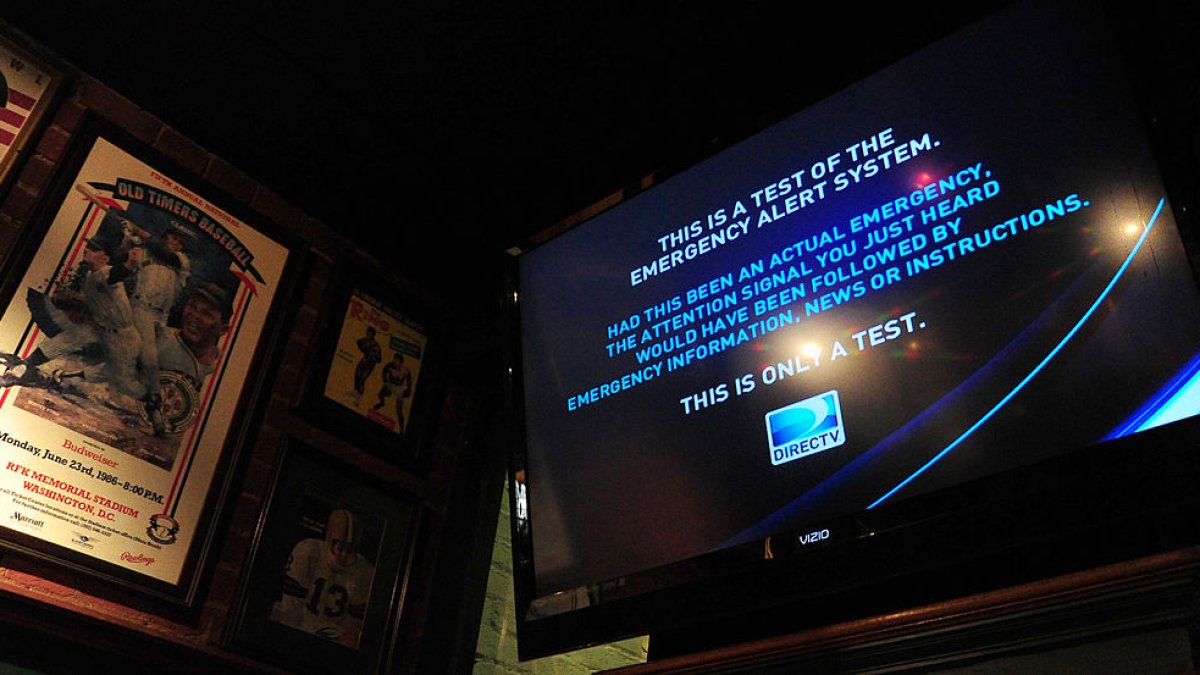
The test launched at 1:20 p.m. and ran for roughly one minute, NBC DFW reported. Viewers and listeners saw or heard the standard message: “This is a nationwide test of the Emergency Alert System, issued by the Federal Emergency Management Agency. This is only a test. No action is required by the public.”
The familiar, jarring header tones — the dual-tone multi-frequency screech engineered to cut through background noise — accompanied the alert.
Eric Upton, Department of Emergency Services Planning Chief, explained the rationale to KFYR-TV: “They’re testing the system as a whole across the United States so that when the presidential alerts, if the president needs to get in touch with the American people they can get it out successfully.” The requirement is straightforward: federal law mandates a nationwide EAS test at least once every three years.
Why phones stayed dark
The Wireless Emergency Alerts system — the channel that pushes Amber Alerts, severe weather warnings, and presidential messages to cell phones — was tested in 2023. FEMA told NBC DFW that this year’s exercise assesses only the broadcast-based EAS, the architecture that has existed since 1997. That system allows the president to address the nation within ten minutes across various devices. State and local agencies also use it for tornado warnings and AMBER Alerts.
The sound nobody forgets
Al Kenyon, FEMA IPAWS’s customer support brand chief, told NBC in 2023 the tones are intentionally harsh: “You know when you hear that sound, something important that may affect your life or property is going to follow.” The payload includes standard EAS alert tones for people who are deaf or hard-of-hearing, ensuring the alert cuts through even when the audio is muted or the viewer relies on captions.
What happens after the beep
Once the minute ends, agencies review how the system performed, including whether broadcasters aired the alert. FEMA tested the Wireless Emergency Alerts system in 2023 and will not include mobile phones in this year’s Emergency Alert System test.
The Federal Emergency Management Agency, created by Presidential Reorganization Plan No. 3 of 1978 and implemented on April 1, 1979, consolidated more than 100 separate federal offices that had previously competed for control of disaster scenes. It became part of the Department of Homeland Security when that department was established in 2003.
For the public, the immediate takeaway is simple: if you want alerts that actually reach your pocket, download the FEMA app. It pushes winter storm warnings, blackouts, tornado alerts, and more — independent of the national test cycle.
🚨 THIS IS ONLY A TEST! 🚨 The Federal Emergency Management Agency (FEMA), in coordination with the Federal Communications Commission (FCC), is scheduled to conduct a nationwide test of the Emergency Alert System (EAS) today, Tuesday, November 17, 2026, at approximately 12:20… pic.twitter.com/db9QPCxoaT
More on Emergency Alert System

Four Anchorage Men Diagnosed With Clade Ib Mpox, No Travel History, Raising Local Transmission Concerns
Four Anchorage men have been diagnosed with mpox despite reporting no travel outside Alaska, raising the prospect of...

USDA Meat Animal Research Center Posts Farm Hand Job at $18/Hour
A 34,000-acre research facility in the heart of Nebraska is hiring a farm hand, offering $18 an hour...

Thunder, Pelicans Play NBA Cup Game With Heavy Injury Lists
The Oklahoma City Thunder host the New Orleans Pelicans Friday night in an NBA Cup group-stage matchup where...
PA Humanities Honors 180 Window Keepers From 65 Pennsylvania Counties
"Democracy is a labor of love and of loving," Yolanda Wisher told the room at the Civic Club...