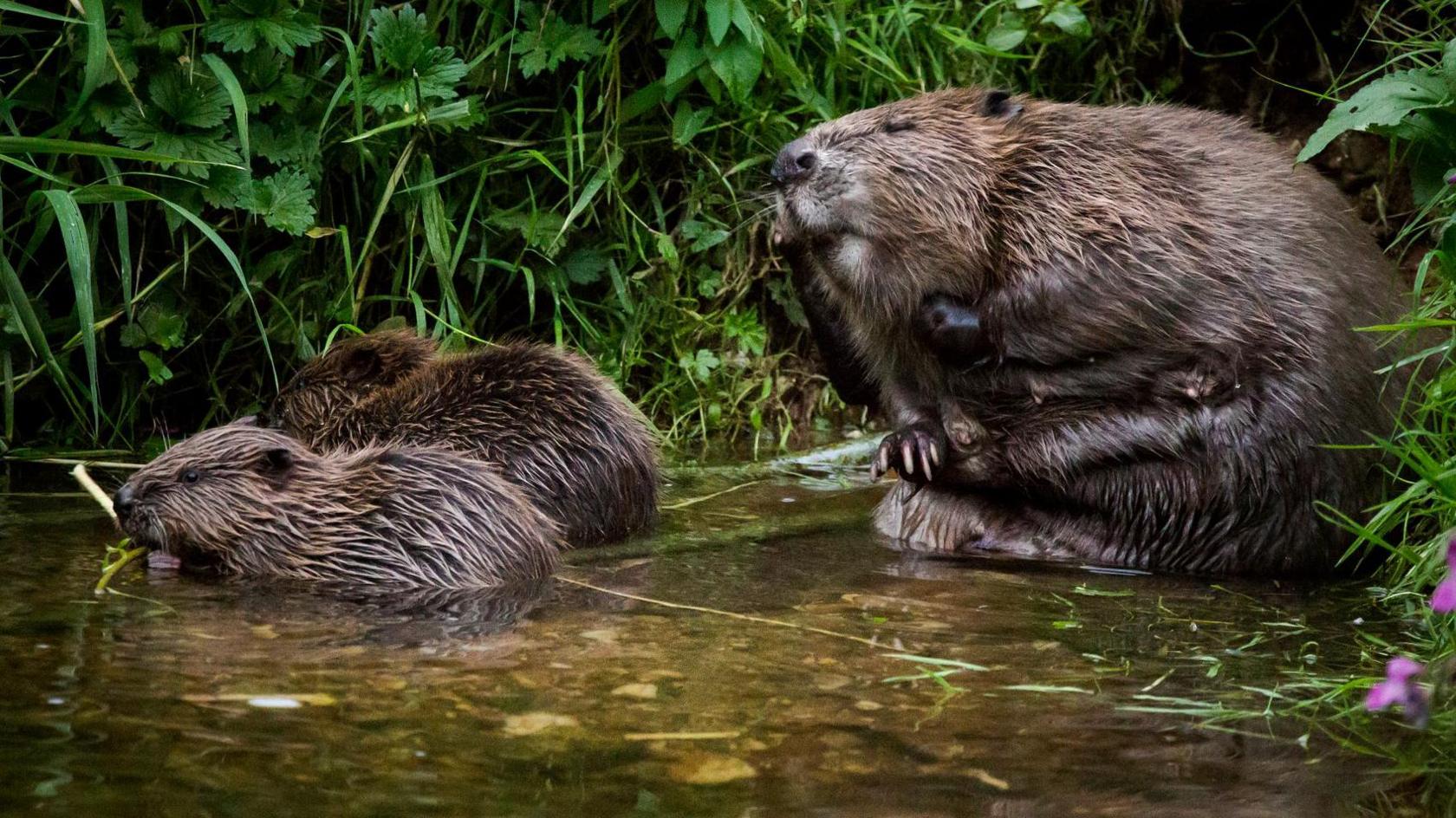
Natural England will take a “precautionary approach” to future beaver releases after two wild beavers in south-west England were found dead with bovine tuberculosis.
The first beaver was found dead in autumn 2026 and the second in spring 2025, though the results were only announced now, Natural England said. The two cases are considered isolated and independent. The National Farmers’ Union called for a review of the release scheme. “News that beavers are also a vector for bTB will be concerning for farmers, with existing beaver populations growing in England and government supporting their expansion and co-existence,” NFU deputy president Paul Tompkins said. “It will raise questions about why this risk was not fully considered before beaver reintroduction projects were permitted, and how this will influence future beaver policy and decisions.” Cumbria cattle farmer Matthew Blair said releasing beavers into areas with known TB issues was “bonkers” for the welfare of the animals. Craig Bennett, the chief executive of the Wildlife Trusts, told the Guardian the farming reaction was premature. “It is really disappointing that some elements of the farming community have rushed to blame beavers and leap to conclusions,” he said. He warned the precautionary stance could stall a programme that hopes to release 100 beavers on nature reserves in coming months.
“Even the Wildlife Trusts as a charity has to submit a PhD-worth of evidence for every individual beaver we release. Every single beaver released is already screened. It is not possible to be more precautionary than they are already being.” Bennett said veterinary advice indicated the beavers likely caught the disease from livestock, not the reverse. “What is likely to have happened is they caught it from contaminated slurry that farmers have poured into rivers,” he said. The UK deputy chief veterinary officer, Ele Brown, said officials are reviewing the evidence for the source of infection.
“At present there is no evidence that beavers increase the risk of TB transmission to livestock, other wildlife or people,” Brown said. “Although these findings do not demonstrate an increased risk of bTB transmission by beavers, it is appropriate to take a precautionary approach while the significance of the findings is better understood, to ensure health and welfare of both livestock and beavers,” they said.
Beavers were extinct in Britain for 400 years until about 20 years ago. Beavers were finally released for the first time under government licensed schemes last year. There are an estimated 600 to 800 beavers in the wild in England and 1,500 in Scotland.

AZCentral Reports on 2026 Holiday Light Displays in Metro Phoenix
Metro Phoenix residents are preparing for the 2026 holiday season as residential light displays across the Valley begin...

Three Killed in Cortez McDonald’s Shooting Suspect Found Dead
Three young adults were killed and a fourth person was injured during an early-morning shooting at a McDonald’s...

Henry Crocombe Seals England T20 Series Win Over Australia
England clinched their T20 series against Australia with a seven-run victory at the Sydney Cricket Ground on Sunday...

Rhode Island Ranks Top U.S. State for Camping in Study
Rhode Island edged out Colorado and California to rank as the top U.S. state for camping in a...