Food pantries across the northern United States turned away families hours before Thanksgiving as expanded federal work requirements cut millions from nutrition assistance, North Country Public Radio reported.
In Malone, New York, a line of cars stretched for miles along the Canadian border for a Regional Food Bank of Northeastern New York distribution. Volunteers exhausted supplies before reaching everyone waiting. “She’s got nothing. It comes down to you buy for your children, or you pay your bills. What’s it going to be, you know?” said Cory, who requested her full name not be used because she feared trouble with her employer.
She was picking up a meal for a single mother who lost SNAP benefits after an injury left her unable to work and without a car. Cory told North Country Public Radio the mother’s food stamps were cut off.
Expanded work rules took effect last July
Since July of last year, millions of people nationwide, including about 1 1/2 million children, have lost Supplemental Nutrition Assistance Program benefits after Republican budget legislation tightened eligibility, North Country Public Radio reported.
The changes require more adults to work, volunteer, or train at least 80 hours a month to receive benefits beyond three months in a three-year period. WRAL reported the law, which Republican lawmakers titled the “One Big Beautiful Bill Act,” was signed by President Donald Trump last year.
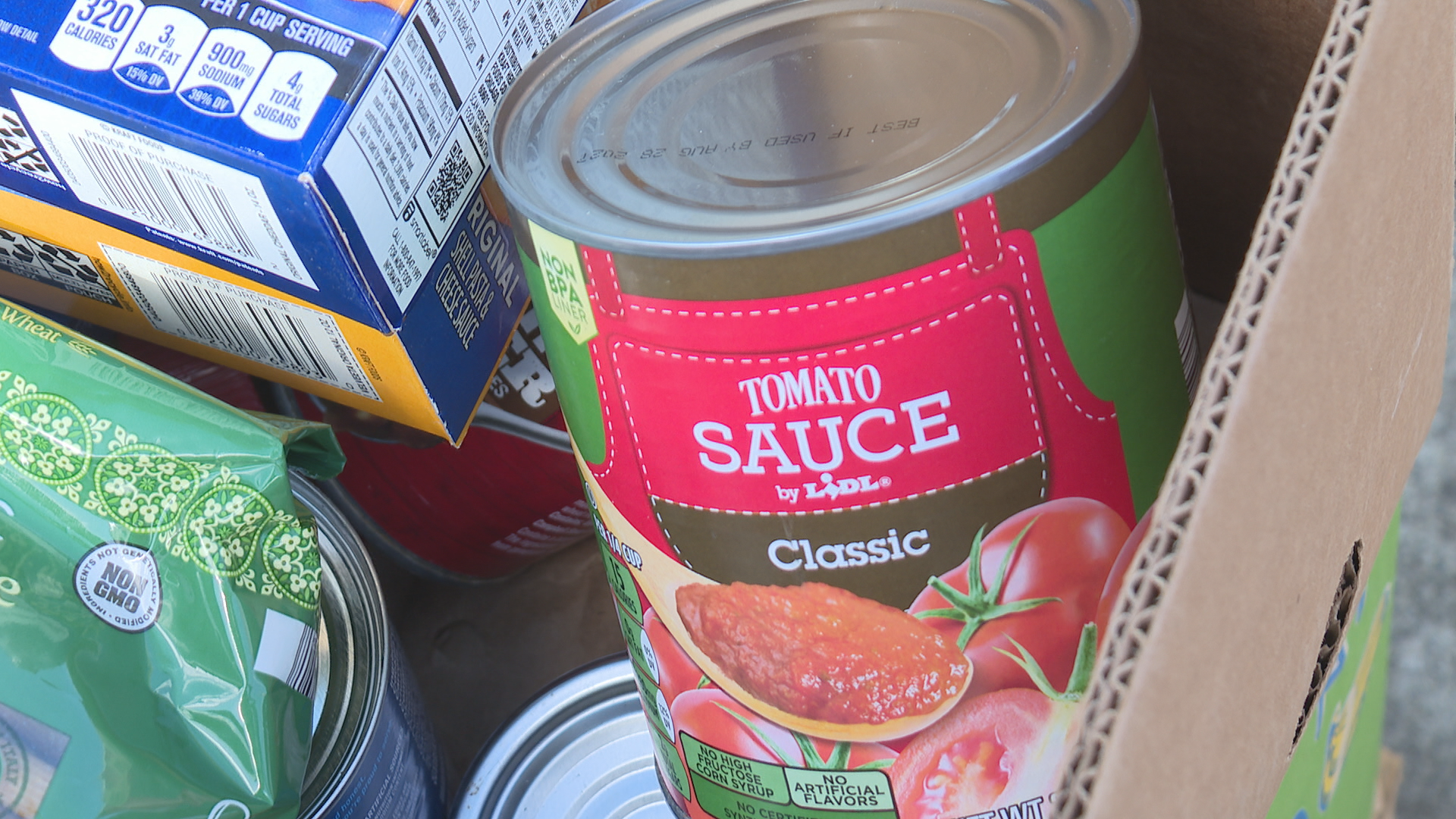
Demand surges at pantries from New York to North Carolina
At a Canton, New York pantry, 20-year-old Nathan Vancourt said he lost benefits last year and struggled to re-enroll under the new rules while experiencing homelessness. “We’re still, as you know, getting food from places like this. It’s something that just brightens my day, I guess, I’d say,” Vancourt told North Country Public Radio.
Pantry director Mia Benjamin said many clients this year cited lost SNAP benefits. “I was there once in my life. You know, I was a struggling mother with three children. And I know what it’s like to — don’t know where your next meal is going to come from,” Benjamin said.
In North Carolina, the Food Bank of Central & Eastern North Carolina said partner pantries are serving up to 60% more people than a year ago.
“We have over 630,000 people who don’t know where their next meal is coming from,” said Jason Kanawati Stephany, the food bank’s vice president. “… It’s the worst crisis that we’ve seen in at least a generation.” The number of North Carolinians receiving food stamps has fallen 20% over about nine months, WRAL reported.
States absorb new administrative costs
Since October 1, North Carolina has covered 75% of SNAP administrative costs, up from 50%, adding an estimated $85 million annually to state taxpayers, WRAL reported. States may also pay a portion of benefit costs based on payment error rates beginning in October.
Democrats pledge reversal in January
Senator Chuck Schumer said at a Watertown, New York news conference Monday that Democrats will attempt to undo the changes when they take control of both chambers of Congress in January.
“The problem isn’t what’s on the Thanksgiving table but whether there’s anything at all. And when our new historic Democratic majority takes office in January, we’re going to try to undo these awful cuts,” Schumer said. U.S. Rep. Deborah Ross, a North Carolina Democrat, said congressional Democrats are drafting legislation to reverse the cuts.
White House defends changes as fraud prevention
The Trump administration said the rules reduce government waste by preventing improper payments. “Rather than throwing money at a broken system, the Trump administration will continue to stop fraudsters stealing from these important programs,” White House spokeswoman Allison Schuster said in a statement to WRAL.
North Carolina Rep. Erin Paré, a Republican, pointed to state tax cuts as relief for consumers. “We want to make sure that we are lowering the cost for North Carolinians and Republicans have done a great job so far enacting legislation to do that,” Paré said.
Worth a look

Navy Begins Classified Briefings on USS South Dakota After Two Lawmakers Demand Answers
The U.S. Navy has begun classified briefings for Congress on the USS South Dakota incident after lawmakers demanded...

Montana Track & Field Breaks 35 Records, Scores Most Big Sky Points Since 2002
Doug Fraley begins his fifth season leading Montana track and field and cross country with the program coming...

CDC: Flu Activity Growing in Central Missouri Counties; Doctors Urge Vaccination
The Centers for Disease Control and Prevention has identified a seven-county region in central Missouri where influenza activity...

Cheyenne Regional Medical Center Expands ‘Reading is Key’ to Ages 6-12 With $25,000 Meta Grant
Cheyenne Regional Medical Center received a $25,000 grant from Meta in August 2026 to expand its "Reading is...