In a first-person essay for KOSU, Sarah Liese writes that the inaugural NDN Territory Gathering of Ink in Oklahoma City reframed Indigenous tattooing as ancestral practice rather than taboo.
The three-day convention ran Oct. 23–25 at the OKANA resort adjacent to the First Americans Museum, drawing about 200 participants from more than 20 tribes, organizer Missy Mahan told KOSU. Oklahoma was the last state to legalize tattooing, lifting its ban in 2006, Crosswinds News reported.
Mahan, a citizen of the Tohono O’odham Nation and member of the Yuchi Tribe who co-owns Desert Bloom Tattoo and Salon in Phoenix, said she launched the gathering to represent southeastern tribes while making space for other Indigenous cultures.
“Thousands of years later, we see it in a book or a photo,” Mahan said. “You know, we see it as ancient and ancestral, which it is. But it’s like…that’s probably contemporary for them.”
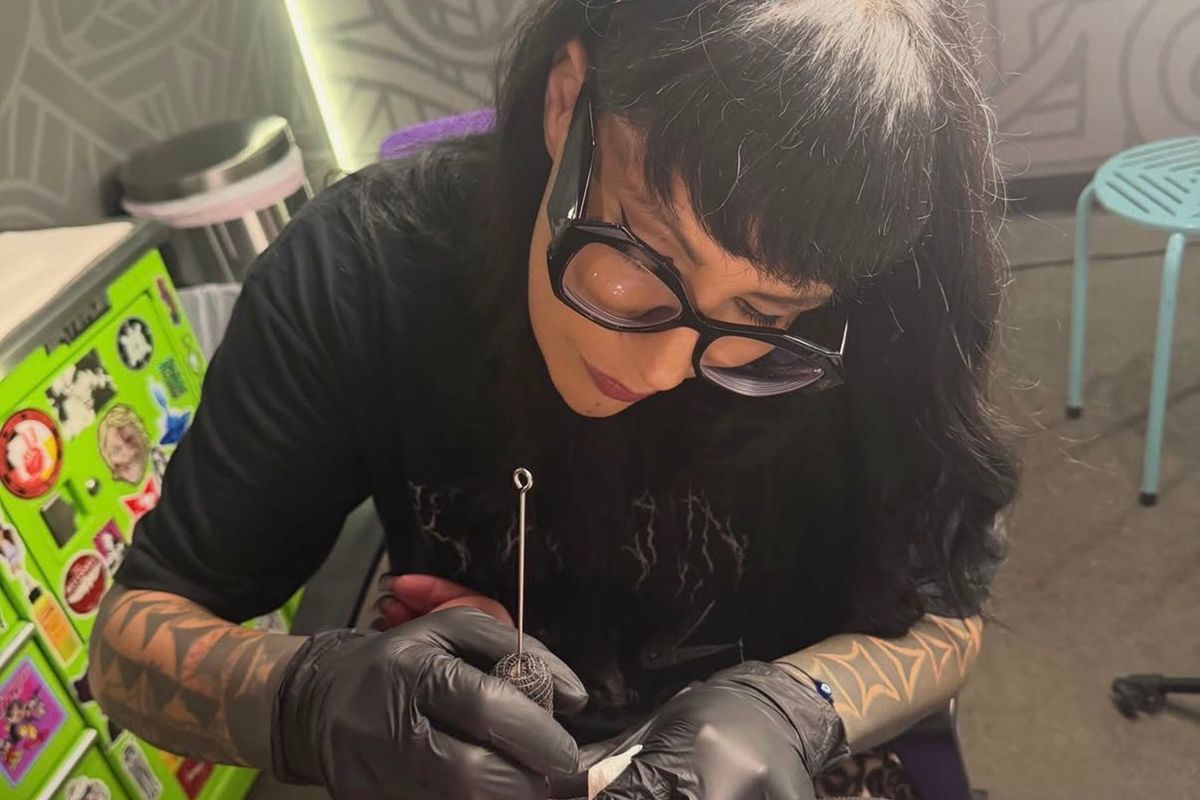
Kii Johnson, a Muscogee Nation citizen and descendant of the Cheyenne and Arapaho Tribes, tattooed Liese with walleye designs incorporating elements from her Navajo grandmother’s art. Johnson, 24, prayed with Liese and burned sage before the marking.
“We normally burn medicine and have a prayer before we get started — just to center and make sure that we’re in the right headspace because the energy that you bring to those spaces is make or break,” Johnson told KOSU.
“Tattoos are seen as such a taboo, unholy thing,” Johnson said. “When we talk about ancestral markings, it’s rather the opposite.” Johnson added: “If you have a tattoo on your face that says that these are your people and this is where you’re from, you have to represent yourself well and you have to represent your people well.”
Mahan uses Ha:sañ spines — saguaro cactus spines — for ceremonial tattoos and offers them to non-Indigenous clients for non-ceremonial work. “I’ve gotten nothing but positive feedback from elders of my own community,” she told KOSU. She said she has faced pushback, including anonymous social media comments arguing she shouldn’t perform ceremonial tattoos in a shop setting. Her rebuttal: her shop is safe, sterile and accessible.
Johnson said health-department regulations complicate ceremonial work. “Health department-regulated spaces can be a little tricky and a little confusing because you don’t, you know, want to pull a ceremonial practice into just a traditional tattoo shop on a normal Wednesday, when there’s walk-ins coming in and other people working around you,” they told KOSU.
Nathalie Standingcloud, a Cherokee, Muscogee (Creek), Salish-Kootenai and Colville artist specializing in cultural revival tattooing, said such conventions “always feel like a reunion.”
She told Crosswinds News: “There’s conversations about art but also about our culture and communities. Tattoo art in general is always candy for the eyes but there’s something special about Indigenous tattoo art that’s also visual food for the soul. Stories are shared, talent is celebrated, and the pain is transformative. I love this tattoo medicine.”
At the NDN Territory Gathering of Ink, Johnson tattooed one of Liese’s walleye designs by handpoke and the other with a machine; Johnson told KOSU there is no guidebook on traditional tattooing and that the gathering is the best place for such conversations, while Mahan said she hopes the event continues.

Costco Planned Near Skye Canyon in Northwest Las Vegas; Neighbors Cite Traffic Fears Near Schools
A seventh Costco warehouse is planned for northwest Las Vegas near the Skye Canyon interchange, drawing neighbors who...

Minneapolis Duplex Listed at $5,634 Upfront With Mandatory Fees, 30-Day Minimum
A Minneapolis duplex listed for short-term rental at $5,634 per month includes mandatory fees in the advertised rate,...

NYC Revamps Attendance Rules, But Teachers Say Grading Policies Undermine Efforts
New York City revamped public school attendance policies for the 2025-26 school year after about one-third of students...

South Dakota Can’t Recruit Its Way Out of Workforce Crisis, Must Build Organizational Capacity
In a column for the Brookings Register, Tresha Moreland argues that South Dakota cannot solve its workforce shortage...