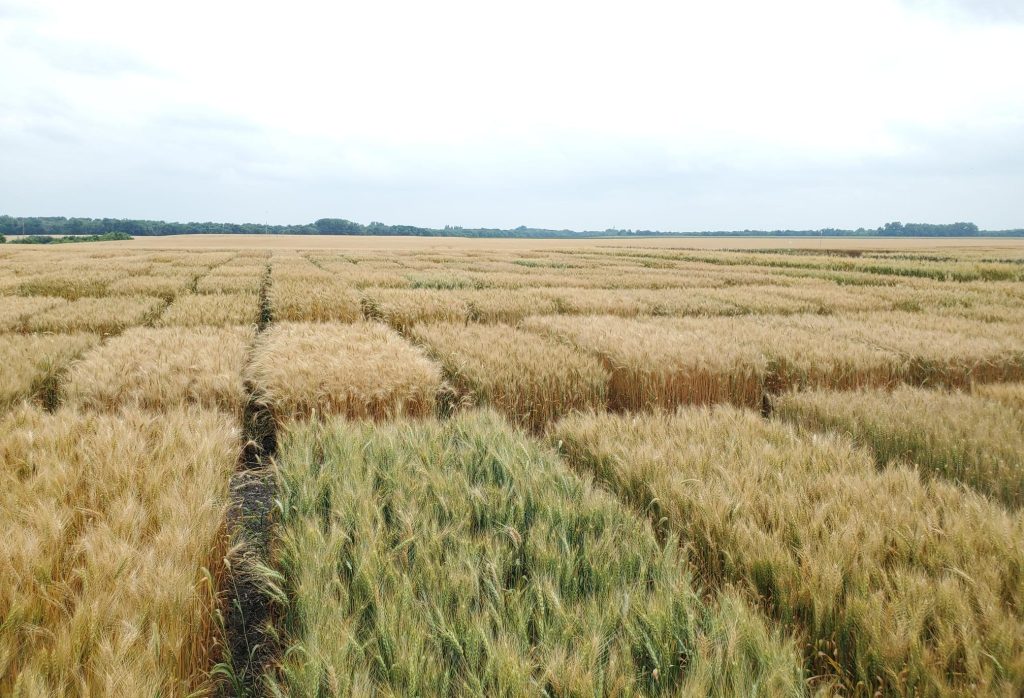
North Dakota State University Extension released its 2026 small-grain variety trial results and selection guides this fall, adding a new Disease Risk Index for hard red spring wheat while statewide average yields slipped to 51 bushels per acre from 55 a year ago.
Data come from replicated trials at each Research Extension Center and other locations statewide; private companies enter lines voluntarily, providing a snapshot of commercially available varieties.
A new Disease Risk Index Value appears in the hard red spring wheat guide. The number reflects a variety’s overall disease risk, calculated from a weighted formula based on the ranked importance of wheat diseases including head scab, bacterial leaf streak and tan spot. The higher the value, the higher the disease risk.

The 2026 growing season was highly variable, according to the NDSU hard red spring wheat variety trial results, A574-26 reported. Dry to very dry seeding conditions dominated April and May, especially in western North Dakota. Some growers delayed planting waiting for rain.
Portions of the western half of the state received abundant June rainfall while other locations remained dry; most of eastern North Dakota stayed dry to very dry throughout the season. Very high temperatures in mid- to late July during grain fill limited top yield.
Because of the generally dry conditions, some growers reported well-above-average protein values, with the crop averaging above 14% protein. Quality is generally not a problem, except where localized heavy rains in August and September caused pre-harvest sprout damage on crops ready to harvest.
NDSU researchers use replicated experimental designs that allow statistical analysis of trial data, the university reported. The least significant difference values listed beneath each column come from those analyses and apply only to the numbers in that column.
Millers and bakers evaluate many factors when determining the quality and value of wheat they purchase.
Strong gluten proteins, high baking absorption and large bread loaf volume indicate superior milling and baking quality, the guide states.
WB9590 remained the most popular hard red spring wheat variety for the fourth year, planted on 16.6% of North Dakota acres in 2026. WB9590 is a WestBred release, MN Torgy a University of Minnesota variety, and ND Stampede a 2024 NDSU release.
North Dakota State University Extension conducts replicated variety trials at each Research Extension Center and other locations statewide, providing farmers with head-to-head comparisons of commercially available varieties. The data, summarized over multiple years and locations, helps producers select optimal crops based on yield potential, protein content, and disease response.
Extension agronomists, like Clair Keene, ensure the guides capture regional performance differences, enabling farmers to choose varieties best suited for their specific area. The 2026 guides also include a new Disease Risk Index Value, calculated from a weighted formula reflecting disease threats such as head scab and tan spot, offering a quick reference for assessing risk.
NDSU recommends producers balance variety selection by considering yield potential, protein content, straw strength, plant height, pest response and maturity, using data summarized over several years and locations near their farm. The publication also provides gluten strength, milling and baking quality ratings (Tables 7 and 8) based on 2025 field trials across multiple locations.
Related reading

Indiana Women’s Hunting Licenses Rise 63% Over Two Decades, DNR Says
Indiana women buying hunting licenses rose 63 percent over the past two decades, reaching 14,264 in 2025 and...

Orioles Face Left-Handed Void After Acquiring Freddy Peralta
The Baltimore Orioles face a left-handed void in their starting rotation after acquiring Freddy Peralta, Birds Watcher reported....
Group 1 GMC Rivertown Breaks Down Lease Math to Show True Monthly Cost
Group 1 GMC Rivertown in Columbus breaks down the math behind advertised lease offers so shoppers can compare...

Missouri Hosts Winless Arkansas-Pine Bluff Friday at Mizzou Arena
Missouri hosts winless Arkansas-Pine Bluff at 3 p.m. Missouri, riding a five-game winning streak after a 78-67 victory...