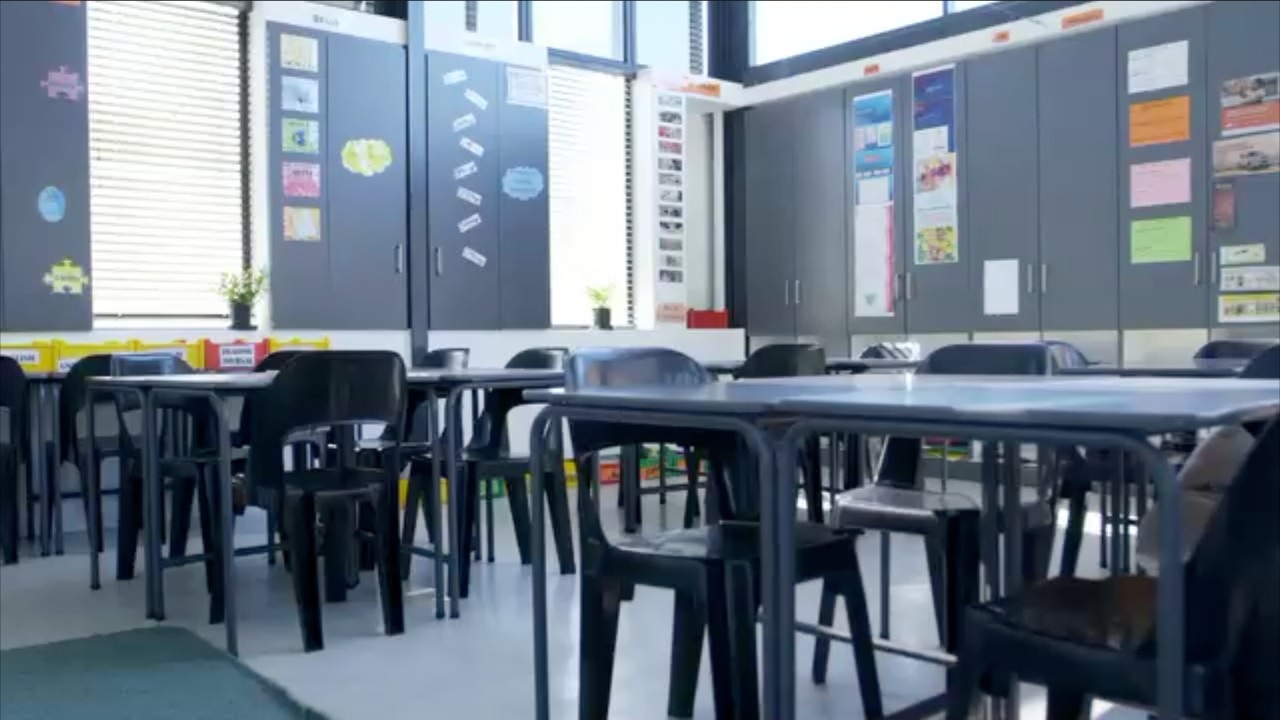
Nearly 19,000 Minnesota students experienced homelessness during the 2024-25 school year, according to a November report from SchoolHouse Connection that shows persistent hurdles in attendance, reading, and graduation rates.
Housing instability often disrupts a child’s routine long before they reach a classroom, according to Cathy ten Broeke, executive director of the Minnesota Interagency Council on Homelessness (MICH).
“If you don’t have a place to sleep at night or a very consistent place to sleep at night, it’s hard to do your homework. It’s hard to get enough rest. It’s perhaps hard to get enough to eat, and so they’re not showing up to school maybe at all,” ten Broeke said.
Federal figures from the National Center for Homeless Education show that the identified student homelessness population in the state rose nearly 4% between the 2022-23 and 2024-25 school years. Ten Broeke said that schools frequently serve as the initial detection point for families facing housing stress, making them vital allies. “Schools are such an important partner in ending homelessness for kids,” she said.
These disruptions manifest quickly in academic metrics. While approximately 47% of all Minnesota third graders reach reading proficiency, that figure falls sharply to 15% among students experiencing housing instability. Graduation data reveals a similar gap: the state’s overall four-year graduation rate stood at about 84% in 2024, compared to 53% for students experiencing homelessness.
Chronic absenteeism emerges as one of the most reliable markers of housing instability. “Housing instability shows up first as maybe a missed day of school, and then that missed day of school turns into more missed days of school, and pretty soon we have a child who has chronic absenteeism,” ten Broeke said.
During the 2024-25 school year, about 61% of Minnesota students facing homelessness were chronically absent, missing at least 10% of their enrolled school days. That rate exceeds the national average of about 47% for similarly situated students nationwide, according to federal data from the National Center for Homeless Education.
While school system metrics center on enrolled youth, young people represent a substantial portion of Minnesota’s broader unhoused population. On any given night, about 9,000 people experience homelessness statewide under the federal housing definition, with roughly half being children and youth.
Ten Broeke explained that many students are not necessarily in shelters or sleeping outdoors, but rather staying temporarily with friends or relatives due to a lack of stable housing—arrangements omitted from single-night federal housing counts.
State leaders continue to target the crisis through initiatives like Homework Starts with Home, a Minnesota Housing program supplying rental assistance, financial aid, and support services to families and unaccompanied youth.
“The whole idea behind the program is that a student needs a home in order to do their homework,” ten Broeke said. Operating currently in only six communities, the program is slated to expand as Minnesota Housing accepts applications for up to $5.5 million in grants.
The funding relies on existing state allocations rather than new appropriations and is projected to serve roughly 430 families, subject to legislative approval and returned funds. Eligible organizations, including counties and Tribal Nations, have until Jan. 15, 2027, to apply. Families seeking support can review the “Minnesota Housing’s Homework Starts with Home contact list”.
“I think in the short term, it means that every student who may be right now experiencing housing instability or homelessness feels and knows that they are getting all the supports that they need to succeed in school,” ten Broeke said.
Mississippi State Visits No. 6 Notre Dame in NCAA Second Round With Sweet 16 on Line
Mississippi State faces No. 6 Notre Dame on Friday with a Sweet 16 spot on the line. Mississippi...

Minnkota Power Seeks IT Technical Support at ND Plant
Starting at $58,161 per year, Minnkota Power Cooperative is seeking qualified candidates for an IT technical support position...

Concord Acquisition Corp II EPS Growth Rebounds 260.0% in FY2025 After Prior Decline
Concord Acquisition Corp II posted an earnings per share growth rate of 260.0% in fiscal year 2025, rebounding...

Tallahassee Democrat Launches Tour of Lights Map for Holiday Displays
Holiday displays illuminate Tallahassee neighborhoods as the Tallahassee Democrat launches its annual search for the community's most creative...