Nebraska will cut Medicaid developmental disability provider rates by 4 percent on January 1, 2027, with a second 4 percent reduction scheduled for 2028, WOWT reported.
- First-ever waiting list for Aged and Disabled waiver expected in April 2027.
- Home and vehicle modification funding ends across five waivers on July 1, 2027.
- DHHS seeks $500 million more from the Legislature; without cuts the request could top $1 billion.
Five bulletins, three phased changes
The payment reductions begin in 2027; the service eliminations and waiting list depend on waiver amendments or federal approval.
For developmental disability waivers, all hourly and daily rates fall 4 percent on January 1, 2027, and another 4 percent on January 1, 2028.
A separate bulletin sets new maximums for personal care, companion and respite under the Aged and Adults and Children with Disabilities waiver and the Traumatic Brain Injury waiver: agency personal care capped at $26.32 an hour, below the current negotiated range of $28 to $34 effective July 1, 2026; agency companion care at $22.37; agency one-to-one respite at $28.76, down from $29.96. Independent personal care rises to $17 an hour from $16, while independent respite drops to $15.36 from $16.
Home modifications, vehicle modifications and assistive technology services are slated for termination on July 1, 2027, across all five waivers. DHHS said further information about the waiver amendment and transition planning will follow.
Waiting list tied to capacity limit
The Aged and Disabled waiver’s federally approved capacity is 14,000 participants. DHHS plans to submit an amendment to reserve capacity for participants with critical needs. The notice does not set a start date or confirm a waitlist is already operating.
Family impact
Carly Moore, 24, lives with restrictive lung disease and 30 percent lung capacity. She has survived six life-threatening respiratory crises. She cannot use her arms and plays video games with her feet. Her mother and caregiver, Linda Garcia, said the family bought Moore’s chairlift before the funding change.
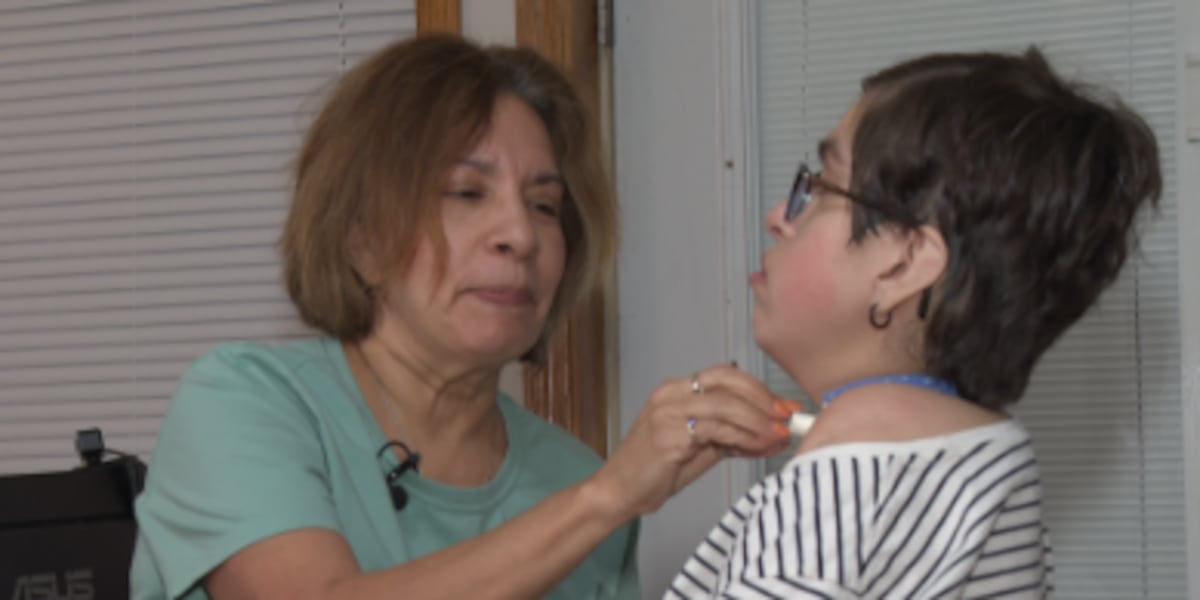
“It feels like they’re putting a cement block on our head, on our shoulders, and then just keep pushing us down. And down. It’s, it’s frightening. It’s very frightening,” Garcia told WOWT.
“I’m fortunate that we got her chairlift before all this, but there’s hundreds of families that are… that are going to be affected by this,” Garcia said.
“When we got the news on Friday, I was terrified of what’s going to happen next. Because I don’t want anything to happen to me or like be in a worse situation that could possibly be me separated from my own home,” Moore told WOWT.
“Please listen to us. We are human beings. We deserve to have a place where we feel home and comfortable. We are not price tags. We are family members,” Moore said.

Moore said other families she knows are scared, too. “I would say to the families, please keep fighting. Please keep advocating. Because if we don’t, who else? I know it’s tiring. I know it’s exhausting. But please don’t give up,” she said.
State rationale
Jeff Powell, a DHHS spokesperson, said the department made necessary adjustments to ensure the long-term sustainability of services. Nebraska’s rates remain comparable to surrounding states, he said, a yardstick DHHS also used in July 2025 when adjusting applied behavior analysis rates, Bloom Ministries reported.
“DHHS has had to make necessary adjustments to certain Medicaid reimbursement rates and programs to help ensure the long-term sustainability of these services,” Powell said in a written statement to WOWT.
“They’re not looking at us as human beings. They’re, it’s like, we’re being punished for having family members with disabilities. We’re being punished for wanting to have just a… simple life like everybody else,” Garcia said after reading the statement.
DHHS will request approximately $500 million in additional funding from the Legislature during the upcoming session. Without the adjustments, the request could exceed $1 billion, Powell said.
No public notice yet
As of Monday morning, Bloom Ministries found none of the waiver changes posted in a DHHS public notice, provider bulletin or waiver filing. A fifth bulletin would replace existing shared-living authorizations for relatives serving as independent contractors under the comprehensive developmental disabilities waiver with a new Relative Shared Living service paying $147.15 a day, pending anticipated waiver approval for July 1, 2027, JBIZ News reported.
Related reading
University of Mary Hosts Tuition-Free Nursing Academy Sessions in Billings Dec. 1
The University of Mary will hold three information sessions in Billings, Montana, on Tuesday, Dec. 1, to promote...

Kansas Jayhawks Host Denver Pioneers at Allen Fieldhouse: Starters, Time, TV Info
Kansas hosts Denver at 7 p.m. Monday at Allen Fieldhouse in Lawrence; the game streams on ESPN+ and...

No. 9 Texas Tech Faces No. 23 Louisville in Players Era Festival Opener: TV, Streaming, Radio Info
No. 9 Texas Tech faces No. 23 Louisville on Tuesday, November 24, at 7 p.m. Central (8 p.m....

Des Moines Nonprofit Knock and Drop Iowa Expands Pantry Hours After County Investment
"Many families are working hard and doing everything 'right,' yet they still struggle to afford basic necessities," said...