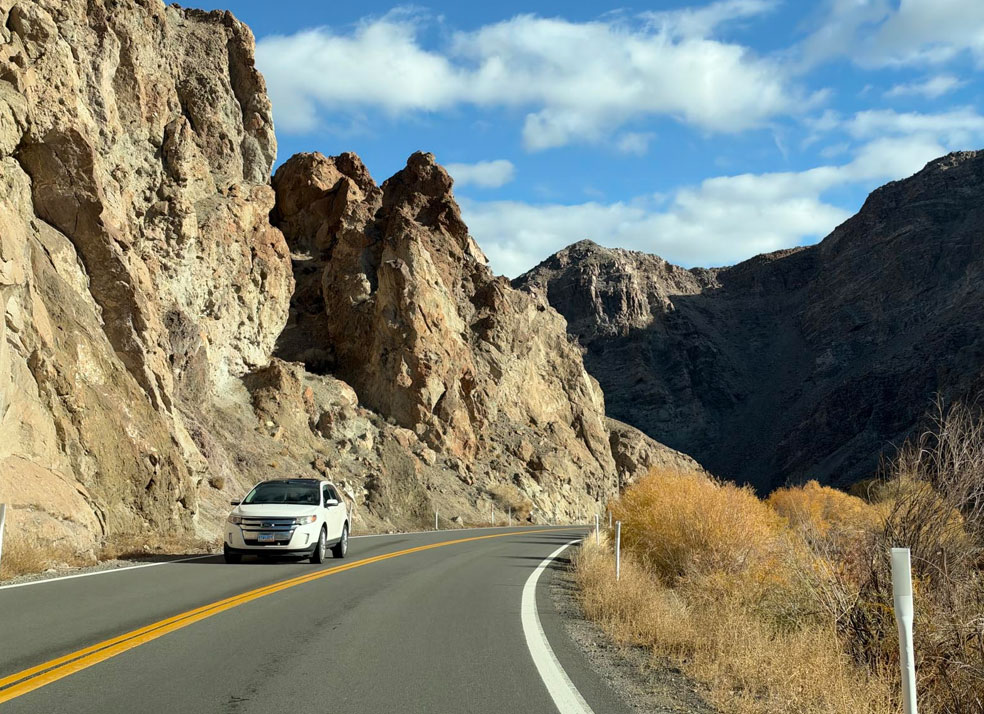
On Tuesday the Nevada Department of Transportation reminded drivers to take extra precautions on rural highways ahead of the holiday travel period.
Nationally, travelers face a 62% higher risk of death in rural crashes compared with similar trips on urban roads, NDOT said. In Nevada, less than 10% of the population resides in rural areas yet nearly one-quarter of all fatal crashes occur on rural roadways, The Ely Times reported.
Drivers should check tires, brakes and fluid levels, arrange a sober designated driver if celebrations involve alcohol, and check highway conditions at NVRoads.com or by dialing 511, Carson Now reported.
The Nevada Department of Transportation directs drivers to follow @NevadaDOTReno on Twitter for traffic and project updates specific to northern Nevada. The department also maintains the @nevadadot handle on Twitter, Facebook and Instagram for statewide information.
Carson Now reported that these accounts supplement the primary NVRoads.com website and the 511 phone line for highway conditions. The Zero Fatalities safety initiative operates its own channels at @ZeroFatalsNV on X and @ZeroFatalitiesNV on Facebook.
Source 3 states that additional state highway information is available at dot.nv.gov or by calling (775) 888-7000. The initiative focuses specifically on safety messaging separate from road condition reporting.
Seat belts cut crash injury risk in half, NDOT said. Motorists ought to observe posted speed limits or reduce speed further in bad weather, stow phones to prevent distraction, keep right to remain in their lane, and keep a following gap of at least three to six seconds — widening that gap when conditions deteriorate.
Since head-on collisions rank among the most common crashes on rural roads, drivers should pass only in designated passing zones when the road ahead is clearly visible, 2News reported.
Drivers should continually scan for merging traffic, slow-moving farm equipment and wildlife or livestock, particularly around dawn and dusk. Nevada law requires headlights to be on from 30 minutes after sunset until 30 minutes before sunrise, during rain or other limited-visibility conditions and wherever posted by signage; daytime running lights can help improve visibility.
NDOT also encourages noting milepost markers along state routes to accurately report location in an emergency and taking regular breaks to avoid drowsy driving.
The Nevada Department of Transportation addresses rural safety through its Planning Division’s Traffic Safety Engineering unit, which leads the state’s dedicated Zero Fatalities initiative (zerofatalitiesnv.com) providing targeted safety messaging and resources separate from road condition reporting.
NDOT’s Operations Division, specifically its Maintenance and Asset Management and Traffic Operations units, maintains the highway system and operates the 511 Nevada Travel Info system and NVRoads.com for real-time condition updates critical for rural travelers. The department also directs drivers to dedicated regional channels like @NevadaDOTReno on X for northern Nevada traffic and project updates.
NDOT’s Engineering Division manages the design, environmental review, and project management of infrastructure improvements on the state highway system, which includes U.S. and Interstate highways where the fatality disparity is concentrated.
Additional traffic safety resources can be found through the state’s Zero Fatalities initiative at zerofatalitiesnv.com, while state highway updates are available at dot.nv.gov or by calling 775-888-7000.
Related reading
Mississippi Law Firm Explains Truck Crash Evidence and Fault Rules
A Mississippi law firm says a commercial truck crash is not an ordinary car wreck and that the...

NBA Power Rankings: Lakers and Spurs Lead West as Sixers Top East Before Thanksgiving
ESPN's weekly power rankings place the Los Angeles Lakers and San Antonio Spurs atop the Western Conference and...

Idaho Certifies Midterm Results After Audit Finds Issues, Boise State Public Radio Reports
Idaho certified its midterm results Tuesday after a mandatory audit uncovered missing ballots and polling-place failures in several...

No Lead Fallout Reported After Successful Lead Azide Detonation at Iowa Army Ammunition Plant
A planned detonation of nearly 10,000 pounds of lead azide at the Iowa Army Ammunition Plant in Middletown...