
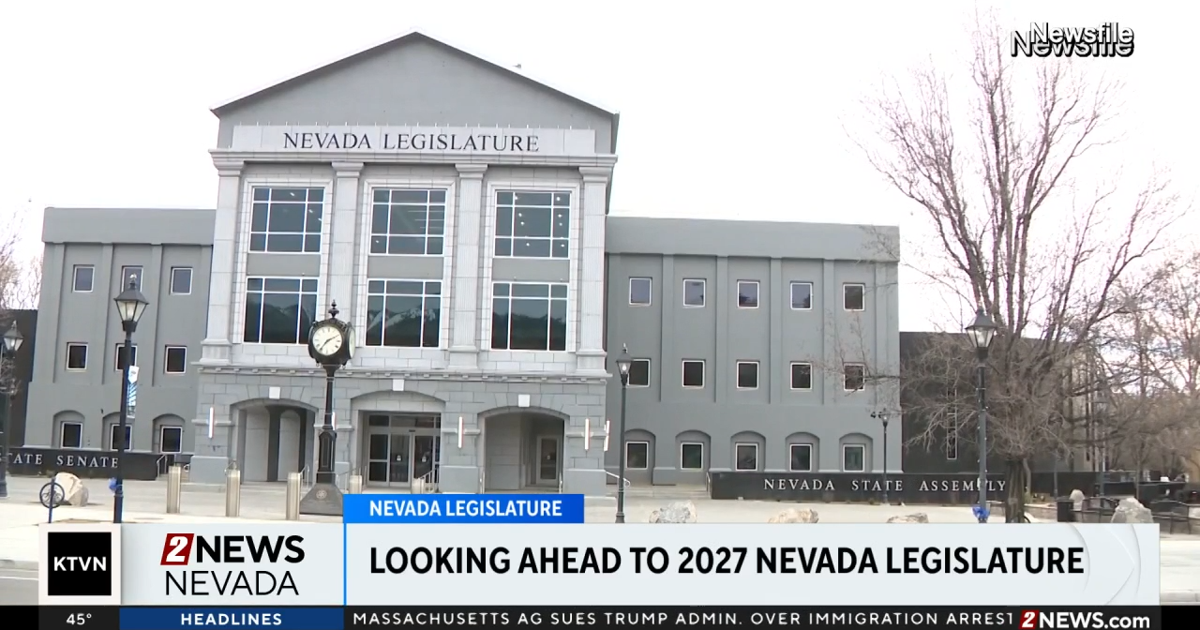
Nevada lawmakers are filing bill draft requests ahead of the 2027 legislative session that convenes Feb. 1 in Carson City, with early proposals covering data centers, maternal health care and school meals, KRXI2 reported.
Returning Assembly members may request up to 10 drafts: four by Aug. 1, five by Dec. 10 and one during the first eight days of the session, according to the Legislative Counsel Bureau. Returning senators may request up to 20 drafts under the same deadlines. A lawmaker tells the Legislative Counsel Bureau what a bill should do; staff attorneys write the proposal and the lawmaker reviews and revises it.
How a draft becomes a bill
Once drafted, a bill is introduced in either chamber, assigned a number and sent to a committee. The committee holds a hearing, may recommend changes, advance the measure or let it stall.
If it advances, the full chamber debates and votes. Passage sends it to the other chamber to repeat the process. Both chambers must approve identical language before the governor can sign, veto or allow it to become law without a signature.
“Sometimes I’ll actually send in the specific language that I want them to include,” Assemblymember Selena La Rue Hatch said. “Other times, especially if it’s not my area of expertise, I’ll just say, ‘This is what I want the bill to do.’”
New majorities, same supermajority threshold
Democrats expanded their control in the November election, holding the governor’s office, the Senate and the Assembly, but fell short of a two‑thirds supermajority, 2news.com reported. Republicans lost five Assembly seats — one‑third of their caucus — while the Senate balance was unchanged.
“We are not in a super minority. We can block anything that requires a two‑thirds vote,” Senate Minority Leader Robin Titus said. That threshold matters for any new taxes or fees, which require a two‑thirds vote in both chambers.
Deadlock broken by card draw for minority leader
Assembly Republicans deadlocked 5‑5 between former leader Greg Hafen and Rich DeLong for minority leader; they drew cards to break the tie, and DeLong drew the higher card.
“I think in general, yes, we have moved past it. Is that true for all ten members? I hope so. I don’t know for sure; I hope so,” DeLong said.
Two Democratic lawmakers have resigned. Assemblymember Selena Torres‑Fossett stepped down roughly two weeks after the election, citing an expected child in February and the inability to commit to the full 120‑day session.
Former Senate Majority Leader Nicole Cannizzaro resigned after winning election as attorney general. The Clark County Commission will appoint Democratic replacements for both seats. Sen. Edgar Flores was selected to lead Senate Democrats, and Assemblymember Elaine Marzola will succeed former Speaker Steve Yeager.
Governor‑elect signals priorities
Governor‑elect Aaron Ford said he intends to work with Republicans rather than push legislation through without their support. As attorney general, Ford said he involved Republican lawmakers on initiatives even when he did not need their votes.
“There has been an occasion where I didn’t need one Republican vote to get an initiative of mine passed as attorney general, two initiatives to be exact, and instead I engaged them and had them at the table with me,” Ford said.
Ford also wants lawmakers to prioritize affordability and revisit proposals vetoed by Gov. Joe Lombardo, including corporate housing legislation, prescription‑drug cost measures and a $1,000‑per‑parent payment to help feed children.
“As their governor, I’m going to do exactly what I promised, and I’m working with the Legislature to send me bills that are going to affect this affordability crisis as soon as possible,” Ford said.
How to track proposals
Nevadans can search “2027 Bill Draft Requests” on the Nevada Legislature’s website to follow proposals as they are drafted and introduced. The public list provides brief descriptions; full bill text becomes available once a bill is introduced.
Keep reading

Colombian Immigrant Raised 7 Children Alone, Retired From Explosives Plant
Alicia Aguirre Farfan, a Colombian immigrant who raised seven children alone after arriving in the United States in...

Las Vegas Opens Its Holiday Weekend With the Jonas Brothers
Las Vegas opens its holiday weekend with the Jonas Brothers, Rodney Norman and Antonia Bennett headlining three distinct...

Drinkwitz: Oklahoma Found Identity Under Witten Ahead of Saturday Visit
Missouri coach Eli Drinkwitz said Tuesday that Oklahoma’s offense has found a new identity under interim coordinator Jason...
College of Charleston Baseball Releases 2027 Schedule
The College of Charleston baseball team will open its 2027 season with a three-game series against West Virginia...