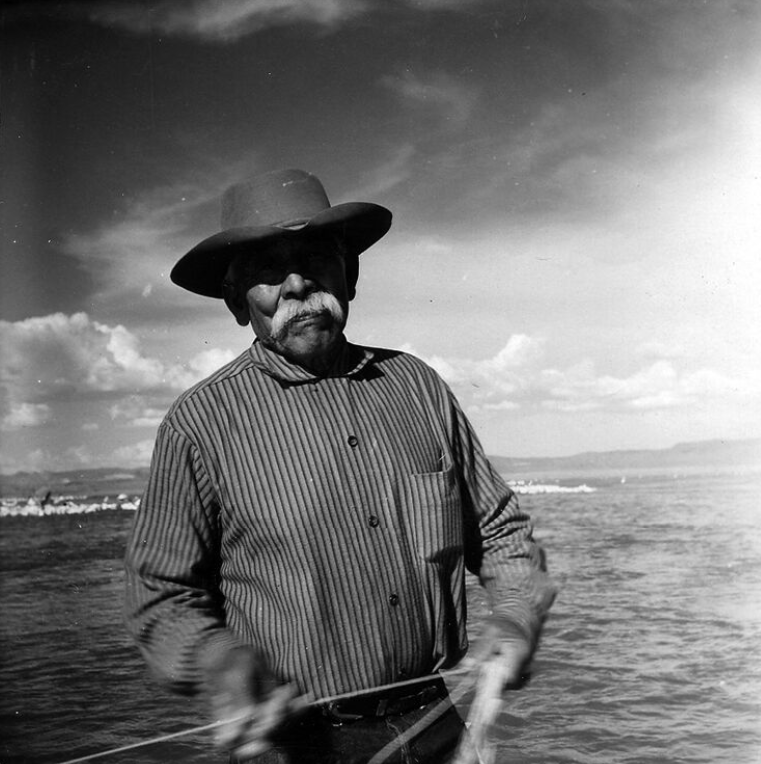
Nevada has 26 reservations across five major Native American Groups, including the Washoe and Numu, despite its large Indigenous presence being often overlooked.
Nevada has the third-highest number of Native American reservations in the United States, yet this large Indigenous presence is often overlooked or underrepresented.
November marks Native American Heritage Month, providing a necessary opportunity to examine the rich history and culture of the region’s original inhabitants. Five major groups comprise the state’s Indigenous population: the Numu, Newe, Nuwuvi, Waší∙šiw, and Mojave.
These groups are distributed across five major Native American Groups, 21 federally recognized tribes, and 26 reservations, with the Waší∙šiw, or Washoe, and the Numu maintaining a particularly strong presence in Northern Nevada, The Nevada Sagebrush reported.
The harsh, dispersed resources of the Great Basin shaped these communities over millennia, requiring a nomadic lifestyle attuned to seasonal animal, fish, plant, and water availability. This foraging existence fostered a sophisticated basketry tradition spanning nearly 10,000 years, utilizing willow and native plant fibers to create bulbous, distinctively patterned vessels that remain culturally significant today.

Spiritual beliefs centered heavily on the sanctity of the environment, inspiring sustainable practices like selective harvesting, seed dispersal, and controlled fires to maintain ecological balance. Oral traditions further reinforced this worldview, including Nuwuvi legends describing a coyote tasked with carrying humanity inside a basket to southeastern Nevada before curiosity caused him to prematurely release the travelers across the land.
European contact permanently disrupted this ancient way of life, beginning with a Spanish expedition in 1776 that treated the territory primarily as an intermediate obstacle. The subsequent gold and silver rushes brought hundreds of thousands of settlers, sparking the rapid rise of boomtowns like Carson City and Virginia City and generating intense friction over ancestral lands.
Hostilities eventually erupted when Paiutes raided Williams Station on May 6, 1860, following reports of the kidnapping and abuse of two Paiute girls. That raid triggered the first and second battles of Pyramid Lake later that same year, ending in a ceasefire without a formal peace treaty. A formal agreement did not materialize until the 1863 Treaty of Ruby Valley, which successfully curbed Western Shoshone hostilities toward incoming settlers.
Despite the treaty, resource depletion and cultural suppression persisted into the 20th century. The completion of the Derby Dam in 1905 diverted about 48% of the Truckee River water away from Pyramid Lake to supply Carson Valley summer irrigation, drastically lowering water levels and endangering the Cui-ui fish essential to the Paiute livelihood.
Meanwhile, the Stewart Indian Boarding School operated from 1890 to 1980 with the explicit intent of separating Indigenous children from their families and cultural identity.
While these historical wounds remain permanent parts of Native heritage, modern tribal traditions continue to thrive across Nevada. Recognizing this enduring culture serves to honor the state’s past while actively preserving its present and future.
Keep reading

France Protests Draw Tens of Thousands for Sixth Weekend
Tens of thousands of people took to the streets across France on November 21 for the sixth consecutive...

Florida Gators Defeat Florida State 26-10 to End 2026 Season 8-4
No. 20 Florida defeated the Florida State Seminoles 26-10 in Doak Campbell Stadium on Friday night, closing the...

RJ Young Criticizes Lincoln Riley After Caleb Williams Bears Win
Lincoln Riley and his USC Trojans face missing the postseason as Fox Sports commentator RJ Young criticizes the...

Chicago Police Say at Least One Died and Two Suffered Injuries in Weekend Shootings
At least one person died and two others suffered injuries in Chicago shootings during the extended Thanksgiving weekend,...