
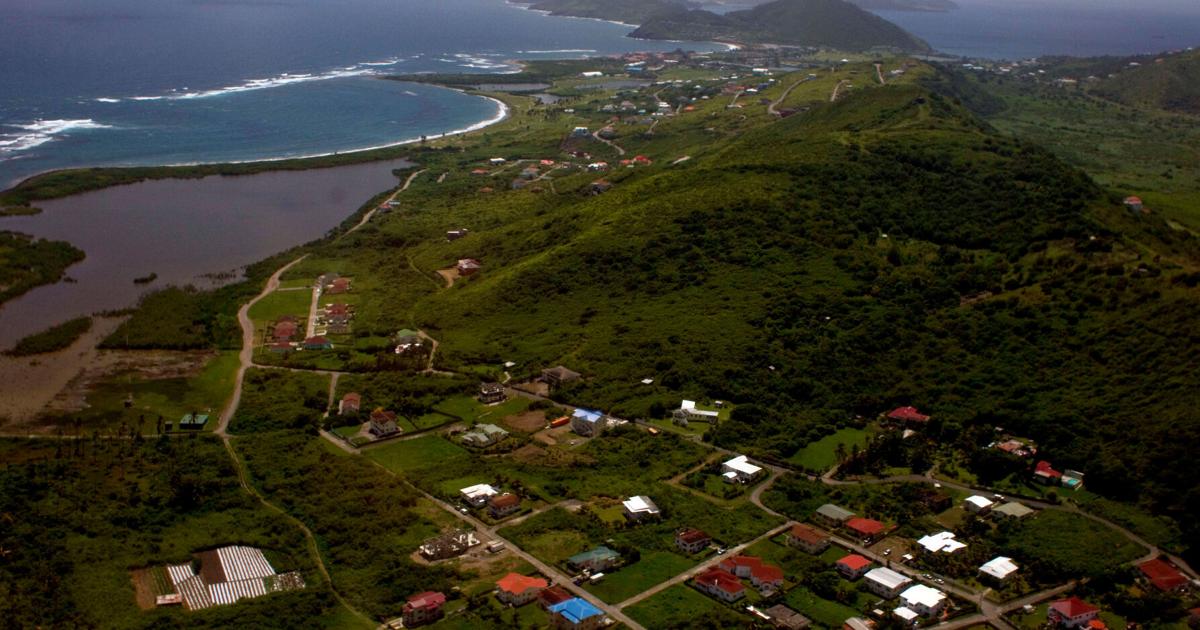
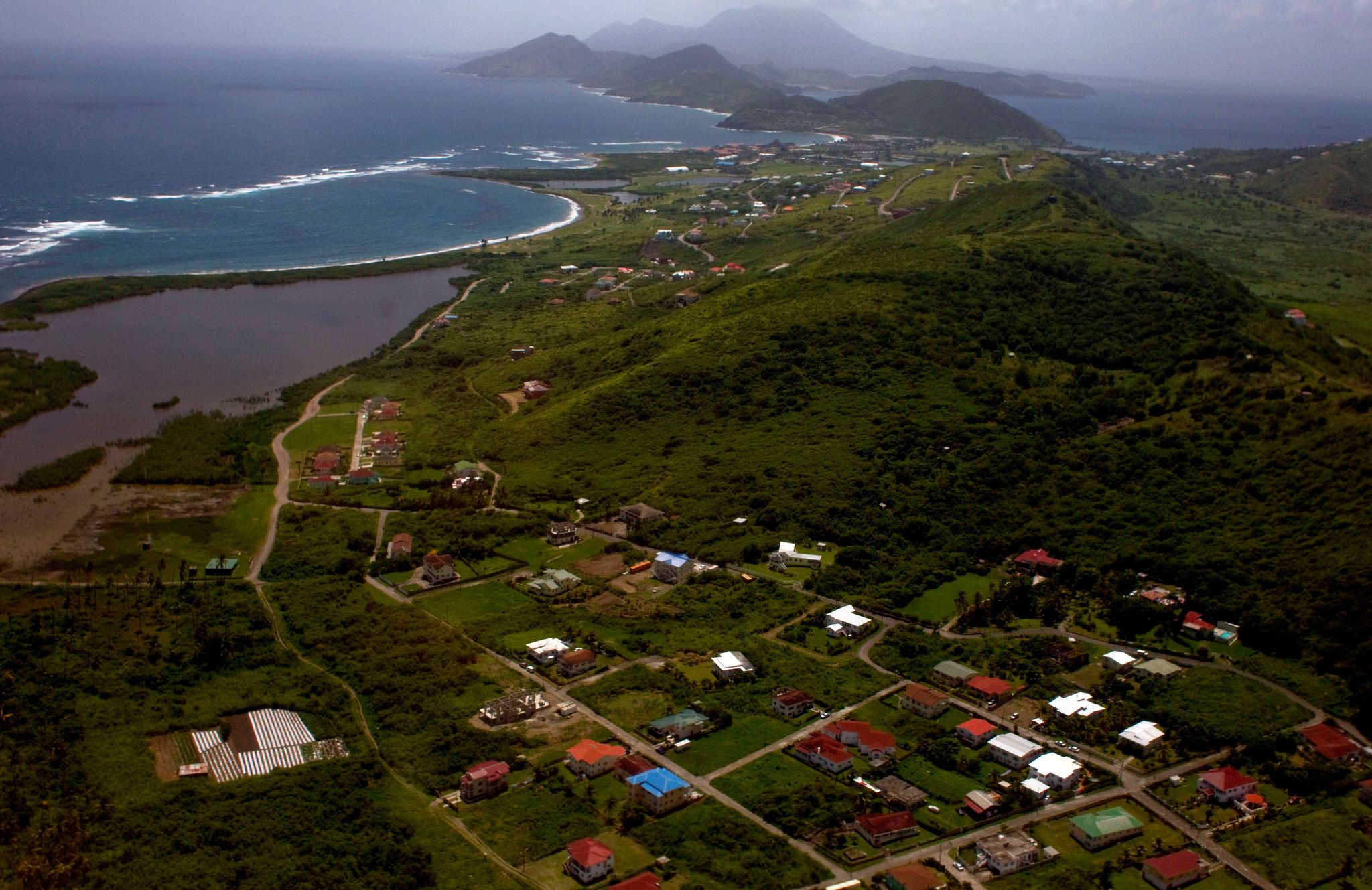
- The “Destiny” zone covers 2,670 acres on Nevis’ southern coast and would operate with its own civil code and tax-free status.
- Developers must invest $250 million in the first 5.5 years, including $50 million to the Nevis Island Administration by 2031.
- Nevis’ citizenship-by-investment program, which supplied nearly half of last year’s budget, is winding down under EU pressure.
- Public consultations follow Monday’s debate; the agreement’s full text has been released for review.
St. Kitts and Nevis established the world’s first citizenship-by-investment program in 1984.
It generated $2.5 billion tax-free over more than a decade and at one point represented more than 25% of the twin-island nation’s gross domestic product, Mark Brantley told AP News. “It will be difficult to replace that overnight,” Brantley said.
“Every country in the world is seeking foreign investment, even the great United States of America.”
The European Union has pressured the federation to wind down the program, leaving a gaping hole in Nevis’ finances. Nearly half of last year’s budget depended on citizenship revenue.
Bitcoin tycoon proposes semi-autonomous zone
Olivier Janssens, the founder of Destiny International Ltd. and South Nevis Ltd., envisions a semi-autonomous utopia along Nevis’ southern coast, “à la Monaco or Dubai.” The proposed Special Sustainability Zone would have its own security, a “Code of Destiny” for civil and criminal matters, and guaranteed public access to beaches, waters and heritage sites. A Nevis official would monitor environmental standards.
Skidmore, Owings & Merrill, the architectural firm behind the Burj Khalifa and One World Trade Center, is designing the development.
Janssens told AP News he plans to give $100 a month to each Nevisian until the project becomes profitable, at which point a proposed 5% revenue share for residents would kick in. He also said he is working with the government to lower residential power bills.
The zone would be governed under the Special Sustainability Zones Authorisation Act, passed in 2025, according to the St. Kitts Nevis Observer.
Land disputes and transparency claims
Critics say the authorizing bill passed last year without public hearings. Former Prime Minister Timothy Harris called the proposal a “colossal betrayal of the people” and accused the government of creating legislation “in secrecy and for the self-interests of those held captive by foreign elements.” He described the deal as “repulsive, repugnant and retrogressive.”
Some Nevisians say they have been offered deals for property not for sale and cannot obtain Land Registry documents for land they live on.
Brantley said the government “has not sold one single square inch” of land to developers and that all transactions would be private and voluntary. “If people are having issues, they should contact an attorney,” he told AP News.
Brantley defended the process: “We have put all the proposed agreement into the public domain. People are debating and pulling it apart … but the very ability to do so is a result of the transparency we have exercised.”
Investment terms and environmental pledges
Destiny must invest $250 million in the first 5.5 years, with $50 million due to the Nevis Island Administration by 2031. The first $10 million would expand and renovate the island’s hospital. The companies pledged 10% of net profits to the Nevis government and another 10% to a jointly managed account, though management details remain undecided.
Nevis would also receive $10,000 per new home sold and 5% of net profits stemming from the zone would be paid directly to Nevisians.
Developers pledge 70% renewable energy, rainwater collection and reservoir investment, plus a coral restoration project for a leased 2,141-acre seabed marina. Janssens said the project has signed letters of intent with four five-star hotels.
Analysts warn of scale mismatch
InvestCaricom said in August that while special zones have worked in the Caribbean, “they have also failed, repeatedly, and the failure modes are consistent.” The group cited scale mismatch, saying very small islands have limited tenants, workers, power and freight.
Nevis has imposed several water-rationing measures in the past decade as regional droughts persist.
“If not Destiny, then what?” Brantley said. “What do you suggest in terms of diversification, economic expansion and development of our little island of Nevis?”
Bitcoin pioneer Olivier Janssens, founder of Destiny International Ltd. and South Nevis Ltd., is spearheading the “Destiny” Special Sustainability Zone on Nevis’ southern coast in partnership with the Nevis Island Administration and the federal government of St. Kitts and Nevis.
Before entering the crypto space in 2010, Janssens worked on large-scale IT infrastructure projects for banks and telecom operators across Europe and founded Destiny Telecom in Belgium, growing it into a leading provider before selling it to investors including the De Wever brothers.
Next steps
The Nevis Island Administration Cabinet approved the proposal and sent it to the Prime Minister on December 23, 2025, according to the St. Kitts Nevis Observer. The Federal Government reviewed it with advice from an independent oversight committee. Monday’s Assembly meeting marks the first reading of the enabling legislation, with public consultations to follow.
The full agreement is available at destinyssz.com and feedback can be sent to [email protected].
“All feedback received will be carefully considered before we return to the Assembly for the second and third readings of the enabling legislation,” Brantley said.
Related reading

No. 11 Carroll College Stays Unbeaten With Win Over Northwest University
No. 11 Carroll College remained unbeaten with a 60-43 victory over previously undefeated Northwest University on Saturday in...
Jazz Host Suns in Rematch After Denver Loss; Utah Seeks Better Ball Security
The Utah Jazz host the Phoenix Suns on Sunday at the Delta Center, a rematch nine days after...

Maine Defeats Niagara 89-80 Behind DeAndre Williams’ 26 Points
Maine defeated Niagara 89-80 on Saturday in a game that featured 12 lead changes and 10 ties, according...

Providence City Council Considers Ordinance to Ban License Plate Readers
The Providence City Council is considering an ordinance to ban all automatic license plate reader cameras from city...