Jordyn Tyson caught 11 of 13 targets for 80 yards last week.
Six teams sit idle this week, stripping lineups of usual suspects and pushing fringe players into starting roles across the league.
CBS Sports Dave Richard framed the dilemma plainly: with more clubs on bye and starting quarterbacks falling to injury, the waiver wire has become the new draft board. The Athletic’s weekly rankings, published Monday, labeled the stretch “Byepocalypse” and warned managers they will likely start players they would never consider in a normal week.
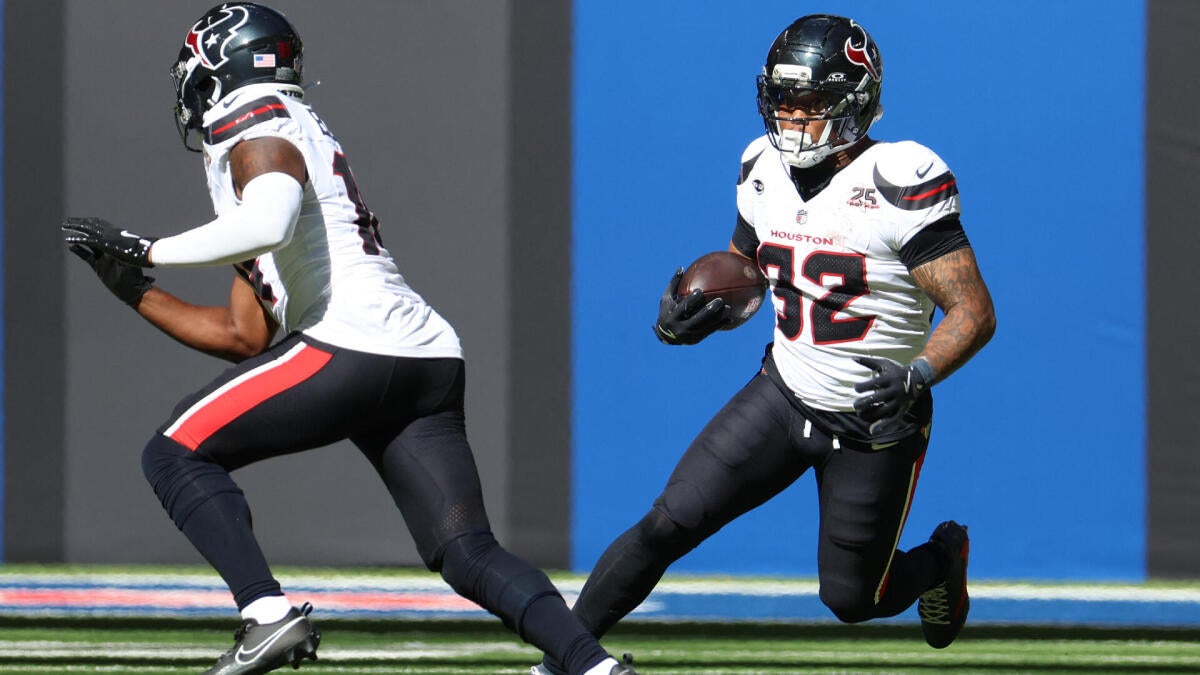
The Colts-Texans matchup illustrates the scramble. David Montgomery returns for Houston after missing five weeks, stepping into a backfield depleted by Woody Marks’ concussion. Montgomery projects as a viable No. 2 option, though Richard cautioned there may not be another week until Week 16 where starting him makes this much sense.
Tyler Warren presents a tougher call. Miami’s physical coverage limited him to three targets last week, and Richard highlighted Warren’s lack of explosiveness makes him easier to contain. With the Colts averaging 20.1 points per game and scoring 20 or fewer in three of their last four against Houston, Warren’s floor rests on touchdown dependency. He ranks as a low-end TE1 in half- and full-PPR formats only.

Coverage Schemes Dictate Tight End Value
Scheme fit emerges as the decisive variable at tight end. Dalton Kincaid thrives against Cover-3, leading Buffalo in targets per route (28.6%) and yards per route (4.47) versus that look.
Three of his four double-digit PPR games came against Detroit, Houston, and Baltimore — the teams playing the most Cover-3 against the Bills. Miami has shifted to Cover-3 on roughly 45% of defensive snaps over the last three weeks, a schematic gift for Kincaid this Sunday.
Conversely, Sam LaPorta’s role has shrunk. Richard observed LaPorta has not seen six targets since Week 4 and posts an 18% target-per-route rate under pressure over his last four games. Tampa Bay’s blitz-heavy, zone-based approach threatens to neutralize him further; only one tight end (Darren Waller) has topped 9.4 PPR points against the Buccaneers without at least six targets.
Quarterback Turbulence Creates Both Risk and Opportunity
Bryce Young’s regression traces directly to protection. His average throw depth has not exceeded 7.7 yards in four games, down from a floor of 8.3 yards in his first five starts. Three of his last four opponents generated 40% pressure rates.
Baltimore’s pass rush has managed only four sacks in four games but may blitz heavily, while their run defense just yielded a breakthrough performance to Omarion Hampton. Chuba Hubbard profiles as Carolina’s most reliable asset.

Cam Ward offers a contrasting profile. The rookie has posted 30.3 and 23.1 fantasy points in his last two outings against Cincinnati and Jacksonville, aided by 39-plus rushing yards in each.
Dallas has allowed six quarterbacks to exceed 22.2 fantasy points; the exceptions were injured Jayden Daniels, inexperienced Jalon Daniels and Tanner McKee, and Daniel Jones. Ward ranks as a high-end QB2 with borderline QB1 upside, though Richard warned a savvy defensive coordinator could dismantle Tennessee’s one-read, college-style system.
Rookie Receivers Handle Target Share and Efficiency
Jordyn Tyson caught 11 of 13 targets for 80 yards last week, but five throws traveled behind the line of scrimmage and three more within seven yards. He broke one tackle.
The volume anchors his flex appeal in non-PPR leagues, yet the lack of yards after contact caps his ceiling. Tyler Shough’s rising pressure rate — exacerbated by Taliese Fuaga’s absence at right tackle — funnels targets to Tyson at the expense of Chris Olave and the downfield passing game.
Caleb Douglas earned trust in Syracuse’s offense, drawing four targets on play-action attempts and four on quick throws. Ollie Gordon benefits as a check-down option against a Buffalo pass rush that has improved its pressure and sack rates since its Week 7 bye. The Bills have allowed 8.5 yards after catch per reception to running backs over their last three games, supporting Gordon’s PPR floor.
Backfield Commitment Remains the Clearest Signal
The Chargers’ commitment to Omarion Hampton tells the story. In the only two games where Hampton commanded over 60% of rush attempts and 75% of total running back touches, he scored 16.5 and 17.0 fantasy points. The Athletic’s rankings keep him outside the RB1 tier, citing skepticism about Jim Harbaugh’s willingness to sustain that workload, but the correlation between volume and production is unambiguous.
Ashton Jeanty’s receiving volume — 5.9 targets and 4.6 receptions for 41.7 yards per game — provides a 6.5-point PPR floor, yet he has not approached 20 touches since Week 4 and has scored 8.8 points or fewer in three straight weeks. The arrival of Jacory Croskey-Merritt clouds the picture further for Monday night.
Dalton Kincaid, born in Las Vegas in 1999 and a dual citizen of the United States and Canada, played only one season of high school football at Faith Lutheran after friends convinced him to join the team, earning all-state honors with 745 yards and eight touchdowns.
Selected 25th overall by Buffalo in the 2023 NFL draft after the Bills traded up with Jacksonville, Kincaid became the first tight end taken and the only one chosen in the first round that year, setting franchise rookie records with 73 receptions for 673 yards and scoring a touchdown in his playoff debut.
| Player | Position | Week 11 Designation | Key Context |
|---|---|---|---|
| David Montgomery | RB | START (No. 2 RB) | Returns from 5-week absence; Colts allow 3rd-most PPR to RBs since Buckner trade |
| Tyler Warren | TE | START (Low-end TE1) | 3 targets last week; Colts offense averaging 20.1 PPG |
| Dalton Kincaid | TE | START (Low-end TE1) | Leads Bills in targets/route vs Cover-3 (28.6%); Miami playing 45% Cover-3 |
| Omarion Hampton | RB | FLEX/RB2 | >60% rush share in only 2 games; both produced 16.5+ FP |
Bye weeks don’t create talent. They only expose the gap between opportunity and ability. The managers who handle this week successfully will be the ones who distinguish schematic advantage from desperate volume — and who accept that sometimes the best move is the one that feels the most uncomfortable.

Utah Remains CFP No. 2 After Same-Day Flight, 70-Yard TD Win at Arizona
Devon Dampier hit Creed Whittemore on a 70-yard touchdown pass to secure Utah's win at Arizona. "No one's...

Troy Football Hosts Georgia Southern on Senior Day With Bowl Hopes Alive
Troy football hosts Georgia Southern on Senior Day at Veterans Memorial Stadium Saturday at 3 p.m., with the...

Four Men Charged in 2013 Orlando Kidnapping and Murder Cold Case
Four men were charged Thursday in the 2013 kidnapping and murder of Orlando resident Jim Johnson Jr., ending...

Montpelier City Council Withholds Infrastructure Commitment for Sabin’s Pasture Development
Montpelier city councilors stopped short of committing infrastructure money to the long-discussed Sabin's Pasture development Wednesday night, choosing...