
“Learning about all these different vast tools not only amped my curiosity, but gave me a newfound determination and motivation to actually engage with this vast field of technology for myself,” said Deion Searles, a senior at Newark School of Data Science and Information Technology.
Searles’ experience highlights a deepening structural bond between the City of Newark and the New Jersey Institute of Technology (NJIT). According to a report from news.njit.edu, this partnership has evolved from simple academic tutoring into a comprehensive network spanning workforce development, urban infrastructure, and economic revitalization.
The immediate impact is visible in programs like the Math Success Initiative (MSI), which was established in 2019 by NJIT, the City of Newark, and Newark Public Schools. The program was designed to improve college-level mathematics preparation and increase Newark residents' enrollment at NJIT.
For students like Searles, the intersection of the City of Newark’s Summer Youth Employment Program (SYEP) and NJIT’s academic programming provided a rare financial cushion. By participating in MSI while receiving an SYEP stipend, students could engage in rigorous coursework without the economic pressure of choosing between education and immediate income.
“SYEP allows students to pursue academic enrichment without necessarily forcing families to choose between education and income,” said Jacqueline Cusack, executive director of NJIT’s Center for Pre-College Programs.
Bridging the gap from high school to career
The pipeline from Newark classrooms to professional sectors is increasingly formalized. Within the NJIT Center for Pre-College Programs alone, 55 Newark youth participated in various tracks including MSI, TRIO, NJ GEAR UP, and the Forensic Science Initiative with SYEP assistance.
These pathways are producing measurable career outcomes. Kaily Peixoto, a 2026 graduate, moved from the Math Success Initiative to the Newark Mayor’s Scholars Program, eventually earning a degree in construction engineering technology. Following internships with the Newark Housing Authority and the New Jersey Turnpike Authority, she joined AECOM as a civil engineer.
Other students have utilized specialized scientific hooks to enter STEM fields. Luvenia Morton and Rodner Perlera, both from the STEM Innovation Academy of the Oranges, entered the system through Essex County’s SYEP and are now enrolled at NJIT studying forensic science and chemical engineering, respectively.
The outreach extends to the community college level through the STEM Success Academy. Working with the New Jersey Community College Consortium for Workforce and Economic Development, the program has helped 165 students explore four-year engineering degrees over the last three years.
Expanding the definition of workforce development
The partnership moves beyond the classroom to address the immediate needs of the local labor market. Newark’s Workforce Development Board acts as a bridge, connecting residents to NJIT’s technical training, such as the Pre-Apprenticeship Training in Mechatronics and Advanced Manufacturing at the university’s Makerspace.

This program has trained more than 175 participants, including veterans and workers looking to transition into manufacturing roles. The Board functions as a placement partner, guiding graduates toward apprenticeships, continued education, or direct employment.
“The goal isn’t simply to provide training — it’s to make sure people can take what they’ve learned and use/leverage it to build a career taking one meaningful and impactful step at a time,” said Ashish Borgaonkar, principal investigator of the Mechatronics Training Program and a member of the Newark Workforce Development Board.
Economic integration also includes the “Hire, Buy, Live Local” effort. NJIT has participated in the Newark Live Local program to encourage university employees to reside within the city, while simultaneously documenting efforts to increase the hiring of Newark residents.
Technical expertise solving urban challenges
Beyond human capital, the partnership applies academic research to the city’s most pressing physical problems. When Newark faced challenges with lead in its drinking water, NJIT environmental engineers collaborated with the city during the lead service-line remediation process. Researchers analyzed excavated pipes and tested treatment strategies, while students were trained to evaluate the replacements.

Environmental resilience is another focal point. Through the Center for Natural Resources, researchers have implemented green infrastructure projects, such as a rain garden in Weequahic Park designed to improve water quality using engineered porous filters.
Current efforts include using drone-mounted LiDAR, cameras, and artificial intelligence to monitor flooding and infrastructure in Essex County. The university’s REACH program also pairs technical expertise with community-informed planning to help local governments prepare for environmental hazards.
At the Second River, students in the “Life on the River” collaboration are working with community members on water quality and remediation. Their work ranges from testing biochar for contaminant removal to designing floating wetlands and digital environments to make environmental data more accessible to Newark residents.

Bruins Battle Panthers in Physical 4-1 Victory Amid Divisional Rivalry
The Bruins answered Florida's physicality with a 4-1 win The Boston Bruins reclaimed some measure of dominance over...
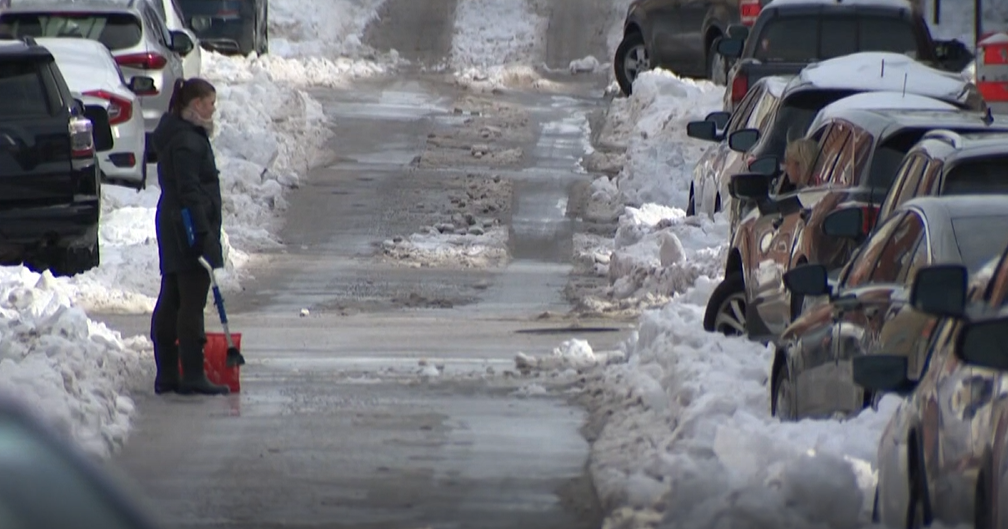
Baltimore Leaders Say City Is Better Prepared for Winter Season
Baltimore city leaders announced Monday that municipal agencies have completed preparations to manage the upcoming winter season, citing...

Battle Grounds Gaming Cafe Relocating From Portland to Vancouver
Battle Grounds Gaming Cafe is relocating from Portland to downtown Vancouver, Washington, with a new 4,119-square-foot space slated...

Topeka Middle School Principal Charged With Child Sex Crimes
Todd W. Haag, the 56-year-old principal of Jardine Middle School, faces multiple felony charges related to alleged child...