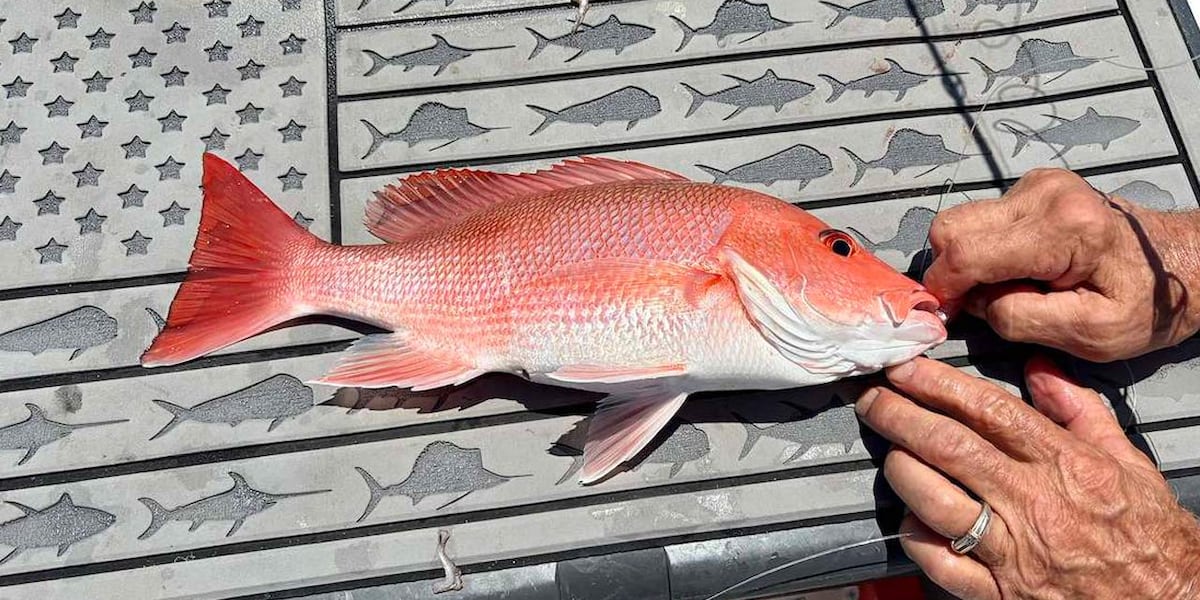
Anglers in South Carolina gain a second chance to catch red snapper in federal waters as NOAA Fisheries signs off on a 31-day recreational season running from Dec. 1 to Dec. 31, 2026, South Carolina Public Radio reported.
The upcoming window follows an extended two-week period in October that fell short of anticipated catches. State wildlife leaders note that rough seas restricted that earlier 14-day harvest to roughly five fishable days.
Landings data show that South Carolina reached only 16.58 percent of its EFP recreational harvest limit during October, according to NOAA Fisheries. Georgia anglers landed 13.91 percent, while Florida participants landed 24.89 percent.
Participants in the December season must follow the same guidelines established for the October window. Fishermen need a standard South Carolina saltwater fishing license alongside a free red snapper experimental permit available through the Go Outdoors SC platform.
Anglers who secured their experimental permit for the October window remain covered and do not need to reapply. Before keeping any catch, individuals must register their excursion on the VESL system no later than five days ahead of time and submit catch details within 24 hours after arriving back at the dock.
Boats must also carry standard South Atlantic snapper-grouper equipment, including a descending device. Fishing inside South Carolina state waters stays open all year with a daily limit of one fish per person measuring at least 20 inches.
Federal regulators and state wildlife officials developed the pilot Exempted Fishing Permits to test new recreational data collection methods, reduce discards, and evaluate long-term management strategies. State wildlife officials indicate the additional December dates provide biologists with essential catch statistics.
South Carolina manages its coastal resources through a diverse geography that includes extensive salt marshes and estuaries along its eastern coastal plain. These ecological features support long-standing traditions of harvesting local marine life, with historical evidence indicating indigenous tribes relied on seasonal fishing of oysters and fish as a primary food source.
This environmental context informs current regulatory efforts, as the state balances permanent year-round fishing access in its inland and coastal waters with the specific, data-driven requirements of the federal experimental permit program designed to monitor and protect snapper populations.
According to NOAA Fisheries, the second season is scheduled to take place from 12:01 a.m. local time on December 1, 2026, through 11:59 p.m. local time on December 31, 2026.
Keep reading
Magic on Market Closes Market Street; Drone Shows on Water Street Saturdays
Market Street will close to vehicles on the first three Saturdays in December as the City of Wilmington...
NYC Raises Rent Freeze Income Limit to $75K, Aiding 5,000+ Households
New York City raised the rent freeze income limit to $75,000, aiding more than 5,000 additional households. “The...

Perry Street Shooting Victims Update Recovery Status
Two survivors of the Perry Street shooting that followed FAMU's homecoming game last month are home with their...

Bob Iger, the former Walt Disney Company CEO
Bob Iger, the former Walt Disney Company CEO, faces new allegations regarding an extramarital affair and his handling...