Lum Hing, a Chinese American businessman, cast the first known Chinese vote in North Dakota in 1889 and built a decades-long career as a laundryman, grocer, restaurateur and, during Prohibition, a moonshiner.
- Hing voted the Republican ticket in Bismarck on November 5, 1889, at age 25.
- He operated businesses in Dakota Territory and Minnesota.
- His family was arrested in 1926 with 50 gallons of moonshine.
- The Hjemkomst Center features his story in an exhibit running through December 2027.
First vote under the Exclusion Act
On November 5, 1889, Lum Hing — sometimes recorded as Lum King — presented naturalization papers from Portland, Oregon, and cast a ballot in Bismarck, Dakota Territory. “The first Chinese vote ever cast in Bismarck, and in all probability the first in North Dakota, was given the Republican ticket… by Lum Hing, the 4th Street laundryman and proprietor of the Chinese bazaar,” the Jamestown Weekly Sun reported that week.
The Dickinson Press called it “the first case of this kind in the history of North Dakota,” and the St. Paul Globe headlined: “The Chinese voted.”
Hing voted while the Chinese Exclusion Act of 1882 — the first U.S. law restricting immigration by nationality — barred Chinese laborers from entry and denied Chinese nationals citizenship. The Act was repealed in 1943 after China joined the Allied Nations in World War II, though a quota of 105 Chinese immigrants per year remained until 1965. Congress did not formally condemn the law until 2011–2012, InForum reported.
Laundry, bazaar and a promise of excellence
Hing purchased his Bismarck laundry from Quong Lee and imported an “expert ironer” from San Francisco. “We will turn out the finest work and give the best satisfaction of any laundry in the city,” he told the Bismarck Tribune. He also sold Chinese and Japanese fancy goods at his bazaar on 4th Street.
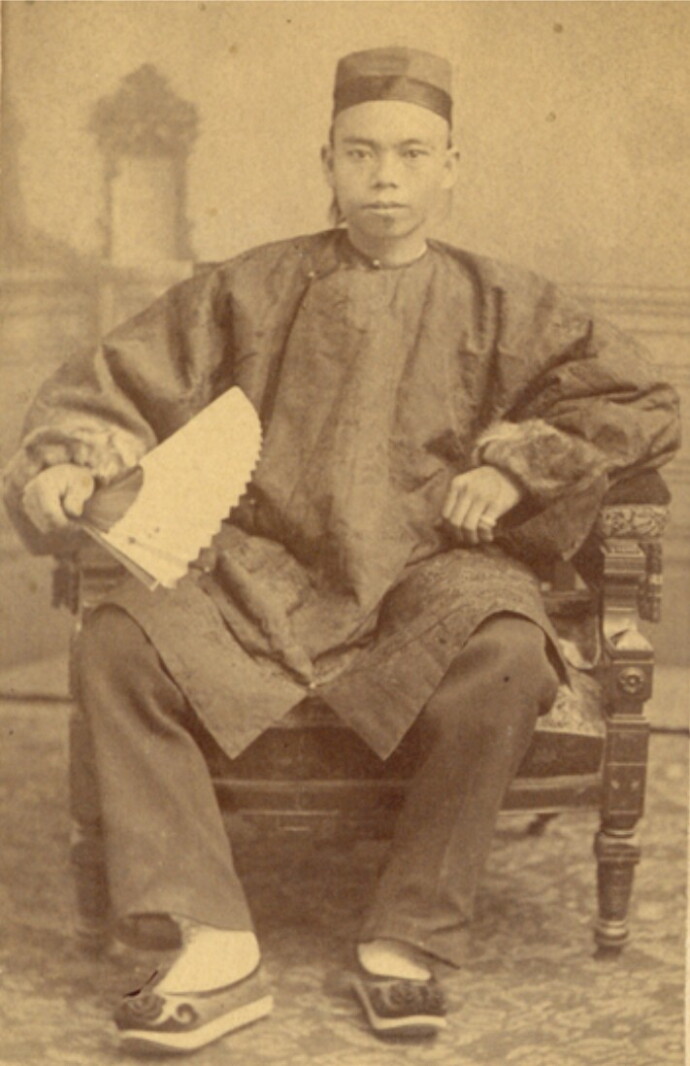
In 1891, at age 28, Hing declared he would remain in the United States “the remainder of my days,” save for a trip to China to visit friends and possibly find a wife, the Bismarck Tribune noted. A proxy marriage — customarily represented by a rooster — either did not occur or was not acknowledged.
Barnesville grocer and interracial marriage
By 1896, Hing had moved to Barnesville, Minnesota, where he ran an American grocery store. The Minneapolis Journal described him as “an exemplary citizen” who wore American fashion, cut his Qing Dynasty queue, and kept a “neat and attractive” store. White competitors acknowledged his fair prices and quality stock, though the Star Tribune reported he was excluded from the Minnesota General Merchants and Retail Grocers’ association.
In 1899, Hing married Mary Jordahl, a German immigrant from Iowa, before Justice of the Peace M.J. Dullea. “The bride… was attired in a becoming gown of black and red, while a large hat and fur boa effectively set off her attire. The groom was dressed in a neatly fitting suit of black,” the Star Tribune reported.
The Minneapolis Daily Times wrote that his wife “civilized him… Lum is probably as thorough-going a Chinese American as can be found in the country.”
Prohibition raid and later years
On July 29, 1926, Clay County Sheriff Peter Malvey raided the Hing family home. Deputies seized 50 gallons of moonshine and 60 quarts of beer. Hing, his wife Mary, their son Clarence, and daughter-in-law were each held on $500 bond; the family car used to transport the liquor was impounded, the Moorhead Daily News and Forum of Fargo-Moorhead reported.
In 1935, while operating a restaurant in LaMoure County, Hing faced a civil wage claim from employee Gladys A. Larson, which was later dropped, the Forum of Fargo-Moorhead said. The Morton County News Journal recorded that boys harassed him, once throwing a dead cat into his café kitchen.
Grocer in Minneapolis trade networks
The Minneapolis Journal described him as a “unique business character” who “seemed to be meeting with fair success,” noting his American dress and short hair. The paper also reported that in Minneapolis, several Chinese residents made a point of buying rice and tea in large quantities from jobbing houses, according to the Journal.
Despite his local reputation, Hing was excluded from the Minnesota General Merchants and Retail Grocers’ association, the Minneapolis Journal indicated. White competitors in Barnesville acknowledged his fair prices and quality stock, the Star Tribune reported, even as the trade group barred his membership.
Vote cast under exclusion law
The St. Paul Globe headlined the event: “The Chinese voted.” The Dickinson Press called it “the first case of this kind in the history of North Dakota,” and the Jamestown Weekly Sun noted Hing showed naturalization papers from Portland, Oregon, before voting the Republican ticket.
The Exclusion Act, approved May 6, 1882, ended in 1943 when China joined the Allied Nations in World War II, according to the U.S. National Archives and Records Administration. Congress repealed the exclusion acts that year but kept a quota of 105 Chinese immigrants annually, the Archives stated.
The Hjemkomst Center, a multi-use facility in Moorhead, Minnesota, opened in 1985 and hosts rotating quarterly museum exhibits that explore local history and cultural developments. The center, now part of the Historical and Cultural Society of Clay County since a 2009 merger, features exhibits examining the social and economic forces shaping the region, including the stories of diverse pioneers like Lum Hing.
His narrative is showcased in the “Land to Table, food stories from Clay County” exhibit, running through December 2027, as part of the center’s mission to highlight the area’s rich heritage through artifacts, photographs, and documents.
Exhibit preserves the record
Hing died in 1956. The Bismarck Tribune noted his historic vote again in 1956 and 1976, without mentioning the moonshine charges. The Hjemkomst Center in Moorhead now includes his story in “Land to Table, food stories from Clay County,” an exhibit running through December 2027.
“Lum Hing was one of the few Chinese residents in Clay County at the turn of the century and owned a grocery store in Barnesville for many years,” the center posted on social media.

Coastal Storm Shuts Both Connecticut-Long Island Ferry Routes, Forces Road Detours
A coastal storm shut down both major ferry routes linking Connecticut and Long Island on Thanksgiving Day, forcing...

Thanksgiving Nor’easter Knocks Out Power to Nearly 47,000 Delmarva Customers, 118,000 Statewide
Power outages across the Delmarva Peninsula climbed through Thanksgiving afternoon as a nor'easter swept the region, with nearly...

MSHA Mining Deaths Rise in 2020; OIG Criticizes COVID Pullback, Silica Limit
The Mine Safety and Health Administration recorded 29 mining deaths in 2020, a 7.4 percent rise from 2019,...

Trenton Vice Mayor Resigns; Mayor to Step Down in January
Trenton Vice Mayor Floyd Croucher resigned from City Council effective Nov. 19, one month after Mayor Ryan Perry...