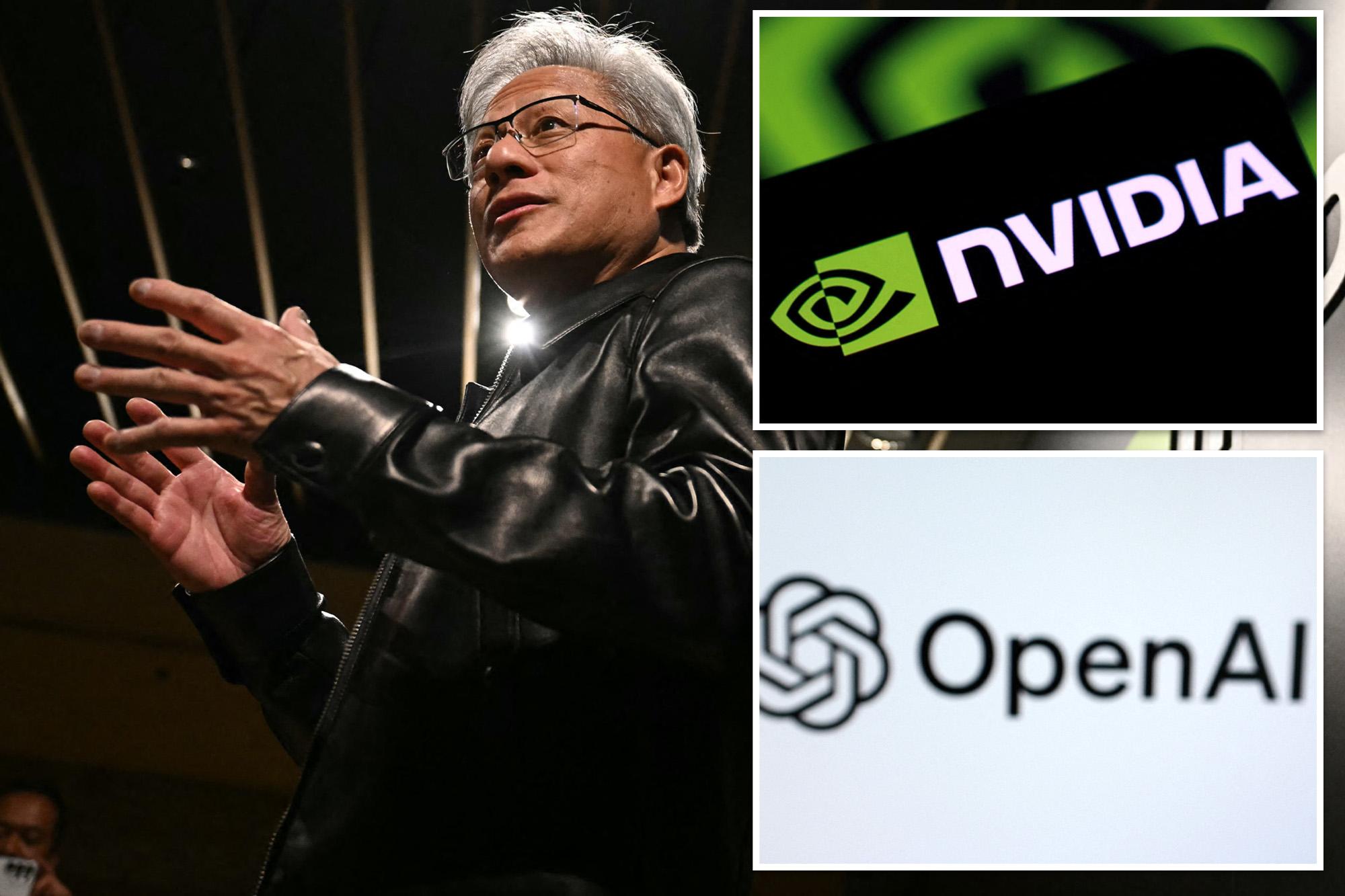
Nvidia is in talks to provide a roughly $250 billion financing backstop for OpenAI to lease a massive 10-gigawatt data center in southern Ohio. Developed by SoftBank subsidiary SB Energy, the infrastructure project could ultimately cost more than $500 billion as technology companies race to fund soaring artificial intelligence demands.
Nvidia is in advanced talks to provide a roughly $250 billion financing guarantee to help OpenAI secure a massive lease. The proposed facility is designed as a 10-gigawatt project, marking a staggering leap in scale for artificial intelligence data centers.
SB Energy, an energy subsidiary controlled by SoftBank billionaire Masayoshi Son, is developing the site. Including the specialized microchips required to power the infrastructure, the project could cost as much as $500 billion in total.
How the SoftBank and U.S.-Japan Energy Deal Powers the Ohio Site
The power supply for the facility is tied directly to a trade agreement between the United States and Japan. Tokyo committed $33 billion to construct a natural gas power facility on federal land, which SB Energy will operate. U.S. Commerce Secretary Howard Lutnick, Son, and Energy Secretary Chris Wright broke ground on the site south of Columbus in March.
Under the arrangement, the United States will pay SB Energy to run the power plant. Power revenue will initially be split between Japan and America until Tokyo recovers its investment, after which the United States will receive 90% of the proceeds. The first phase of the project is expected to be finished in 2028, delivering around 800 megawatts of power.
Financial Structure and Circular Funding Concerns
OpenAI holds a valuation of $852 billion, establishing it among the world’s most valuable private companies. Yet the artificial intelligence startup remains unprofitable, raising questions regarding its ability to self-fund monumental infrastructure commitments. A deal with Nvidia would offer OpenAI a pathway to control its own data centers rather than continually renting capacity from rivals like Microsoft, Amazon, and Oracle.
The proposed $250 billion guarantee covers the data center lease and debt financing. However, that figure excludes the actual chips that go inside the facilities. Nvidia has separately discussed financing OpenAI’s chip purchases worth up to $350 billion, supplementing its existing $30 billion investment in the ChatGPT maker.
This arrangement has intensified ongoing scrutiny from financial analysts and traders. Financiers including Goldman Sachs traders and investor Michael Burry have warned that such agreements feature circular elements where Nvidia takes financial stakes in companies that subsequently spend billions purchasing its hardware.
Open-Source AI Alliances and Silicon Valley Divisions
The massive infrastructure talks coincide with sharp policy divisions over open-source artificial intelligence. Nvidia founder and CEO Jensen Huang recently joined tech leaders from Microsoft, Meta, IBM, and Palantir to form the Open Secure AI Alliance. In his first post on X, Huang released a letter urging lawmakers to avoid restrictive regulations on open models.

“To be sure, open weights carry real and distinct risks. Once released, the weights are beyond the original developer’s control, and modified versions are difficult to trace or reverse. But the right response to this risk is not to prohibit open weights.”
Jensen Huang, CEO and founder, Nvidia
Opponents of open-source models argue that sharing unrestricted AI blueprints hands bad actors dangerous capabilities. Anthropic CEO Dario Amodei warned in congressional testimony that open source moves down a very dangerous path. OpenAI CEO Sam Altman has similarly expressed caution in the past, though his company has integrated open elements into certain tools to remain competitive against Chinese alternatives.
Broader Industry Shifts in AI Spending
Beyond the bilateral negotiations involving OpenAI and Nvidia, top technology firms are increasingly leaning on debt and equity markets to support capital expenditures. Industry spending on artificial intelligence infrastructure is expected to top $700 billion.

As Commerce Secretary Howard Lutnick manages access to the federal land and power assets in Ohio, major competitors including Anthropic, Microsoft, and Google have also held discussions regarding the site. Whether Nvidia’s massive financial backstop materializes to anchor OpenAI’s infrastructure independence remains subject to final deal execution and ongoing regulatory oversight.

iPhone 18 Pro Pre-Orders Open September 12 With A20 Pro Chip and Price Hikes
Apple's latest flagship lineup arrives with a familiar sting for buyers.

Anthropic CEO Calls for AI Slowdown, Backed by Altman and Musk
Anthropic Chief Executive Officer Dario Amodei has called on artificial intelligence firms to slow the development of the...


TCL Unveils P80 NXTPAPER AMOLED Phones and X11L TV at IFA 2026
At IFA 2026 in Berlin, TCL unveiled a massive hardware showcase featuring the P80 series of NXTPAPER AMOLED...