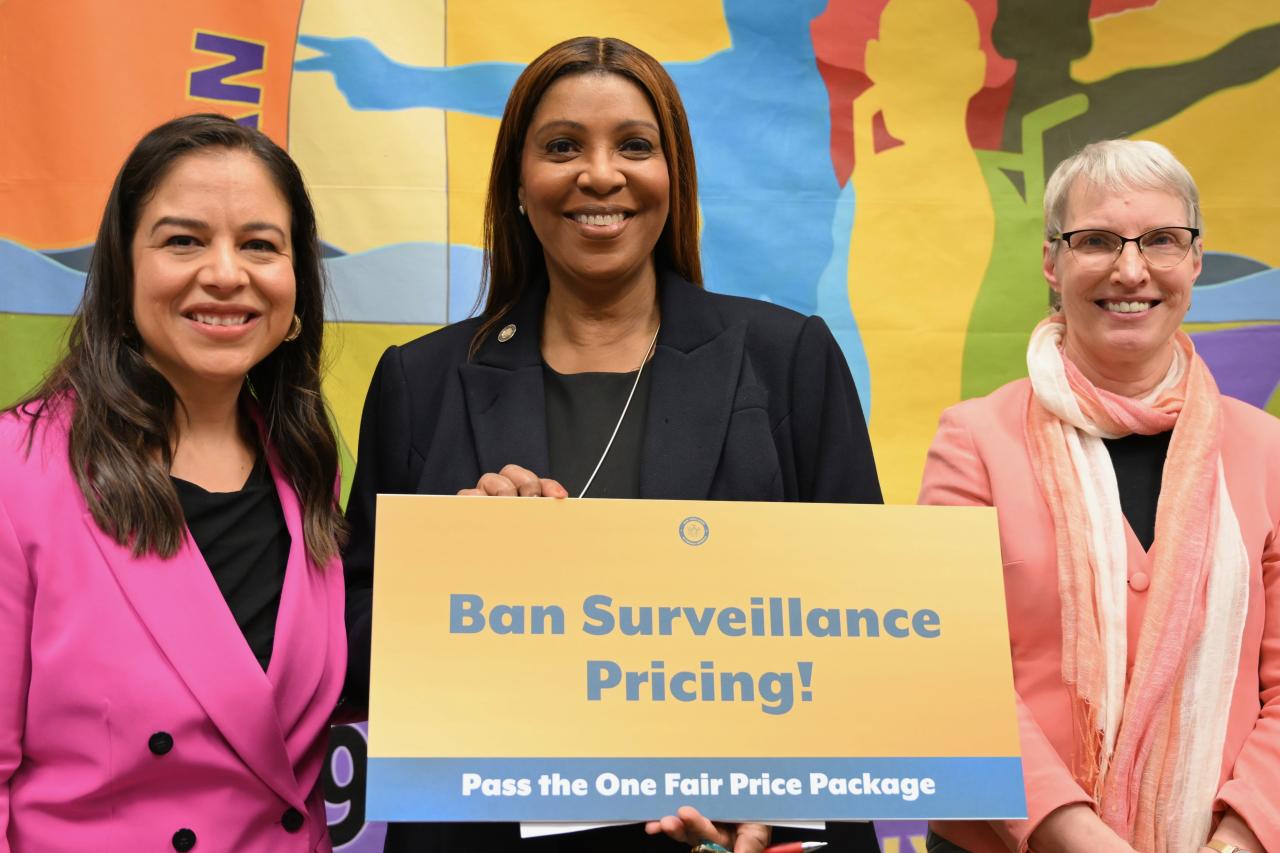
New York City Council passed Int.
No. 891-A on November 12, 2026, prohibiting “surveillance pricing” — pricing set wholly or partly by an algorithm using personal data to offer different prices to different customers for the same goods or services. Mayor Zohran Mamdani has indicated he will sign it, and the law takes effect one year thereafter.
The bill’s core prohibitions and exemptions track the State bill currently awaiting Governor Kathy Hochul’s signature, with a few deviations, fkks.com reported.
Exemptions permit discounts tied to loyalty or rewards programs the consumer knowingly joins, provided tiering by purchase history is disclosed. Discounts based on a class the consumer self-identifies with — such as veterans, teachers, seniors, or birthdays — are allowed, but not a class the business infers. Purchase history with that business alone may support a discount. A narrow set of online marketplace discounts also survives: history with the same third-party seller, a one-time welcome offer for a seller’s new customers, and delivery-fee discounts.
The throughline is data isolation. Purchase history may not be “paired, combined, or cross-referenced” with other personal data — i.e., no profiling. A retailer blending transaction records with browsing behavior, third-party enrichment, or audience or lookalike modeling to decide who gets a coupon falls outside the safe harbor, even if the end result is a lower price.
Uniquely, the statute provides a one-time, 30-day cure period for small businesses with fewer than 15 locations nationally that do most of their business from New York City storefronts, conditioned upon full restitution to affected customers.
Subdivision (c) imports a consumer access right. Any business that uses surveillance pricing or offers a personalized discount must maintain procedures letting consumers ask what personal data was considered in setting a particular price, and how. City authorities can also demand those procedures and the underlying data on request. This duty applies even to lawful personalized discounts.
The bill applies to any entity “domiciled or transacting with consumers in the city” with no size threshold, covering out-of-state e-commerce sites with New York City customers. Each prohibition applies equally to service providers, but a separate exemption shields them unless found in “reckless disregard” of their client’s violations.
A clause limiting enforcement to what is “consistent with state and federal law” hints that drafters see preemption coming if the State bill becomes law. The prohibition on advertising or publishing personalized offers may invite First Amendment scrutiny, particularly after a recent SDNY ruling treated algorithmic pricing recommendations as commercial speech.
Some companies use your personal data, like browsing history, to serve different prices to different costumers. It’s called surveillance pricing, and we just banned it in New York City. This tweet will say the same thing in incognito mode, don’t worry.
Worth a look

Lorene McAfee Patterson, Ballet Teacher to Hillary Clinton, Dies at 94
Lorene Lloyd McAfee Patterson, who taught ballet to hundreds of young women in Little Rock for five decades...

Oklahoma QB John Mateer Named SEC Offensive Player of the Week
Mateer threw for 269 yards and three touchdowns on 23-of-34 passing and rushed for 66 yards and a...

Moran Hosts Annual Service Academy Selection Day in Wichita
Sen. Jerry Moran, R-Kan., writes on his Senate website that he hosted his annual Service Academy Selection Day...
Newark Police, PAL Open Holiday Gift Registration for Dec. 18 Event
The Newark Police Department Community Engagement Unit and Newark PAL opened registration Tuesday for "Presents with Police," a...