
The Oireachtas Committee on Defence will sit for an extra evening this week to process some 224 amendments to the Defence Amendment Bill 2026, after Tuesday’s opening session. The bill would remove the UN Security Council mandate from the “triple lock” governing overseas deployments of more than 12 Defence Forces personnel.
The committee meets again this evening from 6pm to 9pm, in addition to this evening and Thursday morning sessions. During initial exchanges on Tuesday night, Minister for Defence Helen McEntee came under fire from Labour, the Social Democrats, Sinn Féin, Aontú, People Before Profit-Solidarity and Independent TD Séamus Healy.
Referendum amendments ruled out
The first five amendments debated Tuesday sought to insert a referendum requirement. Committee chair Rose Conway-Walsh ruled them out of order. Peadar Tóibín’s amendment — focusing on technical requirements for Dáil and Seanad votes on future deployments — consumed most of the session. “There is a deep concern” among the public, Tóibín said, saying the Nice referendum guaranteed Irish neutrality.

Opposition parties demand public vote
Labour, the Social Democrats, Sinn Féin, Aontú, People Before Profit–Solidarity and Independent TD Séamus Healy all criticised the bill. Paul Murphy of People Before Profit–Solidarity said “this should be put to the people in a referendum” and that UN involvement “is a good thing.”
Government TD accuses Opposition of filibustering
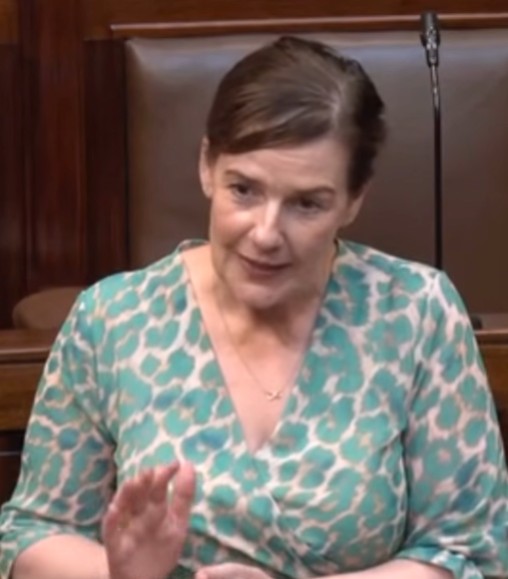
Catherine Callaghan, a former Defence Forces member, told a TV debate that decisions on where Irish peacekeepers are sent should be made in Ireland, and not in Moscow, and argued that the professionalism of Irish troops is often overlooked in the neutrality debate. No Fianna Fáil member spoke at Tuesday’s meeting.
Willie O’Dea amendment may shape compromise
Attention is turning to an amendment led by former minister for defence Willie O’Dea, which would interconnect future Irish peacekeeping directly with the political and moral force of UN General Assembly resolutions. This would be a shift away from dependence exclusively on Security Council decisions.
The Irish Times published a letter from former ambassador Jim Sharkey endorsing O’Dea’s approach as a way to bypass Security Council paralysis while retaining UN legitimacy. Opposition parties say they will consider it but need clarity on how a General Assembly mandate would be interpreted.
Dáil arithmetic and next steps
The bill was supported by 79 votes to 71 in an earlier Dáil vote, while a separate non-bill motion last week to have a referendum on it was defeated 84 votes to 77, with Independent TD Barry Heneghan voting against the Government.
Eleven Dáil sitting days remain before the final sitting day of the year on 17 December. Once report stage and Seanad passage are complete, President Catherine Connolly must sign the bill, consult the Council of State, or refer it to the Supreme Court only if she believes it is unconstitutional.
Thousands protest in Dublin against neutrality shift
Thousands demonstrated in Dublin on 21 November against the change, with signs reading “stick your EU army up your hole” and “make tea not war.” Senator Frances Black performed at the rally. A survey by Wicklow–Wexford TD Fionntán Ó Súilleabháin found 89% of respondents opposed the outcome of the recent Dáil vote and believed the issue should be put directly to the people; 87% said the controversy would affect how they vote in future elections.
Ó Súilleabháin warned the Government has “underestimated the strength of feeling.” Sinn Féin MP Pat Cullen will host a public meeting on Wednesday 25 November, calling the bill “a direct attack on a key protection for Irish neutrality.”
Worth a look

Study Links Unintentional Injuries to PTSD, Depression, Impaired Quality of Life in Ghanaian Youth
A study of hospitalized children and adolescents in Ghana found unintentional injuries significantly associated with post-traumatic stress symptoms,...

Take-Two DMCA Removes GTA 6 PC Port Project
Take-Two Interactive, the parent company of Rockstar Games, has shut down the most prominent unauthorized effort to port...

Four Weather Systems Bring Rains, Flood Risks to Parts of Philippines
Large parts of the country will experience rains due to the combined effects of four weather systems on...

Delia Smith Leads Protest Against £1.2bn Data Centre Plan
TV chef Delia Smith and broadcaster Jake Humphrey led a protest at Marston Marsh on Monday against a...